Paul McKechnie explores how Christianity grew and expanded in Roman Asia over the first three centuries of the religion. Focusing on key individuals, such as Aberkios (Avircius Marcellus) of Hierapolis, he assesses the pivotal role played by Early Christian preachers who, in imitation of Paul of Tarsus, attracted converts through charismatic preaching. By the early fourth century, they had brought many cities and rural communities to a tipping point at which they were ready to move under a 'Christian canopy' and push polytheistic Greco-Roman religion to the margins. This volume brings new clarity of our understanding of how the Christian church grew and thrived in Asia Minor, simultaneously changing Roman society and being changed by it. Combining patristic evidence with the archaeological and epigraphic record, McKechnie's study creates a strong factual and chronological framework to the study of Christianization, while bringing Church History and Roman history more closely together.
After the introduction of the "long-term resident" visa, the mass-migration of Nikkeis (Japanese Brazilians) has led to roughly 190,000 Brazilian nationals living in Japan. While the ancestry-based vi
After the introduction of the "long-term resident" visa, the mass-migration of Nikkeis (Japanese Brazilians) has led to roughly 190,000 Brazilian nationals living in Japan. While the ancestry-based vi
Asia Pacific Pentecostalism, edited by Denise A. Austin, Jacqueline Grey, and Paul W. Lewis, yields previously untold stories and interdisciplinary analysis of pioneer foundations, denominational grow
These chapters examine pathbreaking East Asian women who mobilized Christian beliefs, knowledge, institutions, and networks between 1880 and 1945 to raise the profile of “The Woman Question,” frame th
Christians in fifteenth-century Iraq and al-Jazīra were socially and culturally home in the Middle East, practicing their distinctive religion despite political instability. This insightful book challenges the normative Eurocentrism of scholarship on Christianity and the Islamic exceptionalism of much Middle Eastern history to reveal the often unexpected ways in which inter-religious interactions were peaceful or violent in this region. The multifaceted communal self-concept of the 'Church of the East' (so-called 'Nestorians') reveals cultural integration, with certain distinctive features. The process of patriarchal succession clearly borrowed ideas from surrounding Christian and Muslim groups, while public rituals and communal history reveal specifically Christian responses to concerns shared with Muslim neighbors. Drawing on sources from various languages, including Arabic, Armenian, Persian, and Syriac, this book opens new possibilities for understanding the rich, diverse, and fasc
The Church as Safe Haven conceptualizes the rise of Chinese Christianity as a new civilizational paradigm that encouraged individuals and communities to construct a sacred order for empowerment in mod
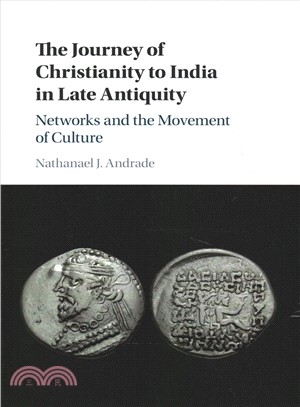
How did Christianity make its remarkable voyage from the Roman Mediterranean to the Indian subcontinent? By examining the social networks that connected the ancient and late antique Mediterranean to the Indian Ocean, central Asia, and Iran, this book contemplates the social relations that made such movement possible. It also analyzes how the narrative tradition regarding the apostle Judas Thomas, which originated in Upper Mesopotamia and accredited him with evangelizing India, traveled among the social networks of an interconnected late antique world. In this way, the book probes how the Thomas narrative shaped Mediterranean Christian beliefs regarding co-religionists in central Asia and India, impacted local Christian cultures, took shape in a variety of languages, and experienced transformation as it traveled from the Mediterranean to India, and back again.
This book explores how the early Christians constructed, developed, and asserted their identity and authority in Asia Minor and Greece in the first five centuries CE.
This work gives a survey of the rise and expansion of Christianity in ancient Lycaonia and adjacent areas, from Paul the Apostle until Amphilochius. It gives special attention to forms of charity, the
In a region where most artifacts remain in the field, the enormous work of documenting and analyzing the early history of Christianity is open to original research. Often the first scholar to
In this volume on Chinese Christian Pentecostal and charismatic movements, some prominent and active historians and sociologists examine historical linkages between Pentecostal missions and indigenous
Asia is the birthplace of Christianity. If Christianity is not usually seen as an Asian religion, that is because the history of Christianity in Asia has long been a difficult one. Whereas Christianit
Born into a prominent Shia Muslim family in Pakistan, Ali had it all—prestige, security, wealth, social status. The Cost is the extraordinary story of his dramatic encounter with Jes
Drawing on recent discoveries, this study reconstructs the material culture of the Christian Ongut in Inner Mongolia. As much of this material no longer survives in the field, it provides an insight i
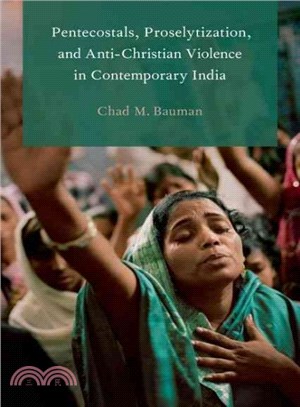
Every year, there are several hundred attacks on India's Christians. These attacks are carried out by violent anti-minority activists, many of them provoked by what they perceive to be a Christian pro
Every year, there are several hundred attacks on India's Christians. These attacks are carried out by violent anti-minority activists, many of them provoked by what they perceive to be a Christian pro
"With a third of South Koreans now identifying themselves as Christian, Christian churches play an increasingly prominent role in the social and political events of the Korean peninsula. Sebastian Kim
Christianity and Imperialism in Modern Japan explores how Japanese Protestants engaged with the unsettling changes that resulted from Japan's emergence as a world power in the early 20th century. Thro
Despite the ongoing global expansion of Christianity, there remains a lack of comprehensive scholarship on its development in Asia. This volume fills the gap by exploring the world of Asian Christiani
From constructing new buildings to describing rival-controlled areas as morally and physically dangerous, leaders in late antiquity fundamentally shaped their physical environment and thus the events
Beginning in the nineteenth century, native women preachers served and led nascent Protestant churches in much of Southern India. Even while allying with their missionary employers, they evolved their
With Early Christianity in the Lycus Valley Ulrich Huttner offers a microstudy of Christian history in southwestern Asia Minor (first to fifth century C.E.).
Although Chinese Christianity can be dated back to the Tang Dynasty it has not been extensively researched by Chinese academics. This volume is devoted to this topic and consists of twelve chapters, w
Demonstrates the inadequacy of the category 'religion' by focusing on the Paraiyars of South India, exploring the complexity of religious belief in marginalized indigenous communities.
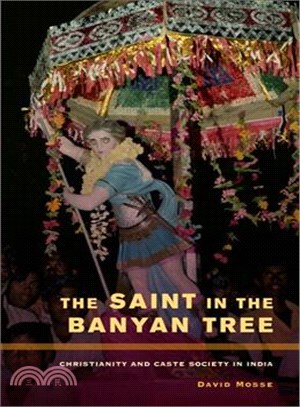
The Saint in the Banyan Tree is a nuanced and historically persuasive exploration of Christianity's remarkable trajectory as a social and cultural force in southern India. Starting in the seventeenth
The Saint in the Banyan Tree is a nuanced and historically persuasive exploration of Christianity's remarkable trajectory as a social and cultural force in southern India. Starting in the seventeenth
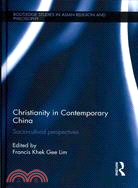
Christianity is one of the fastest growing religions in China. Despite its long history in China and its significant indigenization or intertwinement with Chinese society and culture, Christianity con
Joshi (social and cultural anthropology, Oxford U.) has been studying the Naga people of northeastern India since 1985. Over the past two or three generations, she says, many have converted from their
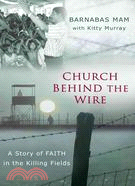
From the oppression and terror of the killing fields in Cambodia, this is the story of how one man's conversion led to a rebirth of faith that brought hope to a nation. Commissioned by Communists to
Ng (religious education, Chinese U. of Hong Kong) describes how Christianity developed in China, where Christians deliberately chose to be independent of foreign control, some say after 1949 and other
In recent years, anthropologists have increasingly viewed Christian conversion as a form of rupture from the past. But what happens if the people with whom they work begin to speak a language of conti
The written word, in Korean and English, constantly struggles to interpret and describe the remarkable period of Korean history from the late nineteenth century to 1945, generally considered as markin
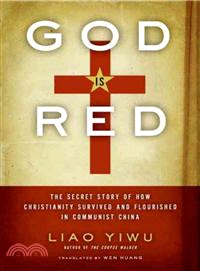
When journalist Liao Yiwu first stumbled upon a vibrant Christian community in the officially secular China, he knew little about Christianity. In fact, he?d been taught that religion was evil, and th
On September 28, 1009, Caliph al-Hakim had the Church of the Holy Sepulchre in Jerusalem destroyed. How did it come to this? What did it mean for contemporaries? Why were Jews persecuted as a result?