Cold War Science and the Transatlantic Circulation of Knowledge shows how western science was transferred and produced in an international network that was conditioned by global power relations.
One cannot adequately study a philosophical system apart from the intellectual context in which it is situated, insists Ariew (philosophy, U. of South Florida), and thus any discussion of Cartesian ph
In 'Studies on Early Modern Aristotelianism' Paul Richard Blum shows that Aristotle's thought remained the touchstone of modern philosophy; for it was the philosophy taught at universities. The concep
This collection of nine essays reevaluates the demise of Aristotelian hylomorphism in the early modern period when the emerging scientific paradigm was shifting to a sense-as-instrument perspective. T
Based on scores of medieval manuscript texts and diagrams, the book shows how Roman sources were used in the age of Charlemagne to reintroduce and expand a qualitative picture of articulated geometric
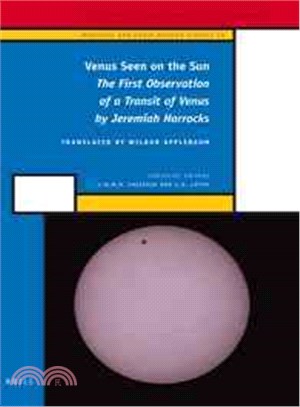
Science historian Applebaum (emeritus, Illinois Institute of Technology, Chicago) presents a translation of Jeremiah Horrocks' (1618-41) treatise on the 1639 transit of Venus across the face of the su
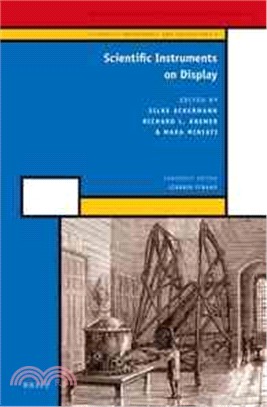
This study examines the display of scientific instruments in venues beyond the laboratory or the classroom, in museums, fairs, universal exhibitions, theatres, movies, book frontispieces, and patent o
This volume presents the first critical edition of books I & II of the final redaction ofJohn Buridan's Questions Commentary on Aristotle's Physics. The edition is accompanied by a detailed gu
"In Elegant Anatomy Marieke Hendriksen offers an account of the material culture of the eighteenth-century Leiden anatomical collections, which have not been studied in detail before. The author intro
The 10 papers in this collection are from sessions on the history of the telescope at the International Congress on History of Science, held in Budapest in July 2009, so marking the fourth centennial
Until well into the nineteenth century, Frederik Ruysch enjoyed international fame as an anatomist. He owed his renown to a preparation method that greatly aided early-modern scientists in their explo
The Dutch Republic was an early modern and modern marvel, developing markets and products far beyond the relatively small limits of its national borders, but as other states emulated its commercial an
Consisting of a series of case studies, this book is devoted to the concept and uses of salt in early modern science, which have played a crucial role in the evolution of matter theory from Aristoteli
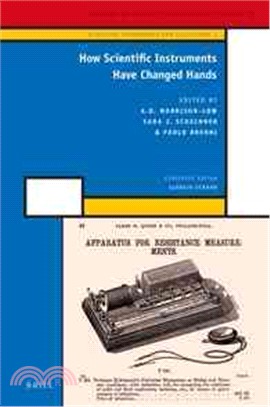
This collection of essays discusses the marketing of scientific and medical instruments from the eighteenth century to the First World War. It features case-studies from the United Kingdom, the Americ
In Copernicus in the Cultural Debates of the Renaissance, Pietro Daniel Omodeo assesses how Copernican astronomy interacted with European culture and examines topics ranging from computation to episte
The 14 papers were developed from presentations at two conferences in Singapore during 2010 and 2013. The topics include the descent of theory, philosophical implications of connective histories of sc
A scholar of modern medicine and intellectual history, Pietikainen examines the history of neuroses in Swedish medicine and culture from 1880 to 1950, a hefty chunk of what he calls the Nervous Centur
In "Religion, Technology, and the Great and Little Divergences" Karel Davids offers a new perspective on technological change in China and Europe before the Industrial Revolution. This book makes an i
This collection of nine essays on the history of science and philosophy examines the use of thought experiments, both in the past and by contemporary thinkers, and discusses the ultimate efficacy of u
In this book, Natalia Tsvetkova describes the American and Soviet policies in German universities during the Cold War. In both parts of divided Germany the conservative professorate resisted both the
Anglo-German Scholarly Networks explores a wide range of scholarly and scientific connections between Britain and Germany from the late eighteenth century to the interwar years.
Verse and Transmutation: A Corpus of Middle English Alchemical Poetry identifies and investigates a corpus of twenty-one anonymous Middle English recipes for the philosophers’ stone through critical e
Scientific collaborator at the State Archives Soleure, Switzerland, Kruger has written on the history of glacial geology and climate perception as well as other matters. Here he traces the discovery o
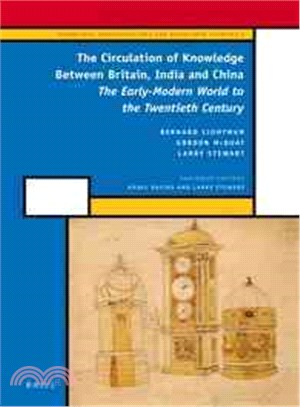
In The Circulation of Knowledge Between Britain, India and China, twelve scholars examine how knowledge, things and people moved within, and between, the East and the West from the early modern period
Christoph Rothmann’s Discourse on the Comet of 1585 offers the first edition of the Latin treatise after it was published in 1619. It is accompanied by an English translation and a full introduction a
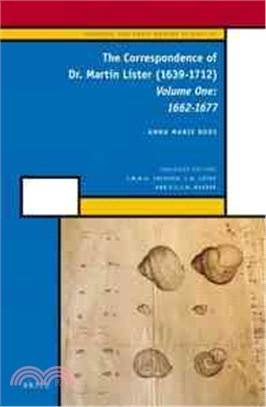
Natural philosopher and empiricist Lister was the first arachnologist and conchologist, a prominent fellow of the Royal Society, a Royal Physician to Queen Anne, a major benefactor of the Ashmolean Mu
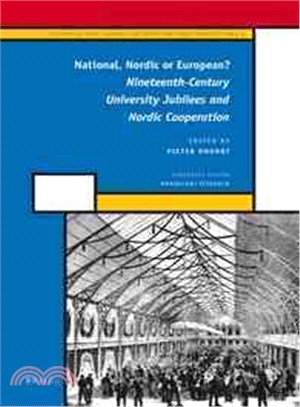
Whereas nineteenth-century university jubilees traditionally led to the writing of histories that celebrated an individual university, in this volume they have inspired instead a stimulating comparati
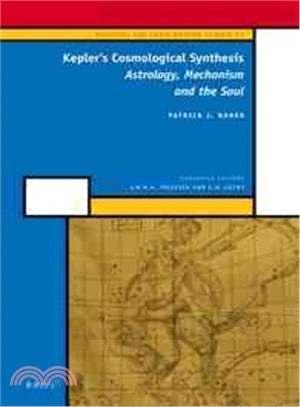
Spanning the course of his career, this book brings new light to Kepler’s vitalistic views and their central place in his world picture. It challenges our view of Kepler as a nascent mechanical philos
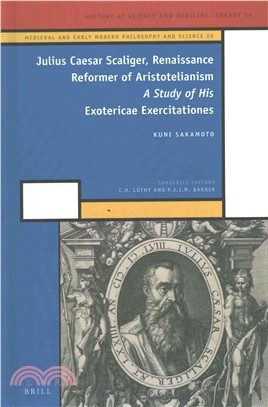
This monograph is the first to analyze Julius Caesar Scaliger’s Exotericae Exercitationes (1557). In order to make this late-Renaissance work accessible to modern readers, Kuni Sakamoto conducted a de
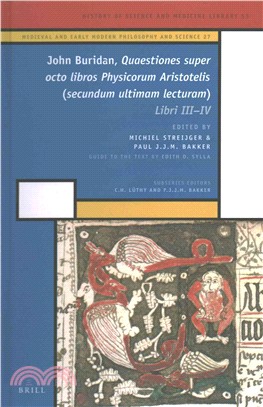
This volume presents the first critical edition of books III and IV of the final redaction of John Buridan's Questions Commentary on Aristotle's Physics. The edition is accompanied by a detailed guide
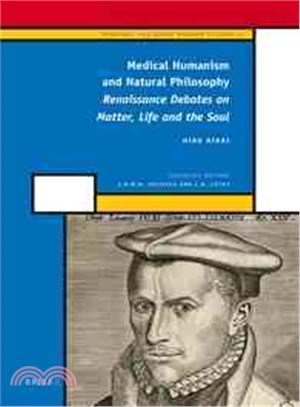
Hirai (history of science, Radboud U., Nijmegan, the Netherlands) profiles in turn six men who contributed significantly to the change in thinking about medicine during the European Renaissance. They
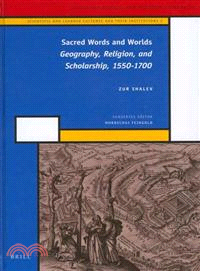
Shalev (early modern European history, U. of Haifa) explores the religious underpinnings and implications of maps and other geographic representations of the Holy Land in a Europe wracked by religious
Ellis (British history, Humboldt-U zu Berlin) contends that the factors driving university reform at Oxford between 1800 and 1854 were more complex than the current historiography allows. She focuses
These selected studies on sixteenth and eighteenth centuries European collections of scientific instruments, which were part of the princely ‘wunderkammern’, delineate an up-to-date-panorama about the
Bringing together the surviving material and manuscript evidence, this book looks closely at a fascinating medieval sundial in the form of a ship. It considers who made and used the surviving instrume
The Understanding, Prevention and Control of Human Cancer explains how certain chemicals in our environment are changed by enzymes of the body to combine with DNA which ultimately results in cancer. T
The tables of Bianchini (d. after 1469) are the largest set produced in the West before modern times, and historians of astronomy Chabas (U. Pompeu Fabra, Barcelona) and Goldstein (emeritus U. of Pitt
'A plaine and easie waie to remedie a horse': equine medicine in early modern England is Louise Hill Curth's groundbreaking new book on the health and illness of what were historically the most import
"A Catalogue of the Manuscripts of Christiaan Huygens inventories all known manuscripts written by Christiaan Huygens as well as all letters to or from him. Because almost all of the manuscripts are h