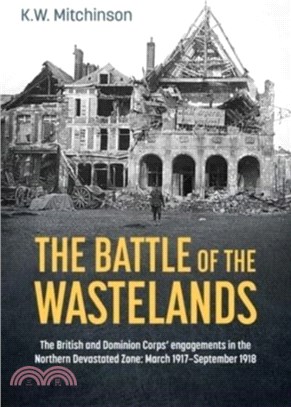
This book considers a relatively unknown series of actions of the victorious Hundred Days of 1918: the operations at the River Selle. Between 9-24 October, the British Fourth Army drove elements of tw
According to the official historian Brigadier-General James Edmonds: ‘In every respect the Expeditionary Force of 1914 was incomparably the best trained, best organized, and best equipped British Army
On the outbreak of war, the South Midland was the second strongest division in the Territorial Force (TF); by October 1914, it was considered to be the second most efficient of the TF’s fourteen 1st L
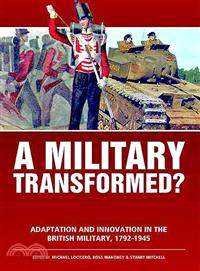
Between 1792 and 1945, the character of warfare changed. Battalions standing shoulder to shoulder during the Napoleonic era gave way to the industrialized, modern armies of the First and Second World
"This book provides the first comprehensive study of the British Army's horse services between 1875-1925, including the use of horses in the 1899-1902 Anglo-Boer and the 1914-18 wars. There is a parti
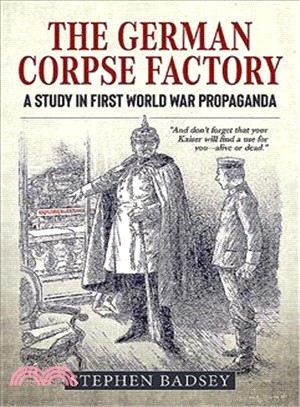
The German Corpse Factory' is one of the most famous and scandalous propaganda stories of the First World War. It has been repeated many times down to the present day as the prime example of the false
The British Expeditionary Force of 1914 was described by the official historian as "incomparably the best trained, best organised, and best equipped British Army that ever went forth to war." The BEF
Nominated for the Royal Historical Society Whitfield Book Prize 2013Nominated for the NYMAS Arthur Goodzeit Book Award 2013Nominated for the SAHR Templer Medal 2013This book provides the first compreh
The war in the Far East between 1941 and 1945 is occasionally referred to as the 'Forgotten War' and this description extends to the way the campaign’s air war has been analyzed. However, the role of
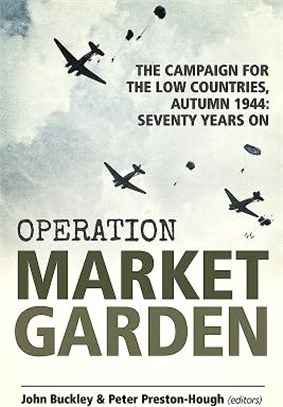
In September 1944 the Western Allies mounted an audacious attempt to seize a crossing over the Rhine into Germany in a bid to end the Second World War quickly. Yet despite the deployment of thousands
The Anglophone history of the War of the Spanish Succession (1701–14) in the Low Countries is dominated by military biographies of John Churchill, first Duke of Marlborough (1650–1722), and studies of
Despite the best efforts of a number of historians, many aspects of the ferocious struggle between Nazi Germany and the Soviet Union during the Second World War remain obscure or shrouded in myth. One
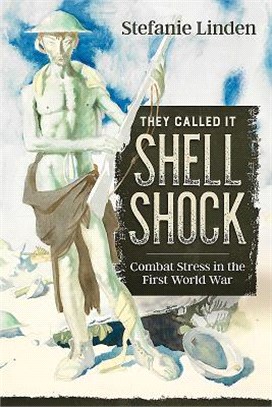
They called it Shell Shock provides a new perspective on the psychological reactions to the traumatic experiences of combat. In the Great War, soldiers were incapacitated by traumatic disorders at an
As any other modern militaries of the world, Turkish Armed Forces (TAF) is a complex organization relying on human force and other resources provided by society, being strictly founded on both an inst
Using a combination of new perspectives and new evidence, this book presents a reinterpretation of how 21st Army Group produced a successful combined arms doctrine by late 1944 and implemented this in
1916 was a pivotal year for the British Army. It was a year of intense combat that was defined by the Battle of the Somme and the appalling casualties of the 1st July 1916. Yet it was also the year i
In September 1918 Second Army was the weakest of the British Armies on the Western Front; many of its formations had been rebuilt through young conscripts and men reclassified as fit for the frontline
The Battle of the Sambre, 4 November 1918, was a decisive British victory. The battle has, however, been largely neglected by historians: it was the last large-scale, set-piece battle fought by the Br
This book is a study of the importance and significance of community identity to a fighting unit in the First World War. In this case the unit in question is primarily 7th King’s Regiment and more wid
At a time when many books about the Great War of 1914-1918 are largely reiterations of earlier strictly chronological accounts, wherein not much is new except perhaps the author’s style, it is refresh
The Battle of Pozières Ridge lasted precisely six weeks. In that time the 1st Anzac Corps, in whose sector most of the fighting took place, advanced the British line just over a mile and a half in a n
In the summer of 1943, the United Nations began Operation HUSKY, the invasion of Sicily. The Eagles over HUSKY – the airmen of the Allied air forces – played a crucial role in the assault. The Luftwaf
Our vision of the soldier of the Great War is often clouded by sentimentality. ‘Glum Heroes’ is a portrayal of how the soldiers of 1914-1918 coped with their experiences. Using their own words, the bo
The year 1915 was one of unprecedented challenges for the British Army. Short of manpower, firepower and experience, the army needed time to adapt before it could hope to overcome the formidable Germ
In this ground-breaking work, James Roberts examines the willingness and ability of British volunteer and conscript infantrymen of the Great War to perform the soldier’s fundamental role: to kill or m
Generally conceded to be doomed from the outset by the most recent historiography, the Gallipoli campaign still arouses heated controversy. In a new compendium of original research by an impressive ar
The Gallipoli Landing of 25 April 1915 is arguably Australia’s best known battle. It is commemorated each year with a national holiday, services, parades and great media attention. 2015, the centenary