The summation of the existentialist philosophy threaded throughout all his writing, Albert Camus' The Myth of Sisyphus is translated by Justin O'Brien with an introduction by James Wood in Penguin Cla
The stories of Exile and the Kingdom explore the state of being an outsider - even in one's own country - and of allegiance. With intense power and lyricism, Camus evokes beautiful but harsh landscape
Jean-Baptiste Clamence is a soul in turmoil. Over several drunken nights in an Amsterdam bar, he regales a chance acquaintance with his story. From this successful former lawyer and seemingly model ci
Jean-Baptiste Clamence is a soul in turmoil. Over several drunken nights he regales a chance acquaintance with his story. From the successful former lawyer and seemingly model citizen a compelling, se
This volume contains some of Camus' most intimate writing, as he reflects on his identity and childhood in Algeria and celebrates the beauty of the Mediterranean. The Wrong Side and the Right Side, Ca
This volume contains some of Camus' most powerful political writing as he reflects on moral responsibility and the role of the artist in the world. 'Letters to a German Friend' was Camus' first wartim
In The Outsider, Camus explores the alienation of an individual who refuses to conform to social norms. Meursault, his anti-hero, will not lie. When his mother dies, he refuses to show his emotions si
The townspeople of Oran are in the grip of a deadly plague, which condemns its victims to a swift and horrifying death. Fear, isolation and claustrophobia follow as they are forced into quarantine. Ea
Reveals some aspects of the existential notion of 'the absurd' by portraying an emperor so mighty and so desperate in author's search for freedom that he inevitably destroys gods, men and himself.
Is it possible to die a happy death? This is the central question of Camus's astonishing early novel, published posthumously and greeted as a major literary event. It tells the story of a young Algeri
'My mother died today. Or maybe yesterday, I don't know.'In The Outsider (1942), his classic existentialist novel, Camus explores the alienation of an individual who refuses to conform to social norms
The townspeople of Oran are in the grip of a deadly plague, which condemns its victims to a swift and horrifying death. Fear, isolation and claustrophobia follow as they are forced into quarantine. Th
The 'first man' is Jacques Cormery, whose poverty-stricken childhood in Algiers is made bearable by his love for his silent and illiterate mother, and by the teacher who transforms his view of the wor
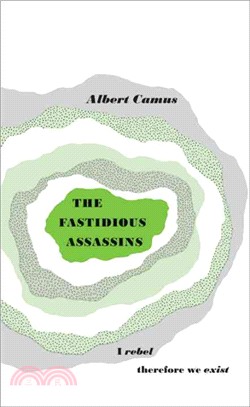
Camus described this brilliant essay on the nature of human revolt as 'an attempt to understand the time I live in'. Published in 1951, it expresses his horror at the events of a period which 'within
The Plague by Albert Camus is an extraordinary odyssey into the darkness and absurdity of human existence. 'On the morning of April 16, Dr Rieux emerged from his consulting-room and came across a dead
The Outsider is an enduring classic of existential writing by Albert Camus 'Mother died today. Or maybe yesterday, I don't know' Meursault is different. He will not lie. He will not pretend. He is tru
A daring critique of communism and how it had gone wrong behind the Iron Curtain, Camus’ essay examines the revolutions in France and Russia, and argues that since they were both guilty of producing t
Part of the Penguin Classics campaign celebrating 100 years of Albert Camus, 'A Sea Close By' reveals the writer as a sensual witness of landscapes, the sea and sailing. It is a light, summery day-dre
She was waiting, but she didn't know for what. She was aware only of her solitude, and of the penetrating cold, and of a greater weight in the region of her heart. The author's writing confronts the g
'My mother died today. Or maybe yesterday, I don't know.' Sandra Smith's new translation, based on close listening to a recording of Camus reading his work aloud on French radio in 1954, sensitively r