Placing Eusebius in the context of his age the author provides a full account his life, including the period when Eusebius controversially sought to assist the heretic Arius.
Placing Eusebius in the context of his age the author provides a full account his life, including the period when Eusebius controversially sought to assist the heretic Arius.
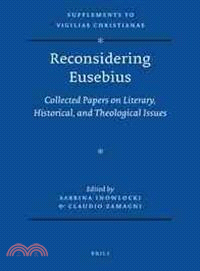
Eusebius, the bishop of Emesa (c. 300-359) is today not a well-known figure of late ancient Christianity. Yet he achieved apparent notoriety in antiquity: he was a student of the famous Eusebius of C
Eusebius (260-340), Bishop of Caesarea, one of the most important Church Fathers of late antiquity, has enjoyed and endured a roller-coaster reputation down the ages for both veracity and style. Here
Eusebius of Caesarea, ca. 260?340 CE, born in Palestine, was a student of the presbyter Pamphilus whom he loyally supported during Diocletian's persecution. He was himself imprisoned in Egypt, but bec
Eusebius of Caesarea, ca. 260?340 CE, born in Palestine, was a student of the presbyter Pamphilus whom he loyally supported during Diocletian's persecution. He was himself imprisoned in Egypt, but bec
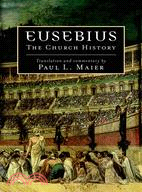
This highly affordable paperback edition includes Maier's best-selling translation, historical commentary on each book of The Church History, and numerous maps and illustrations.
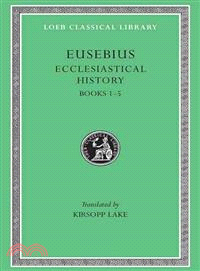
"Could I do better than start from the beginning of the dispensation of our Saviour and Lord, Jesus the Christ of God?" Bishop Eusebius (c. AD 260–339), a learned scholar who lived most of his life
Eusebius of Caesarea was one of the most significant and voluminous contributors to the development of late antique literary culture. Despite his significance, Eusebius has tended to receive attention
Eusebius was more than a mere collector of history. He was a vigorous apologist and polemicist in his own right. Kofsky encourages us to take seriously Eusebius’s efforts against the pagan assailants
This volume offers a new and detailed discussion of the subject of apologetics and polemics against the pagans in Eusebius of Caesarea (c. 260-340), discussing his response to the vigorous political,
Originally published in 1929, this book was formed from the content of the Thirlwall Prize Essay for 1927. It presents a series of studies covering various aspects of the life and work of Eusebius. The text is divided into two main sections, with the first part dealing with the life of Eusebius up until the end of the Great Persecution and the second focusing on his position in the Arian controversy. Detailed notes are incorporated throughout. This book will be of value to anyone with an interest in Eusebius and the history of early Christianity.
When Eusebius (260-340) was bishop of Caesarea Maritima in Palestine, he drew materials for his scholarship from the library founded a century earlier by Origen (185-254) to support his own biblical c
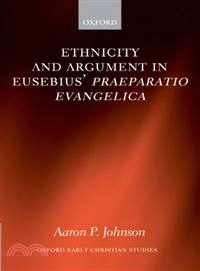
Eusebius' magisterial Praeparatio Evangelica (written sometime between AD 313 and 324) offers an apologetic defence of Christianity in the face of Greek accusations of irrationality and impiety. Tho
This study of the Roman Empire in the age of Constantine offers a thoroughly new assessment of the part Christianity played in the Roman world of the third and fourth centuries.Mr. Barnes gives the f
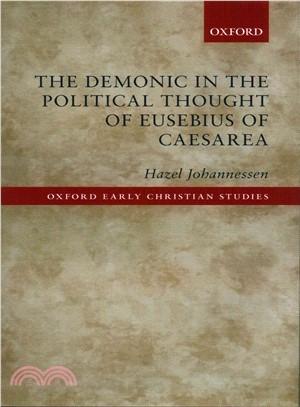
The Demonic in the Political Thought of Eusebius of Caesarea explores how Eusebius of Caesarea's ideas about demons interacted with and helped to shape his thought on other topics, particularly politi
The Historia ecclesiastica of Eusebius took part in the cultural negotiations that attended the turn to a post-Constantinian Christianity. The immediate success of Historia ecclesiastica indicates its












![The Life of ... Constantine [With the Oration of Constantine to the Assembly of Saints and the Oration of Eusebius in Praise of Constantine. Transl.]](https://cdnec.sanmin.com.tw/product_images/101/101937810.jpg)
![The Life of ... Constantine [with the Oration of Constantine to the Assembly of Saints and the Oration of Eusebius in Praise of Constantine. Transl.]](https://cdnec.sanmin.com.tw/product_images/034/034177507.jpg)








![The Life of ... Constantine [With the Oration of Constantine to the Assembly of Saints and the Oration of Eusebius in Praise of Constantine. Transl.]](https://cdnec.sanmin.com.tw/product_images/102/102117231.jpg)