Modal Logic is a branch of logic with applications in many related disciplines such as computer science, philosophy, linguistics and artificial intelligence. Over the last twenty years, in all of t
This is the first book-length treatment of hybrid logic and its proof-theory. Hybrid logic is an extension of ordinary modal logic which allows explicit reference to individual points in a model (wher
This book starts with the basic concepts of Fuzzy Logic: the membership function, the intersection and the union of fuzzy sets, fuzzy numbers, and the extension principle underlying the algorithmic
We welcome Volume 20, Formal Aspects of Context. Context has always been recognised as strongly relevant to models in language, philosophy, logic and artifi cial intelligence. In recent years theoret
This book offers a historical explanation of important philosophical problems in logic and mathematics, which have been neglected by the official history of modern logic. It offers extensive inf
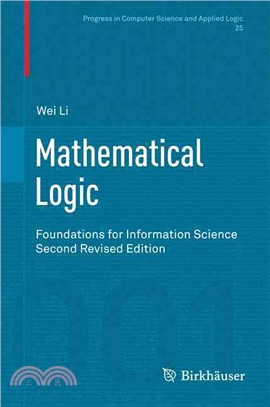
Mathematical logic is a branch of mathematics that takes axiom systems and mathematical proofs as its objects of study. This book shows how it can also provide a foundation for the development of info
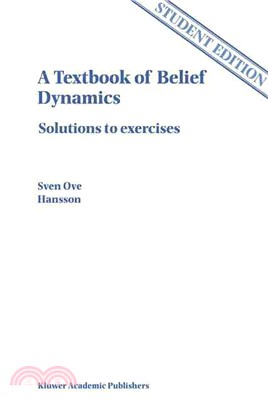
The mid-1980s saw the discovery of logical tools that make it possible to model changes in belief and knowledge in entirely new ways. These logical tools turned out to be applicable to both human b
This book argues for a view in which processes of dialogue and interaction are taken to be foundational to reasoning, logic, and meaning. This is both a continuation, and a substantial modification, o
This is an authoritative collection of papers addressing the key challenges that face the Bayesian interpretation of probability today. The volume includes important criticisms of Bayesian reasoning a
On the history of the book: In the early 1990s several new methods and perspectives in au- mated deduction emerged. We just mention the superposition calculus, meta-term inference and schematization,
Provides a primer on the application of scientific logic to professional psychological practice, demonstrating how scientific reliance on aggregate data can be reconciled with the unique and immediate
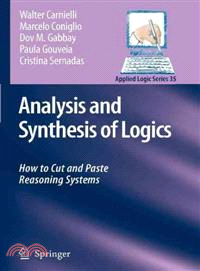
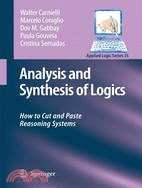
Starting with simple examples showing the relevance of cutting and pasting logics, the monograph develops a mathematical theory of combining and decomposing logics, ranging from propositional and firs
Starting with simple examples showing the relevance of cutting and pasting logics, the monograph develops a mathematical theory of combining and decomposing logics, ranging from propositional and fir
Brings neural networks and fuzzy logic together with dynamical control systems. Each chapter presents powerful control approaches for the design of intelligent controllers to compensate for actuator n
The book answers long-standing questions on scientific modeling and inference across multiple perspectives and disciplines, including logic, mathematics, physics and medicine. The different chapters c
The aim of this volume is to collect original contributions by the best specialists from the area of proof theory, constructivity, and computation and discuss recent trends and results in these areas.
This book brings together contributions by leading researchers in computational complexity theory written in honor of Somenath Biswas on the occasion of his sixtieth birthday. They discuss current tre
In 1994 Peter Shor [65] published a factoring algorithm for a quantum computer that finds the prime factors of a composite integer N more efficiently than is possible with the known algorithms for a c

This book contains a selection of papers submitted to the Workshop on Coding, Cryptography and Combinatorics (CCC 2003). An important feature of the book are invited surveys on key topics such as Bool
The contributors take up applications of logic programming, logic programming and databases, theory of logic and functional programming, parallel executing of logic programs, implementation of logic p
This volume examines the limitations of mathematical logic and proposes a new approach to logic intended to overcome them. To this end, the book compares mathematical logic with earlier views of logic
This fourth volume of the second edition contains major contributions on Conditional Logic, Dynamic Logic, Logics for Defeasible Argumentation, Preference Logic and Diagrammatic Logic. Audience:
Elementary Logic explains what logic is, how it is done, and why it can be exciting. The book covers the central part of logic that all students have to learn: propositional logic. It aims to provide
This first volume of the second edition contains major contributions on Predicate Logic, First- and Second-order Logic, Higher-order Logic, Algorithms and Decision Problems, and the Mathematics of
Elementary Logic explains what logic is, how it is done, and why it can be exciting. The book covers the central part of logic that all students have to learn: propositional logic. It aims to provide
Proof and Disproof in Formal Logic is a lively and entertaining introduction to formal logic providing an excellent insight into how a simple logic works. Formal logic allows you to check a logical cl
Designed to make logic interesting and accessible—without sacrificing content or rigor—this classic introduction to contemporary propositional logic explains the symbolization of English sentences and
George Wilhelm Friedrich Hegel has seldom been considered a major figure in the history of logic. His two texts on logic, both called The Science of Logic, both written in Hegel's characteristically d
Intermediate Logic is an ideal text for anyone who has taken a first course in logic and is progressing to further study. It examines logical theory, rather than the applications of logic, and does no
The Asian Logic Conference (ALC) is a major international event in mathematical logic. It features the latest scientific developments in the fields in mathematical logic and its applications, logic in
This book offers an original contribution to the foundations of logic and mathematics and focuses on the internal logic of mathematical theories, from arithmetic or number theory to algebraic geometry
Medieval and Renaissance Logic is an indispensable research tool for anyone interested in the development of logic, including researchers, graduate and senior undergraduate students in logic, history
The Handbook of the History of Logic brings to the development of logic the best in modern techniques of historical and interpretative scholarship. Computational logic was born in the twentieth centur
Includes tutorials, lectures, and refereed papers on all aspects of logic programming,The Joint International Conference and Symposium on Logic Programming, sponsored by the Association for Logic Prog
The Handbook of the History of Logic is a multi-volume research instrument that brings to the development of logic the best in modern techniques of historical and interpretative scholarship. It is the
In Rationality and Logic, Robert Hanna argues that logic is intrinsically psychological and that human psychology is intrinsically logical. He claims that logic is cognitively constructed by rational