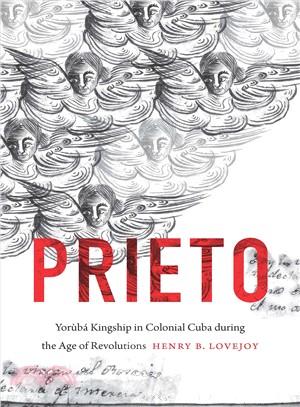
This Atlantic world history centers on the life of Juan Nepomuceno Prieto (c. 1773–c. 1835), a member of the West African Yoruba people enslaved and taken to Havana during the era of the Atlanti
This Atlantic world history centers on the life of Juan Nepomuceno Prieto (c. 1773–c. 1835), a member of the West African Yoruba people enslaved and taken to Havana during the era of the Atlanti
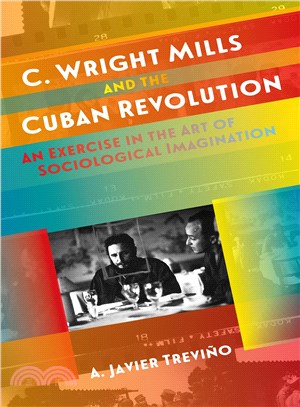
In C. Wright Mills and the Cuban Revolution, A. Javier Trevino reconsiders the opinions, perspectives, and insights of the Cubans that Mills interviewed during his visit to the island in 1960. On ret
In C. Wright Mills and the Cuban Revolution, A. Javier Trevino reconsiders the opinions, perspectives, and insights of the Cubans that Mills interviewed during his visit to the island in 1960. On ret
During the violent years of war marking Cuba's final push for independence from Spain, over 3,000 Cuban emigres, men and women, rich and poor, fled to Mexico. But more than a safe haven, Mexico was a
During the violent years of war marking Cuba's final push for independence from Spain, over 3,000 Cuban emigres, men and women, rich and poor, fled to Mexico. But more than a safe haven, Mexico was a
On the outskirts of Havana lies Mazorra, an asylum known to--and at times feared by--ordinary Cubans for over a century. Since its founding in 1857, the island's first psychiatric hospital has been an
On the outskirts of Havana lies Mazorra, an asylum known to--and at times feared by--ordinary Cubans for over a century. Since its founding in 1857, the island's first psychiatric hospital has been an
Analyzing the ideology and rhetoric around race in Cuba and south Florida during the early years of the Cuban revolution, Devyn Spence Benson argues that ideas, stereotypes, and discriminatory practic
A handful of celebrated photographs show armed, fatigues-clad female Cuban insurgents alongside their companeros in Cuba's remote mountains during the revolutionary struggle. However, the story of wom
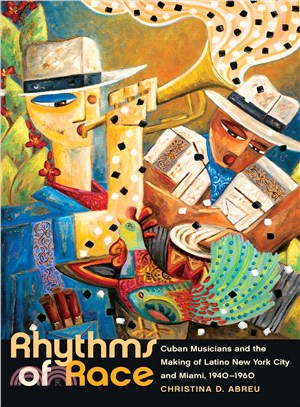
"Among the nearly 90,000 Cubans who settled in New York City and Miami in the 1940s and 1950s were numerous musicians and entertainers, black and white, who did more than fill dance halls with the rhy
Envisioning La Escalera--an underground rebel movement largely composed of Africans living on farms and plantations in rural western Cuba--in the larger context of the long emancipation struggle in Cu
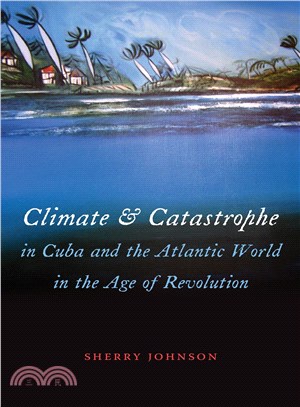
From 1750 to 1800, a critical period that saw the American Revolution, French Revolution, and Haitian Revolution, the Atlantic world experienced a series of environmental crises, including more freque
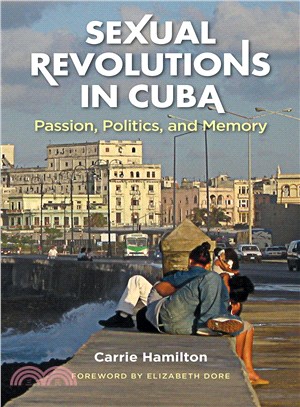
In Sexual Revolutions in Cuba Carrie Hamilton delves into the relationship between passion and politics in revolutionary Cuba to present a comprehensive history of sexuality on the island from the tri
Since 1959, the Cuban revolutionary government has proudly proclaimed that "the revolution is for the children." Many Cuban Americans reject this claim, asserting that they chose exile in the United S
Between 1840 and 1920, Cuba abolished slavery, fought two wars of independence, and was occupied by the United States before finally becoming an independent republic. Tiffany A. Sippial argues that du
In the mid-nineteenth century, Cuba's infamous "coolie" trade brought well over 100,000 Chinese indentured laborers to its shores. Though subjected to abominable conditions, they were followed during
In the tumultuous first decade of the Cuban Revolution, Fidel Castro and other leaders saturated the media with altruistic images of themselves in a campaign to win the hearts of Cuba's six million ci
While it was not until 1871 that slavery in Cuba was finally abolished, African-descended people had high hopes for legal, social, and economic advancement as the republican period started. InBlack Po
In a unique analysis of Cuban literature inside and outside the country's borders, Eduardo Gonzalez looks closely at the work of three of the most important contemporary Cuban authors to write in the
Analyzing the crucial period of the Cuban Revolution from 1959 to 1961, Samuel Farber challenges dominant scholarly and popular views of the revolution's sources, shape, and historical trajectory. Un
Lazo examines the work and influence of a generation of Cuban exiles in 19th-century America who created a body of literature demanding Cuban independence from Spain and alliance with or annexation to
In the years following Cuba's independence, nationalists aimed to transcend racial categories in order to create a unified polity, yet racial and cultural heterogeneity posed continual challenges to t
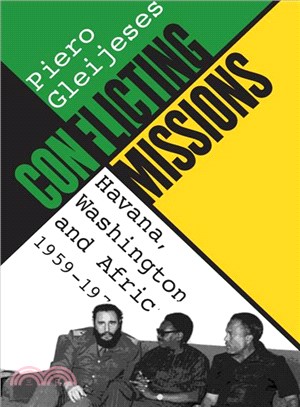
This is a compelling and dramatic account of Cuban policy in Africa from 1959 to 1976 and of its escalating clash with U.S. policy toward the continent. Piero Gleijeses's fast-paced narrative takes th
After thirty years of anticolonial struggle against Spain and four years of military occupation by the United States, Cuba formally became an independent republic in 1902. The nationalist coalition th