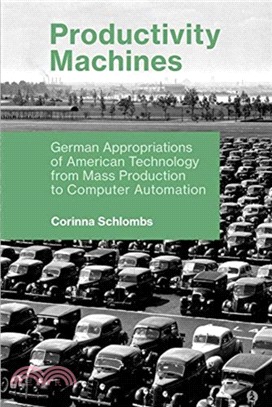
How productivity culture and technology became emblematic of the American economic system in pre- and postwar Germany. The concept of productivity originated in a statistical measure of output per w
Changes in the present challenge us to reinterpret the past, but historians have not yet come to grips with the convergence of computing, media, and communications technology. Today these things are i
Although it is popularly assumed that the history of computing before the second half of the 20th century was unimportant, in fact the Industrial Revolution was made possible and even sustained by a p
A history of one of the most influential American companies of the last century.For decades, IBM shaped the way the world did business. IBM products were in every large organization, and IBM corporate
This accessible textbook presents a fascinating review of cryptography and cryptanalysis across history. The text relates the earliest use of the monoalphabetic cipher in the ancient world, the develo
How Britain lost its early dominance in computing by systematically discriminating against its most qualified workers: women.In 1944, Britain led the world in electronic computing. By 1974, the Britis
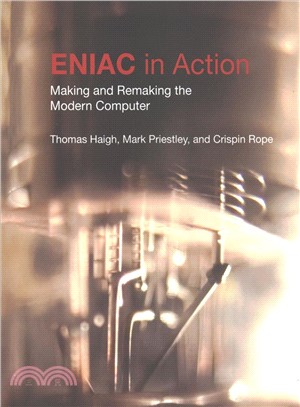
The history of the first programmable electronic computer, from its conception, construction, and use to its afterlife as a part of computing folklore.Conceived in 1943, completed in 1945, and decommi
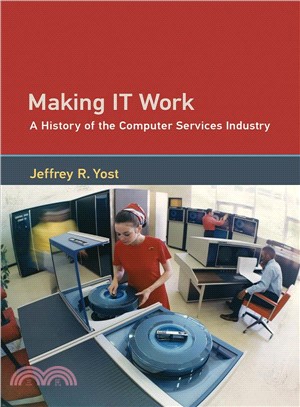
The computer services industry has worldwide annual revenues of nearly a trillion dollars and employs millions of workers, but is often overshadowed by the hardware and software products industries. I
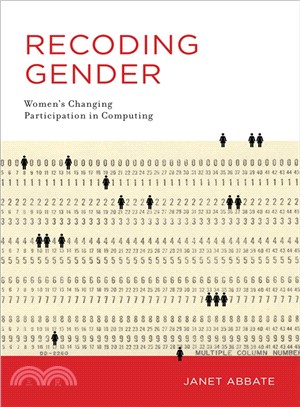
Today, women earn a relatively low percentage of computer science degrees and hold proportionately few technical computing jobs. Meanwhile, the stereotype of the male "computer geek" seems to be every
In the 1980s, there was a revolution with far-reaching consequences -- a revolution to restore software freedom. In the early 1980s, after decades of making source code available with programs, most p
In 1944, Britain led the world in electronic computing. By 1974, the British computer industry was all but extinct. What happened in the intervening thirty years holds lessons for all postindustrial s
In The Government Machine, Jon Agar traces the mechanization of government work in the United Kingdom from the nineteenth to the early twenty-first century. He argues tha
This book provides a history of efforts to increase the number of women in computing and enhance their opportunities in the United States since the Second World War. The focus is primarily on higher e
This book provides a history of the efforts of the US National Science Foundation to broaden participation in computing. The book briefly discusses the early history of the NSF's involvement with educ
Conceived in 1943, completed in 1945, and decommissioned in 1955, ENIAC (the Electronic Numerical Integrator and Computer) was the first general-purpose programmable electronic computer. But ENIAC was
This important volume examines European perspectives on the historical relations that women have maintained with information and communication technologies (ICTs), since the telegraph. Features: descr
This engaging volume celebrates the life and work of Theodor Holm “Ted” Nelson, a pioneer and legendary figure from the history of early computing. Presenting contributions from world-renowned compute
The rise of the Indian information technology industry is a remarkable economic success story. Software and services exports from India amounted to less than $100 million in 1990, and today come close
Hacking Europe traces the user practices of chopping games in Warsaw, hacking software in Athens, creating chaos in Hamburg, producing demos in Turku, and partying with computing in Zagreb and Amsterd
Today, women earn a relatively low percentage of computer science degrees and holdproportionately few technical computing jobs. Meanwhile, the stereotype of the male "computergeek" seems to be everywh
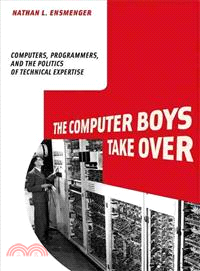
This is a book about the computer revolution of the mid-twentieth century and thepeople who made it possible. Unlike most histories of computing, it is not a book about machines,inventors, or entrepre
This book reviews the shift in the historiography of computing from inventors and innovations to a user-perspective, and examines how the relevant sources can be created, collected, preserved, and dis
The 16th-Century intellectual Robert Recorde is chiefly remembered for introducing the equals sign into algebra, yet the greater significance and broader scope of his work is often overlooked. This bo
"This book provides the most holistic approach to the history of the development of programming and computer systems so far written. By embedding this history in a sociological and political context,
Historians have different views on the core identity of analogue computing. Some portray the technology solely as a precursor to digital computing, whereas others stress that analogue applications exi
No company of the twentieth century achieved greater success and engendered moreadmiration, respect, envy, fear, and hatred than IBM. Building IBM tells the story of that company-- how it was formed,
The effect of a commercialized Internet on American business, from the boom ine-commerce and adjustments by bricks-and-mortar businesses to file-sharing and communitybuilding.
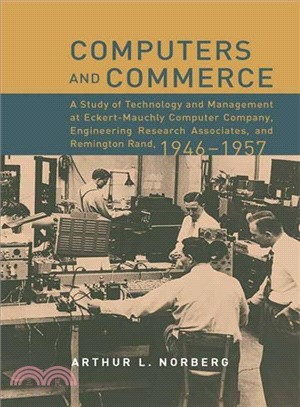
Between 1946 and 1957 computing went from a preliminary, developmental stage to morewidespread use accompanied by the beginnings of the digital computer industry. During this crucialdecade, spurred by
This engaging history covers modern computing from the development of the first electronic digital computer through the dot-com crash. The author concentrates on five key moments of transition: the t
Chronicles the software history's rise from its beginnings in the 1950s to America's fourth largest industrial sector, describing the different kinds of software, products, and markets that developed
After World War II, other major industrialized nations responded to the technological and industrial hegemony of the United States by developing their own design and manufacturing competence in digita
John von Neumann (1903-1957) was unquestionably one of the most brilliant scientistsof the twentieth century. He made major contributions to quantum mechanics and mathematical physicsand in 1943 began
Uses excerpts from letters, memoirs, and documents to recreate the life of Ada Byron, daughter of the English poet, and discusses her contributions to mathematics and her friendships with the leading
This is the story of an extraordinary effort by the U.S. Department of Defense to hasten the advent of "machines that think." From 1983 to 1993, the Defense Advanced Research Projects Agency