Establishing New Mexico as a U.S. territory was anything but bloodless. The Mexican-American War brought ferocious battles, brutal sieges, guerrilla warfare and scorched earth tactics. More than three
When World War II engulfed the nation, the men and women of Akron dutifully played their part in the epic struggle. Keyes Beech ducked grenades as marines raised the American flag at on Iwo Jima. News
During World War II, more than six thousand prisoners of war resided at Camp Perry near Port Clinton and its branch camps at Columbus, Rossford, Cambridge, Celina, Bowling Green, Defiance, Marion, Par
During World War II, Michigan became a temporary home to six thousand German and Italian POWs. At a time of homefront labor shortages, they picked fruit in Berrien County, harvested sugar beets in the
Like every community in America, young men from Puyallup put on the uniform and went off to fight in far-off parts of the world in 1941. Neighbors of all ages joined the war effort as factory and farm
Montana's cowboys, miners, foresters, farmers and nurses entered World War I in April 1917 under the battle cry that would resonate on the battlefields in France--"Powder River, Let 'Er Buck!" Montana
Despite African Americans' lack of political, social and economic equality in the United States, the students of Howard University answered the call to service in both world wars. Howard supported its
Nassau and Suffolk Counties answered the call to service during the First World War. As young men entered the armed forces, existing facilities such as Camp Mills and Hazelhurst Field were expanded, w
Eben "Bunny" Bradbury, son of two historic Newburyport families, joined the United States Marine Corps just days after the declaration of war in April 1917. Everyone in the city knew him, and his his
During World War II, thousands of volunteer combat aviators trained at places like Cal Poly in San Luis Obispo and Hancock Field in Santa Maria. Some air cadets and WASPs--young women pilots--lost the
While World War II raged overseas, the people of midcoast Maine responded with remarkable achievements on the homefront. The shipyard at Bath Iron Works launched a new destroyer every seventeen days.
Spurred into action by the attack on Pearl Harbor, Sacramento dragged itself out of the morass of the Great Depression and joined the war effort. Local citizens trained for Japanese attacks through Ci
Indiana native Paul Baer was an American pilot of many firsts. Born into a modest midwestern family in the late 1800s, Baer grew up short and shy in Fort Wayne. Not short on ambition, he volunteered t
When President Roosevelt visited Buffalo in November 1940, he found a hardworking city with a large immigrant population manufacturing aircraft for the Allies. Nearby Fort Niagara inducted over 100,00
When the Revolutionary War broke out and New York City had fallen in 1776, the forces of the king of Great Britain developed a network of forts along the length of Long Island to defend the New York a
From January to July 1942, more than seventy-five ships sank to North Carolina’s “Graveyard of the Atlantic” off the coast of the Outer Banks. German U-boats sank ships in some of the most harrowing s
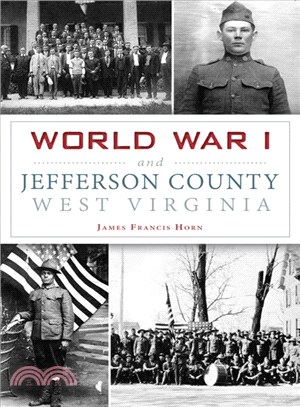
Fifty years after Jefferson County found itself wedged between the Union and the Confederacy, President Woodrow Wilson declared war on Germany and the Central Powers. Suddenly towns like Shepherdstown
Rhode Island’s contribution to World War II vastly exceeded its small size. Narragansett Bay was an armed camp dotted by army forts and navy facilities. They included the country’s most important torp
In 1917, five years after New Mexico received its statehood, the United States entered World War I. With border tensions festering between Mexico and the United States, Germany attempted unsuccessfull
During World War I, New Haven was a hive of wartime activity. The city hummed with munition production from the Winchester Repeating Arms Company, while food conservation campaigns, canning kitchens a
Upon declaration of war on April 6, 1917, Redlands mobilized immediately. The local National Guard Company G departed on April 4 to Arcadia and quickly relocated to San Diego. Residents worked to esta
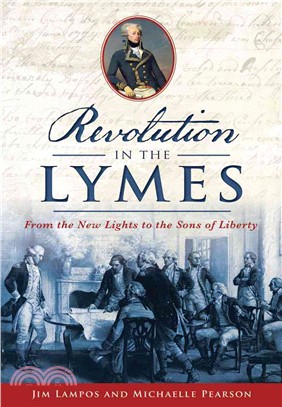
The Revolutionary War in the Lymes started as a rebellion of ideas. From its origins in the Cromwellian Saybrook Colony, Lyme (today’s Lyme, Old Lyme, East Lyme and Salem) prospered under the free han
In December 1780, former Quaker turned general Nathanael Greene took command of the entire Southern Department. He reported only to George Washington himself. Leadership of the southern states to that
In 1776, Delaware declared independence from both England and Pennsylvania. Originally known as the Three Lower Counties of Pennsylvania, the First State was instrumental in the fight to form a new re
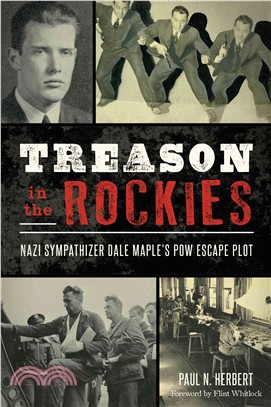
Harvard honor alumnus Dale Maple had a promising future, but his obsession with Nazi Germany led to his downfall. Classmates often accused him of pro-Nazi sentiments, and one campus organization even
Niagara Falls, both a natural wonder and a tourist destination, played a prominent role on the homefront during the Second World War. Many men and women worked diligently stateside in wartime industri
Despite Kentucky’s aim to keep a neutral position in the Civil War and Paducah’s Confederate tendencies, the Union captured the town soon after Confederate troops occupied Columbus. As a result, the T
During the 1860s, the Missouri River served as a natural highway, through snags and rapids, from St. Louis to Fort Benton for steamboats bringing Yankees and Rebels and their families to the remote Mo
In the early morning of September 8, 1755, a force of French Regulars, Canadians and Indians crouched unseen in a ravine south of Lake George. Under the command of French general Jean-Armand, Baron de