Although the era of European colonialism has long passed, misgivings about the inequality of the encounters between European and non-European languages persist in many parts of the postcolonial world.
Although the era of European colonialism has long passed, misgivings about the inequality of the encounters between European and non-European languages persist in many parts of the postcolonial world.
How might the pornographic be associated with Brecht's and Benjamin's media theories? How are Foucault's and Deleuze's writings on visibilities "postcolonial"? What happens when Ranciere's discussions
How might the pornographic be associated with Brecht's and Benjamin's media theories? How are Foucault's and Deleuze's writings on visibilities "postcolonial"? What happens when Ranciere's discussions
What is the sentimental? How can we understand it by way of the visual and narrative modes of signification specific to cinema "and" through the manners of social interaction and collective imagining
What is the sentimental? How can we understand it by way of the visual and narrative modes of signification specific to cinema "and" through the manners of social interaction and collective imagining
Martin Heidegger once wrote that the world had, in the age of modern science, become a world picture. For Rey Chow, the world has, in the age of atomic bombs, become a world target, to be attacked onc
Martin Heidegger once wrote that the world had, in the age of modern science, become a world picture. For Rey Chow, the world has, in the age of atomic bombs, become a world target, to be attacked on
In late-capitalist Western society, cross-ethnic cultural transactions are an inevitable daily routine. Yet, according to acclaimed cultural critic Rey Chow, the notion of ethnicity as it is currently
Repositioning critical approaches to race, multiculturalism, and ethnicity, Chow (humanities, Brown U., Providence, RI) engages with the works of Foucault, Max Weber, Derrida, and others. The title pu
In Ethics after Idealism, Rey Chow explores once again the issue of cultural otherness that has been central to her work. She argues that at a time when cultural identity has become imbricated with th
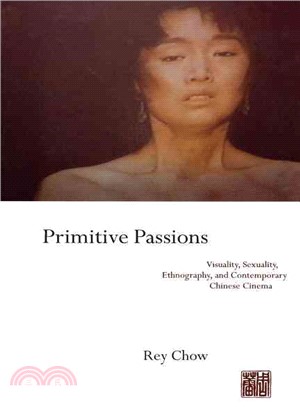
Chow situates contemporary Chinese film within the broad context of Chinese history and culture, giving readers a glimpse of the unique shared identity that characterizes the current crop of outstandi
"... this is no doctrinaire tract but rather a concerted attempt to look at important cultural problems from a fresh perspective.... Chow's book is an excellent example of its type."—Discourse & S