The forces of the East India Company were unique. Although the private army of a commercial organization, by the turn of the 19th century 'John Company' had a strong and disciplined army, larger than
In 2006 the title 'Highlanders' finally disappeared from the British Army's list of infantry regiments after nearly 270 years. Throughout this period Scottish Highland units distinguished themselves i
In August 1644, at the height of the First English Civil War (1642-1646), John Graham, the Marquis of Montrose, raised the standard of Royalist rebellion in Scotland. In a single year he won a string
Osprey's study of the decisive battle of the French and Indian War (1754-1763). ‘What a scene!’ wrote Horace Walpole. ‘An army in the night dragging itself up a precipice by stumps of trees to assault
Osprey's study of the most important battle of the Jacobite Risings (1688-1746). The final demise of Jacobitism amid the slaughter of the Highland clans on a cold and damp Culloden Moor in April 1746
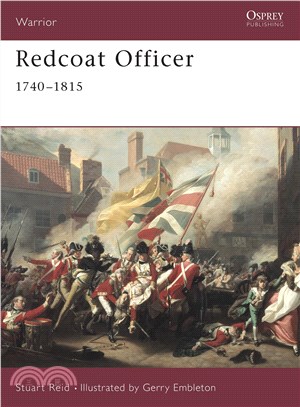
The commissioned officer ranks in the British Army from 1740-1815 were almost entirely composed of the affluent and educated - the sons of the landed gentry, the wealthy, and other professional people
In August 1745 Charles Edward Stuart, the 'Young Pretender', landed in Scotland and sparked the Second Jacobite Rising. The Jacobite forces seized Perth, then Edinburgh, where they proclaimed the Youn