About the disciple known as Doubting Thomas, everyone knows at least this much: he stuck his finger into the risen Jesus' wounds. Or did he? A fresh look at the Gospel of John reveals how little we ma
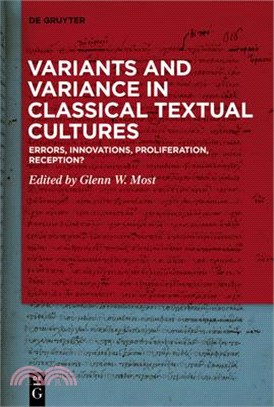
Until the modern period, the reproduction of written texts required manual transcription from earlier versions. This cumbersome process inevitably created errors and made it increasingly difficult to
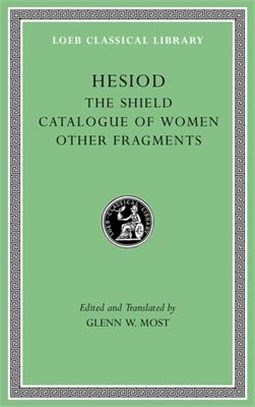
This volume, which completes the new Loeb Classical Library edition of Hesiod, contains The Shield and extant fragments of other poems, including the Catalogue of Women, that were attributed to Hesiod
Hesiod describes himself as a Boeotian shepherd who heard the Muses call upon him to sing about the gods. His exact dates are unknown, but he has often been considered a younger contemporary of Homer.
Hesiod describes himself as a Boeotian shepherd who heard the Muses call upon him to sing about the gods. His exact dates are unknown, but he has often been considered a younger contemporary of Homer.
Hesiod describes himself as a Boeotian shepherd who heard the Muses call upon him to sing about the gods. His exact dates are unknown, but he has often been considered a younger contemporary of Homer.
This important work now appears in its first English translation. The Genesis of Lachmann's Method examines the origin, development, and validity of Lachmann's model as well as its association with La
Volume VI of the nine-volume Loeb edition of Early Greek Philosophy includes the later Ionian and Athenian thinkers Anaxagoras, Archelaus, and Diogenes of Apollonia, along with chapters on early Greek
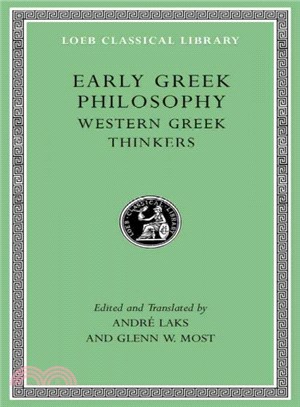
The fragments and testimonia of the early Greek philosophers (often labeled the Presocratics) have always been not only a fundamental source for understanding archaic Greek culture and ancient philoso
The fragments and testimonia of the early Greek philosophers (often labeled the Presocratics) have always been not only a fundamental source for understanding archaic Greek culture and ancient philoso
The fragments and testimonia of the early Greek philosophers (often labeled the Presocratics) have always been not only a fundamental source for understanding archaic Greek culture and ancient philoso
The fragments and testimonia of the early Greek philosophers (often labeled the Presocratics) have always been not only a fundamental source for understanding archaic Greek culture and ancient philoso
The fragments and testimonia of the early Greek philosophers (often known as the pre-Socratics) have always been not only a fundamental source for understanding archaic Greek culture and ancient philo
The fragments and testimonia of the early Greek philosophers (often known as the pre-Socratics) have always been not only a fundamental source for understanding archaic Greek culture and ancient philo
The fragments and testimonia of the early Greek philosophers (often known as the pre-Socratics) have always been not only a fundamental source for understanding archaic Greek culture and ancient philo
The fragments and testimonia of the early Greek philosophers (often known as the pre-Socratics) have always been not only a fundamental source for understanding archaic Greek culture and ancient philo
Homer in Print traces the print transmission and literary reception of the Iliad and the Odyssey from the fifteenth through the twentieth century. Over 175 mini essays provide new details of each incl
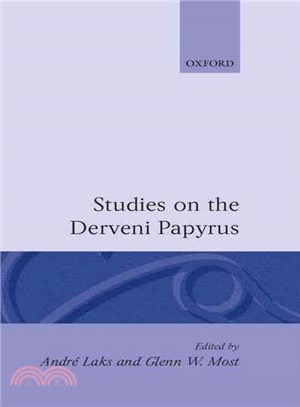
The Derveni Papyrus was discovered earlier this century and is the oldest literary papyrus ever found. This book offers the first full and reliable translation of the text, a range of articles by lead
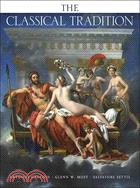
How do we get from the polis to the police? Or from Odysseus’ sirens to an ambulance’s? The legacy of ancient Greece and Rome has been imitated, resisted, misunderstood, and reworked by every culture
How do we get from the polis to the police? Or from Odysseus’ sirens to an ambulance’s? The legacy of ancient Greece and Rome has been imitated, resisted, misunderstood, and reworked by e
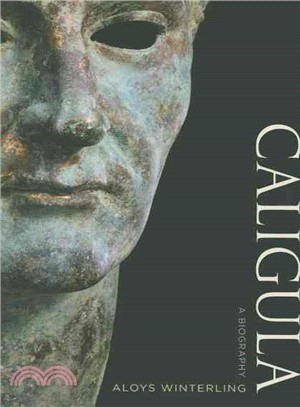
The infamous emperor Caligula ruled Rome from A.D. 37 to 41 as a tyrant who ultimately became a monster. An exceptionally smart and cruelly witty man, Caligula made his contemporaries worship him as a
Greek Tragedies, Volume I contains Aeschylus’s “Agamemnon,” translated by Richmond Lattimore; Aeschylus’s “Prometheus Bound,” translated by David Grene; Sophocles’s “Oedipus the King,” translated by D
Greek Tragedies, Volume I contains Aeschylus’s “Agamemnon,” translated by Richmond Lattimore; Aeschylus’s “Prometheus Bound,” translated by David Grene; Sophocles’s “Oedipus the King,” translated by D
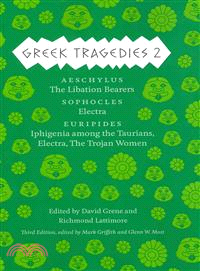
Greek Tragedies, Volume II contains Aeschylus’s “The Libation Bearers,” translated by Richmond Lattimore; Sophocles’s “Electra,” translated by David Grene; Euripides’s “Iphigenia among the Taurians,”
Greek Tragedies, Volume II contains Aeschylus’s “The Libation Bearers,” translated by Richmond Lattimore; Sophocles’s “Electra,” translated by David Grene; Euripides’s “Iphigenia among the Taurians,”
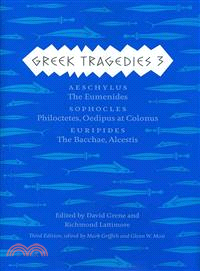
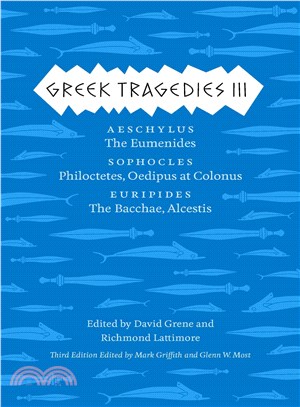
Greek Tragedies, Volume III contains Aeschylus’s “The Eumenides,” translated by Richmond Lattimore; Sophocles’s “Philoctetes,” translated by David Grene; Sophocles’s “Oedipus at Colonus,” translated b
Greek Tragedies, Volume III contains Aeschylus’s “The Eumenides,” translated by Richmond Lattimore; Sophocles’s “Philoctetes,” translated by David Grene; Sophocles’s “Oedipus at Colonus,” translated b
Aeschylus II contains “The Oresteia,” translated by Richmond Lattimore, and fragments of “Proteus,” translated by Mark Griffith. Sixty years ago, the University of Chicago Press undertook a momentous
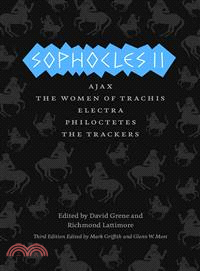
Sophocles II contains the plays “Ajax,” translated by John Moore; “The Women of Trachis,” translated by Michael Jameson; “Electra,” translated by David Grene; “Philoctetes,” translated by David Grene;
Euripides IV contains the plays “Helen,” translated by Richmond Lattimore; “The Phoenician Women,” translated by Elizabeth Wyckoff; and “Orestes,” translated by William Arrowsmith. Sixty years ago, th
Euripides V includes the plays “The Bacchae,” translated by William Arrowsmith; “Iphigenia in Aulis,” translated by Charles R. Walker; “The Cyclops,” translated by William Arrowsmith; and “Rhesus,” tr
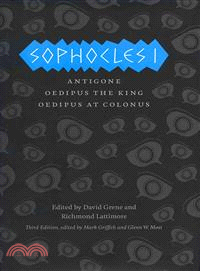
Sophocles I contains the plays “Antigone,” translated by Elizabeth Wyckoff; “Oedipus the King,” translated by David Grene; and “Oedipus at Colonus,” translated by Robert Fitzgerald. Sixty years ago, t
Sophocles II contains the plays “Ajax,” translated by John Moore; “The Women of Trachis,” translated by Michael Jameson; “Electra,” translated by David Grene; “Philoctetes,” translated by David Grene;
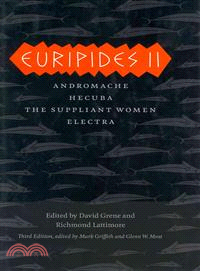
Euripides II contains the plays “Andromache,” translated by Deborah Roberts; “Hecuba,” translated by William Arrowsmith; “The Suppliant Women,” translated by Frank William Jones; and “Electra,” transl
Euripides I contains the plays “Alcestis,” translated by Richmond Lattimore; “Medea,” translated by Oliver Taplin; “The Children of Heracles,” translated by Mark Griffith; and “Hippolytus,” translated
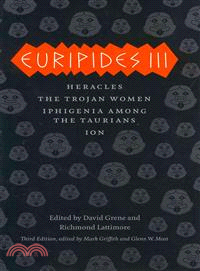
Euripides III contains the plays “Heracles,” translated by William Arrowsmith; “The Trojan Women,” translated by Richmond Lattimore; “Iphigenia among the Taurians,” translated by Anne Carson; and “Ion
Euripides IV contains the plays “Helen,” translated by Richmond Lattimore; “The Phoenician Women,” translated by Elizabeth Wyckoff; and “Orestes,” translated by William Arrowsmith. Sixty years ago, th
Euripides V includes the plays “The Bacchae,” translated by William Arrowsmith; “Iphigenia in Aulis,” translated by Charles R. Walker; “The Cyclops,” translated by William Arrowsmith; and “Rhesus,” tr
Sophocles I contains the plays “Antigone,” translated by Elizabeth Wyckoff; “Oedipus the King,” translated by David Grene; and “Oedipus at Colonus,” translated by Robert Fitzgerald. Sixty years ago, t