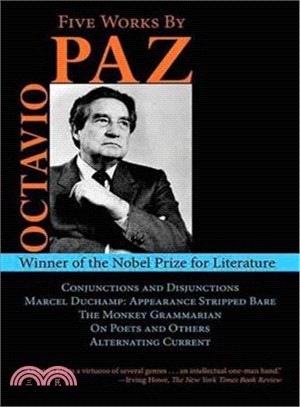
In its front-page review of Alternating Current, The New York Times Book Review called Octavio Paz “an intellectual literary one-man band” for his ability to write incisively and with dazzling origina
In Conjunctions and Disjunctions, Octavio Paz offers what he calls his ?rough draft” for a history of man, which is a history of human nature rather than of men or of cultures and civilizations. For P
Octavio Paz claims in this essential work that the two painters who had the greatest influence on the twentieth century were Pablo Picasso and Marcel Duchamp. If that conjunction surprises at first, P
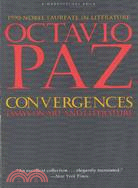
One of the great thinkers of the twentieth century has some of his finest art, culture and literary criticism collected here for the first time. A Nobel laureate, Octavio Paz’s lucid poetry has been t
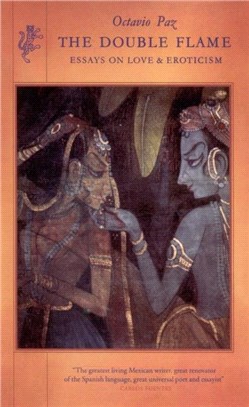
"Brimming with insight, thoughtfulness, and sincerity . . . a poetic road map to the past, present, and future of love" is how Kirkus Reviews praised The Double Flame, Nobel Laureate Octavio Paz's exp
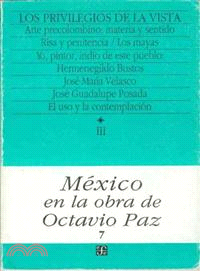
Este volumen contiene una de las preocupaciones cardinales de Octavio Paz (1914-1998) en su reflexion sobre el mundo: las sociedades primitivas, los mitos, el amor y el principio del placer en Occiden
*注意:此書為POD (Print on Demond)少量印製Octavio Paz was born in Mexico City in 1914 to a family of Spanish and native Mexican descent. He was the author of more than twenty-five books of poetry and prose. In
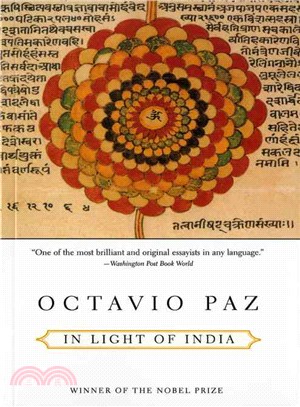
“One of the most brilliant and original essayists in any language” (Washington Post Book World) reflects on the six years he spent in India as Mexican ambassador-and reveals how the people and culture
Ensayos varios, articulos, notas y poemas sobre la el arte moderno. Apasionado de las artes plasticas, Paz nos revela su itinerario como espectador y apreciador del arte. Autores diversos son objeto d
Engrossing essays that reflect the author’s vast and subtle knowledge of the world. Topics range from the religious rites of the Aztecs to modern american painting, from Eastern art and religio
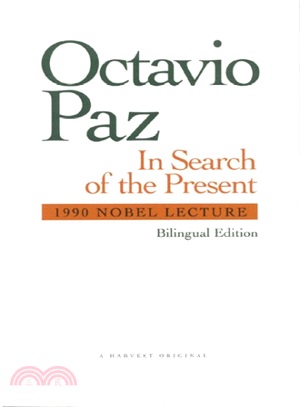
The speech delivered by Paz in acceptance of the 1990 Nobel Prize for Literature, in which he discusses gratitude, separateness, and modernity. Published in a handsome bilingual edition. Translated by
This book is in part an exploration of Paz's native Mexico and also a study of relations between language and the poet, reality and language, and the poet and history.
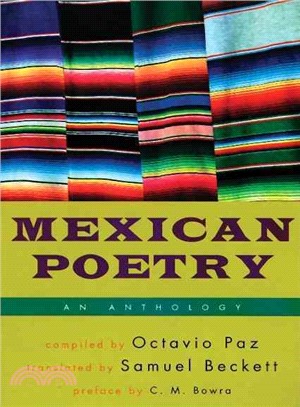
The renowned Mexican poet and critic Octavio Paz assembled this important anthology—the first of its kind in English translation—with a keen sense of what is both representative and unive
Los privilegios de la vista tomo III-1, incluye titulos como "Arte antiguo y moderno" y "Arte del siglo XX". En si la obra es una recopilacion de textos referentes al arte precolombino, asi como al ar
Written with a poet's sensibility and a diplomat's sense of history, these essays view a contemporary world poised between the upheaval of the 1960s and the uncertainties of the 1980s. "Essay
Octavio Paz has long been acknowledged as Mexico's foremost writer and critic. In this international classic, Paz has written one of the most enduring and powerful works ever created on Mexico and it
Configurations was his first major collection to be published in this country, and includes in their entirety Sun Stone (1957) and Blanco (1967). Paz himself translated many of the poems from the Span
A Tale of Two Gardens collects the poetry from over 40 years of Nobel Prize winner Octavio Paz's many and various commitments to India - as Mexican ambassador, student of Indian philosophy, and above
The difficulty (and necessity) of translation is concisely described in Nineteen Ways of Looking at Wang Wei, a close reading of different translations of a single poem from the Tang Dynasty—from a tr
The Nobel Prize?winning poet and man of letters Octavio Paz was also a brilliant reader of other writers, and this book selects his best critical essays from over three decades. In the sixteen pieces
In 1990, the Swedish Academy awarded Octavio Paz the Nobel Prize in Literature “for impassioned writing with wide horizons, characterized by sensuous intelligence and humanistic integrity.” Paz is “a
Octavio Paz has written one of the most enduring and powerful works ever created on Mexico and its people, character, and culture. Compared to Ortega y Gasset's The Revolt of the Masses for its trench
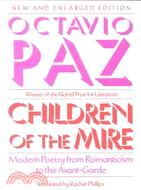
In seven elegant essays that range across centuries and literatures, Paz offers his thoughts on how modern poetry came to be, what makes it “modern,” and what it may become. Translated by
Presented in Eliot Weinberger's excellent new translation with the Spanish texts en face, this is the 1957 poem "that definitively established Paz as a major international figure" (Sagetrieb). Writte