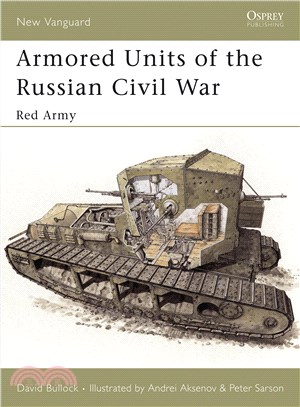
By 1920 the Red Army fielded an overwhelming array of armored cars and armored trains, while tank detachments had begun forming in earnest. These armored units played an important part in consolidatin
The concept of the Main Battle Tank emerged from the Centurion Universal tank that was developed at the end of World War II. Development of its successor began as early as 1951. The Chieftain incorpor
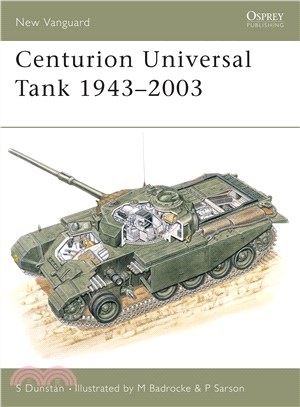
From 1943 the British began the design of a tank that bore distinct similarities to the German Panther tank. Designed as a Universal Tank, the design emerged in mid-1945 as the Centurion. It was last
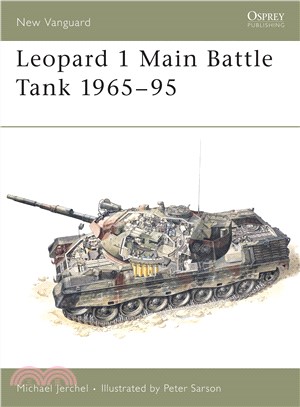
Development of the Leopard 1 can be traced back to November 1956, when the operational requirement for a new battle tank was formulated by the Federal German Armed Forces (Bundeswehr). Originally a Fr
The first attempt at mounting a flamethrower in a German tank was not the result of an engineering design process but rather occurred as a field expedient, when German troops involved in the Spanish C
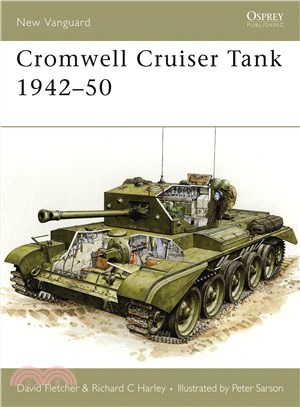
The Covenanter (which never saw active service) and Crusader Cruiser tanks were developed between 1939 and 1940. The Crusader first saw action in the North African desert in June 1941: its speed and s
The Russian BMP infantry fighting vehicle (IFV) was one of the most significant innovations in infantry tactics in the latter half of the 20th century. Built in response to the threat of nuclear warfa
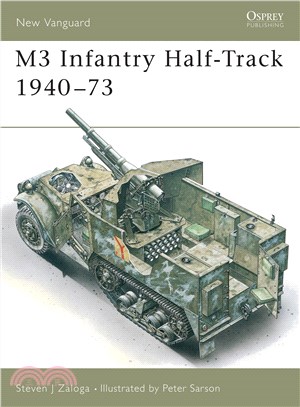
As armoured warfare tactics matured, mechanised infantry became a key ingredient in what is now called 'combined arms' doctrine. For the US Army of World War 2, the most important technical aspect of
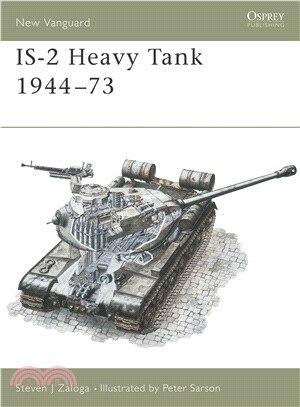
The Iosef Stalin tanks were the ultimate heavy tanks developed by the Soviet Union and were popularly called 'Victory tanks' due to their close association with the defeat of Germany in 1945. Yet in s
One of the most sophisticated armoured fighting vehicles in the world, the M2/M3 Bradley is the United States equivalent of the British Warrior, combining the role of personnel carrier with the formid
The T-34 was the most influential tank design of World War 2. When first introduced into combat in the summer of 1941, it represented a revolutionary leap forward in tank design. Its firepower, armour
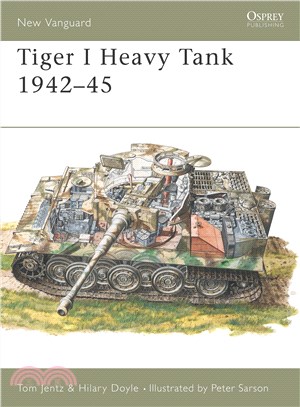
Probably the most famous tank of the World War II, the Tiger I was originally conceived in 1941 in response to the German Army’s experience in fighting British tanks and anti-tank guns in Western Euro
The workhorse of the German Army that swept across Poland, France and Russia, the Sturmgeschutz III saw service in all theatres of World War II, both in an infantry support role and as a tank destroye
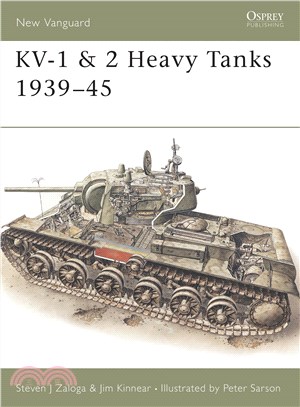
Named after Klimenti Voroshilov, the People’s Commissar for Defence, the KVs proved a nasty surprise for German tank crews during the early days of Operation Barbarossa. Although slow, they were extre
The M1 Abrams was the most radical departure in US tank design since World War II. Until the advent of the M1 in the early 1980s, the US Army had relied on the steady evolution of the M26 Pershing tan
As the Second World War dragged on, heavy German losses in armoured vehicles and tanks ensured that assault gun units had to play an increasingly vital role in supporting the beleaguered infantry and
The light tanks of the Panzerwaffe make a fascinating subject for technical and historical study. Operation Barbarossa was the light tanks' swan song: thoroughly experienced and at the peak of self-co
As World War II entered its later stages and Germany was forced increasingly onto the defensive, the need for fast-moving mobile forces lessened and the Wehrmacht required better protected and more po