The reign of Louis XIV of France had a great impact on the course of European and world military history. The years 1643 to 1715 were a defining epoch for western military, diplomatic and economic mat
With expert analysis and lively narrative, this engaging study of the Oswego raid casts light on a daring feat of arms at the height of the French and Indian War.The year 1755 saw the rivalry between
During the war for Spanish independance from Napoleonic France, Portuguese and British troops launched a daring raid into southern Spain, siezing the ancient city of Alcantara.Napoleon had left his br
In 1758, at the height of the French and Indian War, British Brigadier General John Forbes led his army on a methodical advance against Fort Duquesene, French headquarters in the Ohio valley. As his a
From the earliest English settlements the survival of the infant colonies in North America depended upon local militias. Before the mid-18th century royal troops were seldom shipped out from Britain,
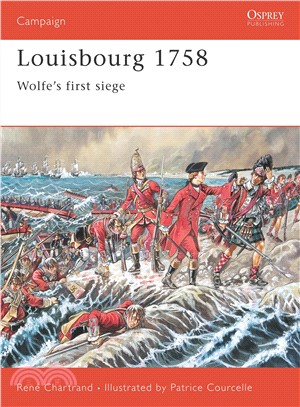
Osprey's study of James Wolfe's siege of Louisbourg during the French and Indian War (1754-1763). Louisbourg represented a major threat to Anglo-American plans to invade Canada. Bypassing it would lea
Osprey are confident in boasting that this remarkable three-part study will transform the research material available to the English-speaking student of the Peninsular War (1808-1814). Most know that
Osprey's study of one of the decisive battles of the French and Indian War (1754-1763). On 5 July 1758 General Abercromby's expedition against Fort Carillon set off from its camp. Within hours, traged
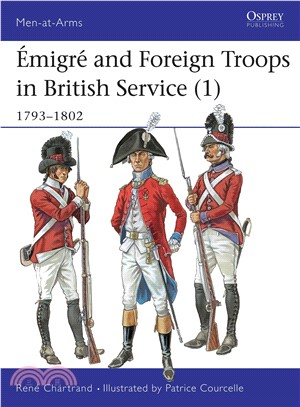
Following his study of the astonishing range of French Royalist and foreign mercenary units employed by Britain in the period 1793–1802 of the French Revolutionary Wars?(Men-at-Arms 328), the author d
In 1715 France had a sizeable overseas empire in America, Africa and Asia, its colonies garrisoned by thousands of regular officers and soldiers who belonged to the Navy's colonial establishment or by
In Louis XV's army the classification of 'French' infantry denoted troops recruited from men born and raised in France. These regiments were called, naturally enough, infanterie francaise as opposed t
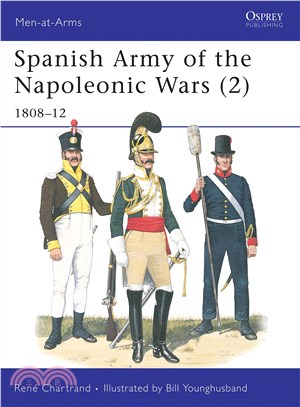
The Spanish Army was transformed during the 18th century by an influx of progressive officers who modernised and expanded it. It was closely modelled on the French armies of Louis XIV and Louis XV in
In 1884 the French novelist Alexandre Dumas published The Three Musketeers, followed by Twenty Years After (1845) and The Vicomte de Bragelonne: Ten Years Later (1847-50). This trilogy of works, repro
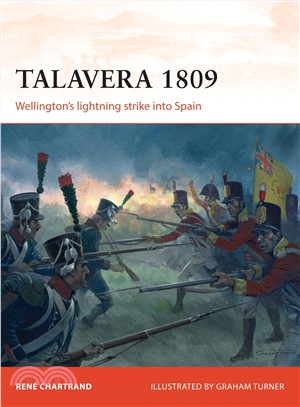
The battle of Talavera in 1809 was one of the major battles of the Peninsular War and Arthur Wellesley's first victory in Spain itself, following which he was created Viscount Wellington of Talavera a
When war broke out between the United States and Great Britain in 1812, neither side was prepared for the conflict, as evidenced by their respective fortifications. The most sophisticated and modern f
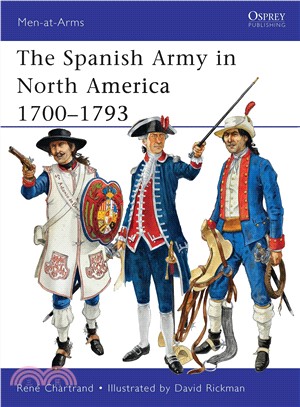
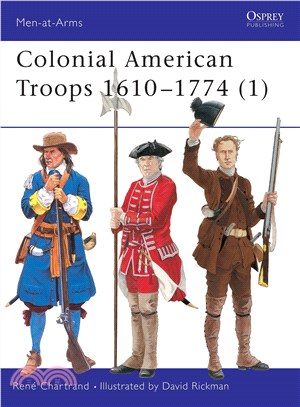
A classic Men-at-Arms title detailing a major chapter in American military history. North American colonial history can broadly be divided into 'New France', 'New England' and 'New Spain. The latter c
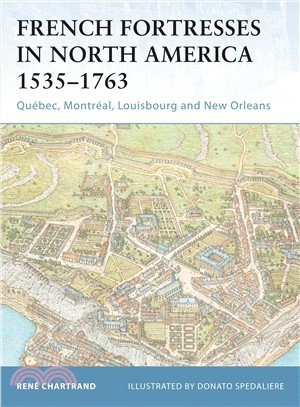
The second in a two-volume study of forts in colonial North America, this title offers a detailed look at various types of fortifications built between the times of the earliest British settlements in
"New France" consisted of the area colonized and ruled by France in North America from the 16th to the 18th centuries. This title, which follows on from Fortress 27: French Fortresse
"New France" consisted of the area colonized and ruled by France in North America from the 16th to the 18th century. At its peak in the early 18th century its territory was huge, stretching from Newfo
In 1914 with a regular army of only 3,110 men Canada was ill-prepared to enter World War I (1914-1918). Yet, in a display of incredible unanimity thousands of young Canadians volunteered to fight for
After Spain declared war against Britain on 21 June 1779 during the American Revolutionary War (1775–1783), a siege by land and sea was deployed against Gibraltar. For four years the garrison of Gover
Following the discovery of America by Columbus in 1492, European colonists brought their system of fortification to the New World in an attempt to ensure their safety and consolidate their conquests.
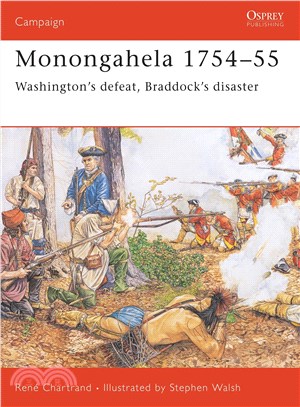
Osprey's examination of one of the key campaigns of the French and Indian War (1754-1763). On 9 July 1755 amid the wilderness of North America, Britain suffered one of the most humiliating defeats in
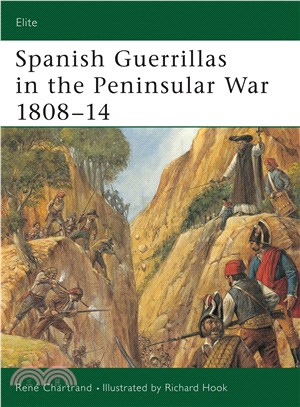
Constant Spanish guerrilla activity so drained the resources and diverted the attention of the French military that Wellington was able to advance against and overcome a numerically superior enemy. So
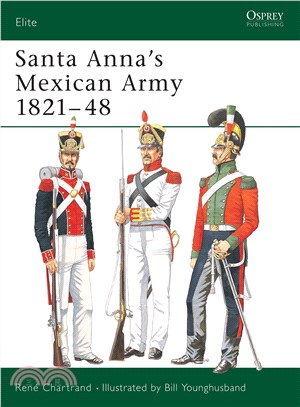
Osprey's examination of the Mexican Army of Santa Anna, from 1821 to 1848. Detailed information on the Mexican Army which fought the Texans in the Battle of the Alamo (1836) and the US Army in its fir
The commanders who led the opposing armies of the American War of Independence (1775–1783) came from remarkably different backgrounds. They included not only men from Britain and America, bu
This volume is the second half of the story of the French artillery during the Revolutionary and Napoleonic Wars. It covers the howitzers, mortars and large siege (16- and 24-pdrs) and garrison (8- an
As a young gunner, Napoleon Bonaparte was trained in one of Europe’s finest artillery arms. Both the technological sophistication of their weaponry and the skill of their gunners was largely the resul
From the earliest English settlements the survival of the infant colonies in North America depended upon local militias. Throughout the 17th and most of the 18th century royal troops were seldom shipp
From the earliest English settlements the survival of the infant colonies in North America depended upon local militias. Throughout the 17th and early 18th centuries the burden of successive wars with
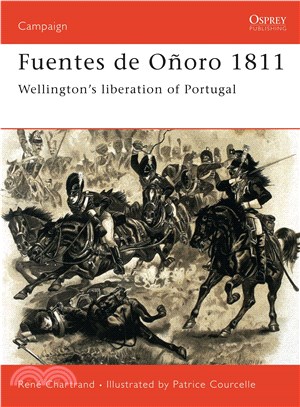
This Osprey title examines the crucial campaign culminating in the hard-fought battle that finally drove the French from Portugal during the Napoleonic Wars (1799-1815). In October 1810 the Allied pos
Canada was the first Commonwealth country to send troops to Britain in 1939. During 1939-45 hundreds of thousands of Canadians - more than 40 per cent of the male population between the ages of 18 and
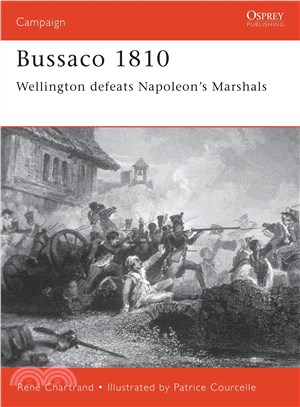
This Osprey title details the gruelling Bussaco campaign of the Napoleonic Wars (1799-1815), as French attempts to subdue Portugal reached their climax. By 1810, Napoleon reigned supreme over most of
This remarkable three-part study will transform the research material available to the English-speaking student of the Peninsular War (1808-1814). Most know that Wellington's Portuguese troops were pr
Osprey's examination of the first of Sir Arthur Wellesley's string of victories in the Peninsular War (1807-1814). On 2 August 1808, a British army of 14,000 men began landing north of Lisbon under th
Osprey are confident in boasting that this remarkable three-part study will transform the research material available to the English-speaking student of the Peninsular War (1808-1814). Most know that
The French 'invasion by stealth' of her uneasy ally Spain, and the final proclamation of Napoleon's brother Joseph as king, led to the spontaneous outbreak of a war of resistance in May 1808 that woul
Following the Revolution in 1789, members of the aristocracy were increasingly persecuted, and many of them fled abroad. These exiles became known collectively as 'emigres', and despite initial confus