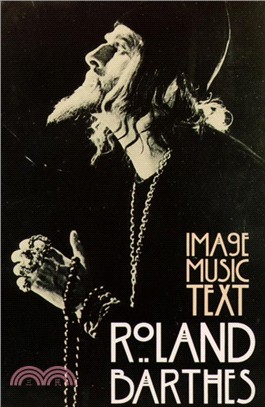
These essays, as selected and translated by Stephen Heath, are among the finest writings Barthes ever published on film and photography, and on the phenomena of sound and image. The classic pieces "In
Roland Barthes was one of the most widely influential thinkers of the 20th Century and his immensely popular and readable writings have covered topics ranging from wrestling to photography. The semiot
In "The Preparation of the Novel," a collection of lectures delivered at a defining moment in Roland Barthes's career (and completed just weeks before his death), the critic spoke of his struggle to d
Focusing on five texts representing different living spaces and their associated ways of life--including Robinson Crusoe and The Magic Mountain--a series of lectures explores solitude and the degree o
In this magnificent collection of essays, Barthes explores the myths of mass culture taking subjects as diverse as wrestling, films, plastic and cars, deciphering the symbols and signs within familiar
‘May be the most detailed, painstaking anatomy of desire that we are ever likely to see or need again... An ecstatic celebration of love and language’ Washington PostThe language we use when we are in
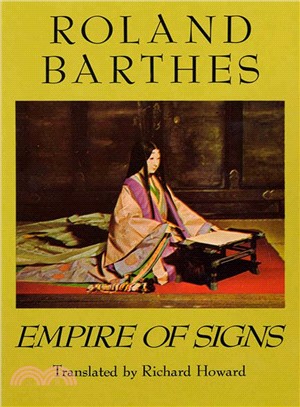
With this book, Barthes offers a broad-ranging meditation on the culture, society, art, literature, language, and iconography--in short, both the sign-oriented realities and fantasies--of Japan itsel
"In his Course in General Linguistics, first published in 1916, Saussure postulated the existence of a general science of signs, or Semiology, of which linguistics would form only one part. Semiology,
The essays in this volume were written during the years that its author's first four books were published in France. They chart the course of Barthe's criticism from the vocabularies of existentialism
Examines the themes of presence and absence, the relationship between photography and theatre, history and death. This title offers an investigation into the nature of photographs.
The Rustle of Language is a collection of forty-five essays, written between 1967 and 1980, on language, literature, and teaching--the pleasure of the text--in an authoritative translation by Richard
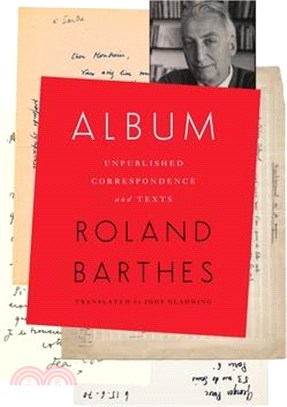
Album provides an unparalleled look into Roland Barthes's life of letters. It presents a selection of correspondence, from his adolescence in the 1930s through the height of his career and up to the l
Last season, Seagull Books published the first three volumes in a new series collecting essays and interviews by the late French thinker Roland Barthes. This season they’ll bring the five-volume set t
Last season, Seagull Books published the first three volumes in a new series collecting essays and interviews by the late French thinker Roland Barthes. This season they’ll bring the five-volume set t
Roland Barthes, whose centenary falls in 2015, was a restless, protean thinker. A constant innovator, often as a daring smuggler of ideas from one discipline to another, he first gained an audience wi
Roland Barthes, whose centenary falls in 2015, was a restless, protean thinker. A constant innovator, often as a daring smuggler of ideas from one discipline to another, he first gained an audience wi
Roland Barthes, whose centenary falls in 2015, was a restless, protean thinker. A constant innovator, often as a daring smuggler of ideas from one discipline to another, he first gained an audience wi
A Lover’s Discourse, at its 1978 publication, was revolutionary: Roland Barthes made unprecedented use of the tools of structuralism to explore the whimsical phenomenon of love. Rich with refer
This book brings together the great majority of Barthes’s interviews that originally appeared in French in Le Figaro Litteraire, Cahiers du Cinema, France-Observateur, L'Express, and elsewhere. Barthe