Provides an overview of Australia, discussing such topics as its geography, history, government, indigenous peoples, plants and animals, holidays, and symbols.
When living things die, they still have energy and nutrients in their bodies. The leftover energy and nutrients are used by other living things. Nothing is wasted in nature. Living things that eat dea
Introduces patterns and progression through presenting sets of things from the natural world and asking readers identify the characteristics that they share in order to complete the set.
Introduces the different qualities and aspects of living things, including people, other animals, and plants, and covering such topics as breathing, feeding, energy, growth, locomotion, and reproducti
Baby animals must know how to stay alive. The most important things every baby needs to know is how to find food and how to avoid predators. Baby predators wrestle and fight each other as a way of lea
Children will be amazed by images of many kinds of baby carnivores that belong to a group of mammals with sharp teeth and claws. Fascinating text explains how baby carnivores are cared for by their mo
With the help of this book, children can write a book about different countries or concentrate on one country. Children will learn how to draw maps showing the continent on which the country is locate
Describes how organisms obtain food, discussing animals that are herbivores, carnivores, or omnivores, how food chains work, the function of scavengers in nature, and the food habits of humans.
This book shows children how past communities were different from those of today by pairing modern photographs with illustrations of life in pioneer times. Topics include malls and general stores, fam
The everyday life of the modern Japanese people is highlighted along with traditional customs, such as the tea ceremony, and modern leisure activities, such as manga and karaoke, and the way of life o
"The book starts with the stages of metamorphosis from egg to worm-like caterpillar to pupa, and finally, to a magnificent butterfly. It then introduces some caterpillars and butterflies and asks chi
Describes the homes that different kinds of animals live in, including a bear's cave, a raccoon's den in a hollow log, a squirrel's nest, a prairie dog's burrow, and a bee's hive.
Provides an overview of Native Americans before their contact with the Europeans, discussing the shelter, food, clothing, tools, and activities of tribes in such regions as the Eastern Great Lakes, th
Describes the homes that different kinds of animals live in, including a bear's cave, a raccoon's den in a hollow log, a squirrel's nest, a prairie dog's burrow, and a bee's hive.
This book teaches children about mountains, volcanoes, coasts, valleys, islands, caves, and canyons. For their own books, suggestions for research will begin with the landforms around the children's h
"Animals live in many kinds of habitats, located in different parts of the world. This book compares and contrasts these habitats and encourages students to learn how animals have adapted to where the
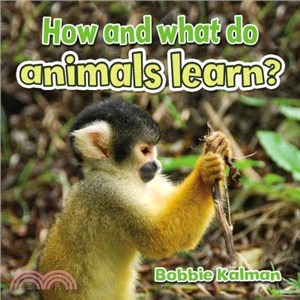
"This fascinating book explains that some animals must learn the basics of staying alive from their mothers, while others know how to survive without being taught. Students will discover how some bird
"People have learned a lot from animals and copied many of their ways of surviving. This interesting book details many, often surprising, examples: bird flight and airplanes; defensive equipment such
Describes the difference between man-eating and plant-eating animals, the kinds of foods that they eat, and the different body parts they use to obtain food.
Describes the different ways in which animals move, including the flight of birds, the climbing behavior of monkeys, and the migration of whales from cold to warm waters.
Children will learn about endemic animals, which can only be found on certain islands. The amazing photographs show the land and water habitats of islands such as Galapagos, Madagascar, Sumatra and Bo
Children will be intrigued by photographs of different kinds of rodentsfrom cute baby chipmunks to chubby capybaras. Easy-to-understand text explains in which habitats rodents live and how their babie
Children will learn about river habitats and the animals that live in them and along their banks. Baby beavers, crocodiles, brown bears, otters, swans, geese, tigers, and hippos are some of the animal
Close-up images of baby animals highlight the basic facts about different kinds of mammals, such as hoofed mammals, elephants, rodents, rabbits, marsupials, and primates. Children will learn about the
A city is not a habitat just for peopleit's a home for animals, too! Children will recognize a lot of animals they see living in their own cities, such as all kinds of pets, raccoons, squirrels, and b
Children will find this book a lot of fun to write! After researching information about animal life, kids can pretend to interview animals about the foods they eat, the ways they move and hide, and th