The Theodor Seuss Geisel Award Winner In this Theodor Seuss Geisel Award Winner Benny and his sister Penny know it’s wrong to sneak into someone else’s backyard but their mysterious new neighbor – or
Two tiny mice give us a hugely valuable lesson in what it takes to be a leader.Geoffrey Hayes, winner of the Geisel for Benny and Penny in the Big No-No!, tells the story of two tiny mice who learn wh
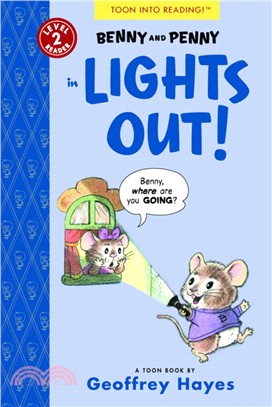
Geoffrey Hayes’ loveable mice are about to find out just how many adventures can be packed in before bedtime.It’s nearly time for lights out but Benny and Penny just can’t settle down. The moon has go
What’s that rustling in the bushes?It’s nearly time for lights-out but Benny just won’t settle down — and his sister, Penny, is becoming very annoyed. The moon has gone missing, there’s a flashlight t
Meet Patrick, a playful teddy with a sweet spot for Mama, who is put to the test when Big Bear shows up!Geisel Award-winning author Geoffrey Hayes delights young readers with these easy-to-read storie
“The combination of picture book and comic book make this an excellent transition book for…early readers” – Graphic Novel Reporter In their third adventure, Benny and Penny hide every toy and tell Co
“[S]weet, delicately colored illustrations have an old-fashioned feel that gives the familiar sibling story a timeless quality…A charmer that will invite repeated readings.” – Booklist (starred review
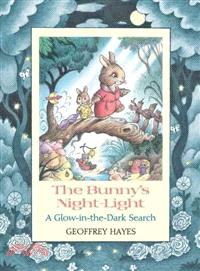
When Little Bunny can't sleep because "there's too much dark at night," it's up to Papa to find just the right night-light for his little bunny. The pair go for a walk around the woods and Papa points
"Punchy dialogue and compact sentences should make this a read-aloud delight."—Publishers Weekly"Part-slapstick, part-fairy tale, the gently humorous plot has enough twists and turns to keep newly ind
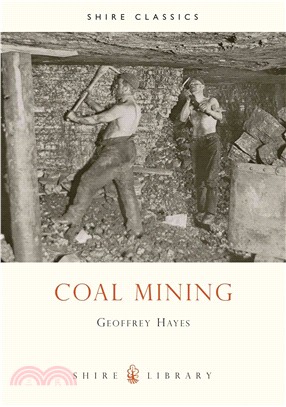
This book tells how mines evolved from simple bells pits into extensive networks of shafts and tunnels extending deep underground. It describes the methods used to drive tunnels through the rock and
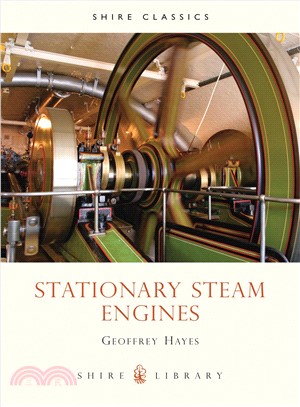
In Victorian times the steam engine was almost the only source of mechanical power. Thousands of these engines were at work driving machinery in factories and pumping stations throughout Britain, but