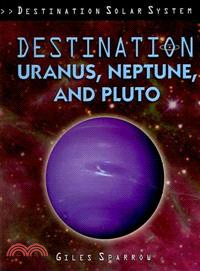
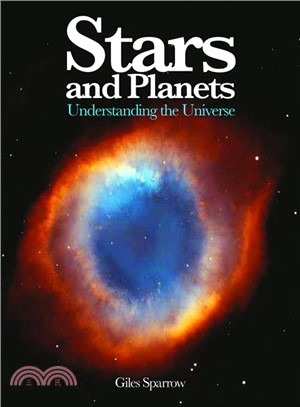
Following the ‘Big Bang’, it took the universe billions of years to evolve into the unique system of stars and planets that we know of today. Scientists have studied the planets of our solar system fo
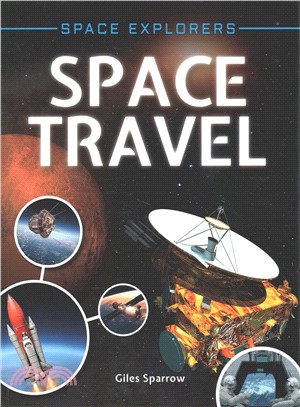
Explores the history of space travel, including the launch of Sputnik, the first manned space flights, the moon landings, and the Space Shuttle program.
Physics is the oldest and deepest of all the sciences, revealing profound truths about the way in which the Universe operates. Schrödinger’s Cat, the Higgs boson particle, string theory―concepts we’ve
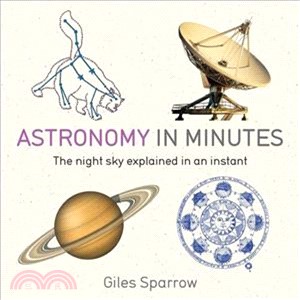
What happens when a star dies? How many asteroids are in our solar system? Can galaxies collide? What is dark energy? Astronomy in Minutes answers all these questions and more as it condenses 200 key
A virtual guide to the solar system offers speculations on what it would be like to visit the planets, reveals the processes and events that have shaped the two hundred color photographs of such subje
From the craters of the Moon to the far reaches of Orion, The Stargazer's Handbook will enable you to explore space without leaving the comforts of Earth. All you need are a pair of binoculars and a c
Through this book, students will learn about our solar system’s smallest planet. On their journey to Mercury, readers will discover Mercury’s extreme temperatures and mysterious craters. Young astrona
Offers a history of humanity's understanding of the universe, including early philosopher's cosmologies, the flat disc universe ceding to celestial spheres, and the geocentric model ceding to the heli
Within the pages of this book, students will embark on a journey to the most-visited place in our solar system: Earth’s Moon. Kids will read about the lunar crust and the fascinating theory of how the