One of the greatest thinkers of the 20th century describes a series of his encounters around the world with a wide variety of spiritual seekers. Their questions and his answers explore the nature of t
Life Ahead presents lessons that move far beyond the traditional forms of education taught in most schools and colleges. Drawn from transcripts of talks given to Indian students, the book covers a wi
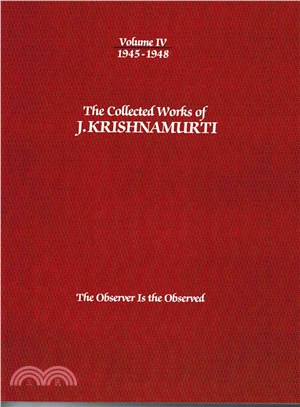
In these talks, given in Ojai and India, Krishnamurti discusses the nature of the observer. He states in the beginning, "to understand the confusion and misery that exist in ourselves, and in the worl
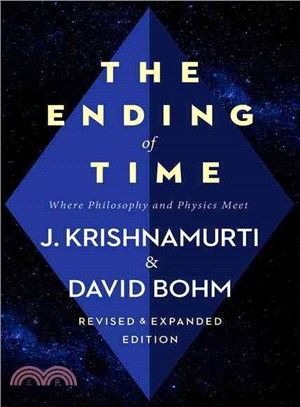
Dialogues between a spiritual leader and physicist examine psychological conflict, the importance of thought, death, senility, cosmic order, and fragmentation
Krishnamurti shows how people can free themselves radically and immediately from the tyranny of the expected, no matter what their age--opening the door to transforming society and their relationship
"This volume covers talks given in New Zealand, Ojai, New York, South America, and Mexico. Krishnamurti begins by stating ""what we call problems are merely symptoms, which increase and multiply becau
In these Talks, given in Europe, Ojai, and India, Krishnamurti addresses the need to approach our life problems in a manner that does not perpetuate fragmentation. "Though we have many problems, and e
Krishnamurti's essential message is that to find truth, we must go beyond the limits of ordinary thought. In public talks worldwide, he strove to free listeners from conventional beliefs and psycholog
Krishnamurti's essential message is that, to find truth, we must go beyond the limits of ordinary thought. In public talks worldwide, he strove to free listeners from conventional beliefs and psychol
Krishnamurti's essential message is that to find truth, we must go beyond the limits of ordinary thought. In public talks worldwide, he strove to free listeners from conventional beliefs and psycholo
During this time span, Krishnamurti gave talks in England and India. In this volume, Krishnamurti introduces the material as a form of a discussion. He asks those listening to engage in the material a