One of the century's greatest philosophers, without whom there would be no Sartre, no Foucault, no Frankfurt School, Martin Heidegger was also a man of great failures and flaws, a Faustus who made a p
Once we've terrified ourselves reading Anne Rice or Stephen King, watching Halloween or following the O. J. Simpson trial, we can rely on the comfort of our inner child or Robert Bly's bongos, an ange
Philip Hofer, who founded the Department of Printing and Graphic Arts in the Houghton Library, was a curator and collector of great zeal and singular taste. In this exhibition catalogue his successor,
This selection of lapidary nuggets drawn from 33 of antiquity’s major authors includes poetry, dialogue, philosophical writing, history, descriptive reporting, satire, and fiction—giving a glimpse at
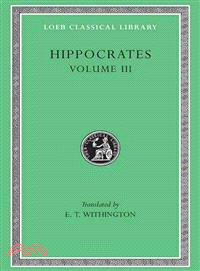
Hippocrates, said to have been born in Cos in or before 460 BCE, learned medicine and philosophy; travelled widely as a medical doctor and teacher; was consulted by King Perdiccas of Macedon and Artax
Hippocrates, said to have been born in Cos in or before 460 BCE, learned medicine and philosophy; travelled widely as a medical doctor and teacher; was consulted by King Perdiccas of Macedon and Artax
Icons and murals depicting the biblical scene of the Last Judgment adorned many Eastern-rite churches in medieval and early modern Ukraine. Dating from the twelfth to the eighteenth centuries, these i
The contents of this issue are: Susan Sontag, in memoriam; "Presentation," by Finbarr Barry Flood and Zoe S. Strother; "Restoration as recreation at the Sainte-Chapelle of Paris," by Meredith Cohen; "
Dio Cocceianus Chrysostomus, ca. 40?ca. 120 CE, of Prusa in Bithynia, Asia Minor, inherited with his brothers large properties and debts from his generous father Pasicrates. He became a skilled rhetor
Plutarch (Plutarchus), ca. 45?120 CE, was born at Chaeronea in Boeotia in central Greece, studied philosophy at Athens, and, after coming to Rome as a teacher in philosophy, was given consular rank by
This is the first volume of an anthology of Latin poetry. The two-volume anthology covers a period of four and a half centuries, beginning with the work of the mime-writer Publilius Syrus, who flouris