Melting glaciers, loss of seasonal snow, and precipitation changes pose significant risks to the stability of water resources in the South Asia region. Glaciers help to moderate river flows in the reg
The World Bank Group has made important contributions to poverty reduction in developing countries. But to stay relevant under the uncertain conditions that characterize today’s global development con
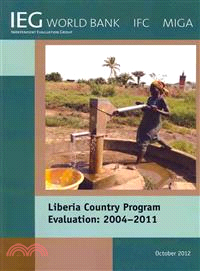
This report evaluates the outcomes of World Bank Group support to Liberia from its post-war reengagement in 2003 through 2011. The country has moved from total disarray to a solid foundation for incl
The popular grievances that have fueled the Arab Spring since 2010 demonstrate that past development paradigms have failed to achieve the inclusive and sustainable growth expected by Arab populations.
How much is a cleaner environment worth? For policy makers, that question used to go largely unanswered. Many economic activities cause environmental degradation, entailing real costs to the economy a
Stronger agricultural growth is needed to reduce poverty in Africa, yet the region continues to fall behind. During the past three decades, many traditional African export crops have lost their compet
This volume, presented by the World Bank, intends to help governments in developing countries improve their drinking water and sanitation services to households and businesses through private firms. I
The HIV/AIDS epidemic has the potential to impede and even reverse development if not addressed early enough. Poverty and income inequality have been shown to facilitate the diffusion of HIV epidemics
The aim of 'Reshaping the Future' is to draw international attention to the key role that education can play in both preventing conflict and in reconstructing post-conflict societies. The author also
This report attempts to explain the paradoxes and potential of Jamaica's economic history, and concludes that one possible explanation for Jamaica's low growth in GDP is that its GDP has been understa
At the beginning of the new century, it is clear that while individual social programs can improve people's welfare and reduce poverty, a more holistic approach is needed in order to lift more people
More children are going to school, staying in school for longer, and learning than ever before in East Asia and Pacific (EAP). During the past 50 years, a group of countries in EAP have successfully t
At the turn of the millennium, the world experienced a dramatic increase in funding for global health programs. Competing demands for these resources meant that policymakers needed access to valid, ev
At the turn of the millennium, the world experienced a dramatic increase in funding for global health programs. Competing demands for these resources meant that policymakers needed access to valid, ev
Africa is poised on the edge of a potential takeoff to sustained economic growth. This takeoff can be abetted by a demographic dividend from the changes in population age structure. Declines in child
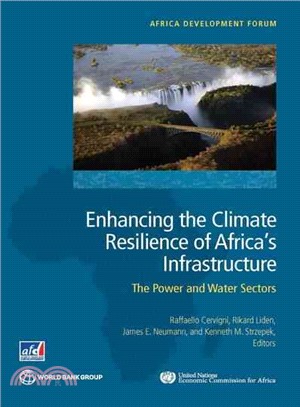
Enhancing the Climate Resilience of Africa’s Infrastructure: The Power and Water SectorsEdited by: Raffaello Cervigni, Rikard Liden, Jim Neumann, Kenneth StrzepekAbstract To sustain Africa’s growth, a
One of a series of pocket-sized books that provide a quick reference to development data on different topics, 'The Little Data Book on Private Sector Development 2015' provides data for more than 20 k
Global Financial Development Report 2015 focuses on the ability of financial systems to sustainably extend the maturity of financial contracts for private agents. The challenges of extending the matur
At the turn of the millennium, the world experienced a dramatic increase in funding for global health programs. Competing demands for these resources meant that policymakers needed access to valid, ev
At the turn of the millennium, the world experienced a dramatic increase in funding for global health programs. Competing demands for these resources meant that policymakers needed access to valid, ev
At the turn of the millennium, the world experienced a dramatic increase in funding for global health programs. Competing demands for these resources meant that policymakers needed access to valid, ev
The publication presents the detailed results of the 2011 International Comparison Programme (ICP). The ICP is a worldwide statistical initiative that aims to estimate Purchasing Power Parities (PPPs)
This Toolkit provides an overall framework with practical tools and information to help policymakers design and implement corporate governance reforms for state-owned enterprises. It covers the key el
The World Bank Group is currently engaged in reflection and debate on how to improve the delivery of development support. Part of this debate concerns strengthening the knowledge agenda. The findings
One of a series of pocket-sized books that provide a quick reference to development data on different topics, 'The Little Data Book on Private Sector Development 2014' provides data for more than 20 k
This report evaluates the outcomes of World Bank Group support to Afghanistan from 2002-11. Despite extremely difficult security conditions, which deteriorated markedly after 2006, the World Bank Gro
'The Invisible Poor' seeks to raise the profile of the rural poor in Argentina, promote dialogue on rural poverty issues, provide the best currently available information about rural poverty, and offe
Over the next 25 years developing countries will move to center stage in the global economy. 'Global Economic Prospects 2007' analyzes the opportunities—and stresses—this will create. While rich and p
The theme of The World Development Report 2007 is youth - young people between the ages of 12 to 24. As this population group seeks identity and independence, they make decisions that affect not only
The theme of The World Development Report 2007 is youth - young people between the ages of 12 to 24. As this population group seeks identity and independence, they make decisions that affect not only
The 'Consulting Services Manual 2006' explains World Bank Policy Guidelines for the Employment and Use of Consultants by Bank Borrowers, and describes the correct use of the World Bank Standard Reques
The past two decades have witnessed a fundamental transformation in the structure of government across East Asia. Prior to 1990 most East Asian countries were highly centralized; today, decentralizati
The majority of the world's poor depend directly or indirectly on agriculture. Despite the strong linkages between broad-based agricultural growth and poverty reduction, international support to agric
In recent years, the focus in many developing regions is increasingly moving away from communicable disease, where as Africa continues to face a high burden of communicable disease, malnutrition, and
According to the authors of 'Zambia', poverty is on the rise in the country, its economy is not growing fast enough, the quality of economic governance is on the decline, and its public resources are
'China: Air, Land, and Water' is a further chapter in the successful and creative dialogue between the World Bank and the People's Republic of China. It focuses on how to promote both China's economic
This book analyzes the cultural heritage sector in the Middle East and North Africa region and the World Bank's policy and operational experiences in this sector over the past six years—1996 to 2001.
Tragically, mass killers are nothing new in Africa. Malaria still claims about as many African lives as AIDS, and preventable childhood diseases kill millions of others. What sets AIDS apart, however,
At the turn of the millennium, the world experienced a dramatic increase in funding for global health programs. Competing demands for these resources meant that policymakers needed access to valid, ev
Health care in India has shown remarkable improvement since the country 's independence in 1947. Doubling of longevity from 32 to 64 years, a steep fall in infant mortality and maternal mortality rate