Every year, the harmful use of alcohol kills 2.5 million people, including 320,000 young people between 15 and 29 years of age. It is the eighth leading risk factor for deaths globally, and harmful us
This Concise International Chemical Assessment Document (CICAD) provides summaries of the relevant scientific information concerning the potential effects of these chemicals upon human health and the
This report reviews the current state of noncommunicable diseases (NCDs) around the world, focusing on cardiovascular diseases, cancer, diabetes, chronic respiratory disease, and obesity. Special atte
The eHealth series is primarily meant for government ministries of health, information technology, and telecommunications, as well as others working in eHealth — academics, researchers, eHealth profes
This document is intended for use by national immunization program managers and immunization partners involved in providing implementation support to countries.The specific objectives of this guide ar
Inorganic Chromium (III) Compounds provides summaries of the relevant scientific information concerning the potential effects of these chemicals upon human health and/or the environment. Chemical safe
This report presents the recommendations of a WHO Expert Committee commissioned to coordinate activities leading to the adoption of international recommendations for the production and control of vacc
These guidelines present evidence-based recommendations and best practice statements on use of medically important antimicrobials in food-producing animals, based on the WHO list of critically importa
The Atlas project on neurological disorders aims at collecting, compiling and disseminating information on global health-care resources available to cope with the growing burden of neurological disord
This report presents the recommendations of a WHO Expert Committee commissioned to coordinate activities leading to the adoption of international recommendations for the production and control of vacc
This report presents the recommendations of a WHO Expert Committee commissioned to coordinate activities leading to the adoption of international recommendations for the production and control of vacc
This document presents the World Health Organization (WHO) Operational framework for building climate resilient health systems. The framework responds to the demand from Member States and partners for
The goal of this course is to provide participants with the foundational skills needed to begin the development, implementation and ongoing improvement of a congenital anomalies surveillance program,
The Global Antimicrobial Resistance Surveillance System (GLASS) is being developed to support the Global Action Plan on Antimicrobial Resistance and should be coordinated within the national action pl
This report presents the recommendations of a WHO Expert Committee commissioned to coordinate activities leading to the adoption of international recommendations for the production and control of vacc
This report presents the recommendations of a WHO Expert Committee commissioned to coordinate activities leading to the adoption of international recommendations for the production and control of vacc
This third edition of Guidelines for Medicine Donations has been developed by the World Health Organization in cooperation with major international agencies active in humanitarian relief and developme
This document provides interim guidance for the use of bedaquiline in conjunction with other WHO-recommended MDR-TB treatments. It also specifies the essential treatment and management conditions for
This World Health Organization publication reports on alcohol consumption, harm, and policy approaches in the European Union, using information gathered in 2011 to update key indicators on alcohol con
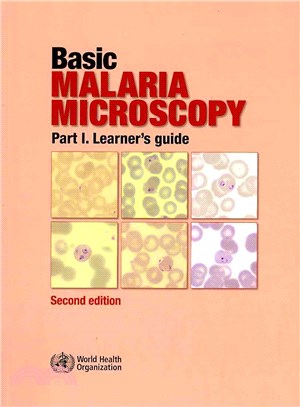
Ten brief learning units introduce clinical procedures for preparing blood films, describe operation of a compound binocular microscope, and train health workers to identify malaria in blood films fro
This report showcases the state of inequality in Indonesia, drawing from the latest available data across 11 health topics (53 health indicators), and eight dimensions of inequality.In addition to qua
This publication addresses the role of the biomedical engineer in the development, regulation, management, training, and use of medical devices.The first part of the book looks at the biomedical engin
This third edition of the WHO Guidelines for the Treatment of Malaria contains updated recommendations based on a firmer evidence base for most antimalarial drugs and in addition includes recommendati
This report presents the conclusions reached and recommendations made by the members of the WHO Study Group on Tobacco Product Regulation which dealt, respectively, with the following four themes: Nov
This report represents the conclusions of a Joint FAO/WHO Expert Committee convened to evaluate the safety of various food additives, including flavoring agents, and to prepare specifications for iden
This global status report is the second in a triennial series tracking worldwide progress in prevention and control of noncommunicable diseases (NCDs). The majority of NCDs are preventable. This repor
These guidelines were developed based on the shared experiences from and consultations with WHO Member States. A consultation on verification of measles elimination in the Western Pacific Region was h
The school-based control of schistosomiasis and soil-transmitted helminth (STH) infections is of proven cost-effectiveness. This book describes an approach in which epidemiological data are used to se
In a folder, no binding, 12 heavily laminated pages (each two-sided), present information for laboratory and field workers responsible for diagnosing malaria by Giemsa microscopy. The pages feature te
In the Eastern Mediterranean Region, the knowledge base on social determinants and how these influence health is sparse. This publication reviews the social determinants of health in seven countries o
This report on integrating mental health into primary care, which was developed jointly by the World Health Organization (WHO) and the World Organization of Family Doctors (Wonca), presents the justif
The aim of these guidelines is to provide a comprehensive range of evidence-based recommendations for interventions to be applied during the pre-, intra- and postoperative periods for the prevention o
The objective of the compendium series of innovative medical devices, assistive devices and eHealth solutions is to provide a neutral platform for technologies which are likely to be suitable for use
WHO’s Mental Health Atlas series has already established itself as the single most comprehensive and most widely used source of global information on the mental health situation. This new edition ofMe
This practical guide contains seven modules targeted at district and health facility staff. It intends to meet thedemands to improve immunization services so as to reach more infants in a sustainable
This document provides an update to the "Communicable Disease Alert and Response for Mass Gatherings: Key Considerations", July 2008. This new version builds on the expertise gained
This guide covers psychological first aid which involves humane, supportive and practical help to fellow human beings suffering serious crisis events. It is written for people who can help others who
Member States have requested guidance from the World Health Organization on the effects and safety of the use of multiple micronutrient powders for point-of-use fortification of foods consumed by preg
This study provides an approximate estimate of how much disease can be prevented by reducing the environmental risks to health. It includes a meta-synthesis of key evidence relating diseases and injur