In 1914, celebrants marked the anniversary of the founding of Belleville, Illinois, by observing the progress the city had made since it was established a hundred years before. In that time, it had be
The towns of Cave Creek and Carefree are nestled in the lush foothills of the Sonoran Desert 35 miles north of Phoenix. Theprehistoric Hohokam first inhabited the area, settling along Cave Creek and
Texas Oil and Gas documents in postcards the rapid growth of the Texas petroleum industry from its beginnings near Corsicana in the 1890s through the next several decades of oil booms throughout the s
Grand County's story begins long before the first white settlers entered the valley. The land holds ruins, artifacts, and remnants of many ancient peoples, including Ute, Navajo, Anasazi, and others.
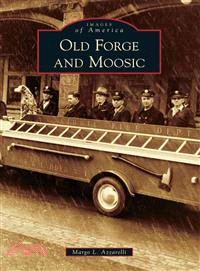
Moosic was incorporated as a borough in 1898 and was followed by Old Forge shortly thereafter in 1899; these communities became a part of the area of Lackawanna County known as the Triboro. Throughout
The history of Delhi Charter Township and the unincorporated community of Holt is remembered with historical photographs that show the changes over the years. Holt once seemed like a country town, as
Since the city's beginnings after the War of 1812, Atlanta has had a tradition of building with a regard for becoming a world-class metropolis. Before being burned by Union general William T. Sherman
Suisun, a Patwin word for "where the west wind blows," was the name given to the city and valley that flourished as a port between the vast regions of Sacramento and San Francisco. For over a thousand
Cutchogue and the neighboring waterfront hamlet of New Suffolk share a common history. Their remote location belies the fact that they witnessed events that shaped the nation's history. Among the nota
Formed in 1820, Phillips County was named for Sylvanus Phillips, an early settler; Helena, the county seat, was named for Phillip's daughter and was incorporated in 1833. Helena was a major river town
Sanibel Island was opened to homesteading in 1888, four years after the Sanibel Island Light Station was completed, and boats ranging from steamers to schooners were drawn to the islands. The islands'
Bowie, the "Little Wonder of the West," grew from a tent city to the largest town in Montague County in just one year's time. This entrepreneurial spirit led to ideas such as the Chicken and Bread Boy
D'Iberville and the community of St. Martin share more than a common origin: from their colonial beginnings they have been one, now separated only by an invisible county line. The first is named after
Dedicated exclusively to the oldest town in Kentucky, Postcard History Series: Harrodsburg and Mercer County presents what Fort Harrod looked like when it was established in 1775. High Bridge, spannin
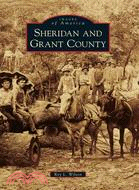
Land fever delivered people to the Sheridan area as the first settlers' idea of progress meant acquiring and improving land. In the 1820s, Pulaski and Clark Counties governed the area, followed by Sal
Everything is bigger in Texas. From ranches that cover more acres of land than Rhode Island to 10-gallon hats, monster belt buckles, and heart-attack barbecue, even the most remote corners of the stat
Samuel Heighway founded Waynesville in 1797 and thought his town would become the capital of the Northwest Territory--a dream that never materialized. However, Waynesville did grow up to become the "A
North Amherst and Cushman, villages within the town of Amherst, were settled in the early 1700s. Farms dominated the area's rolling hills, and mills lined the fast-flowing Mill River. In the 19th cent
As early as 1885, Salem Township's supply of coal attracted companies to build mines and "coal patch" towns. In 1916, Slickville was the last coal patch town built in Salem Township. When the demand f
In the late 1790s, when the first settlers arrived in Lanesville, they had a dream for a better life in which they could raise families and be part of a new and expanding country. Lanesville became a
In the winter of 1804-1805, Edward Scofield and a small group entered the township in search of a creek suitable for a mill and good land for settlement. Within a few years, Walnut Run, a tributary of
Prior to the Great Depression, coal mines and coke ovens made Scottdale the wealthiest community in Westmoreland County. Once part of a region that was known as the world's largest producer of metallu
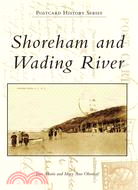
Wading River, settled by New Englanders in 1671, is reminiscent of a classic New England town with its steepled Congregational Church, village green, ancient cemetery, horse farms, and colonial homes.
In 1762, Abraham Wing led a group of Quakers to lands he had acquired on the edge of the Adirondacks. Soon, a cluster of log cabins surrounded the mills that Wing had built at the falls on the Hudson
New York's mountainous Adirondack region, once considered foreboding and impassable, has evolved during the last three centuries into a desirable place for people to live and visit. Native Americans,
Bedford Township, labeled "a most excellent township" by surveyors of the Western Reserve lands, had an abundance of hardwood forests, water for mill sites, and superb farmland. Transportation played
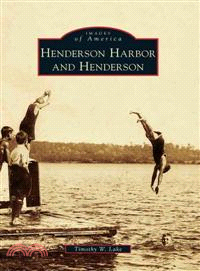
On Lake Ontario's eastern shore, surrounded by forested bluffs and deep, navigable water, Henderson Harbor and Henderson evolved into a fishing and boating paradise. The lucrative smallmouth black bas
Nipomo, Chumash for "at the foot of the hills," and Los Berros, Spanish for "watercress," comprise an important Central Coast area that is often overlooked by history. First established by Chumash Ind
In 1673, Louis Jolliet and Fr. Jacques Marquette were the first Europeans to explore the Mississippi and the Illinois River Valleys. Their explorations took them through what is now northern Illinois.
Albuquerque's response to Modernism--the architectural avant-garde of the first half of the 20th century, of which the Art Deco movement of the 1920s and 1930s is an important component--was complex a
Known as the home of the Prohibition-era Shelton Brothers Gang, the true heritage of Wayne County, Illinois, is the collective life of its ordinary citizens--their surroundings, activities, and challe
Wakeman and Florence Townships began with the American Revolution. The federal government set aside land in Ohio for people from Connecticut whose lands were destroyed by the war. These "fire sufferer
From its early founding to becoming a university town, from the interurban railroad era to the famous Little Brown Jug harness race, Delaware and Delaware County, Ohio, have many stories to tell. Pres
Thorn Township is a farming community about 30 minutes east of Columbus, Ohio; its name derived from the plentiful thorn bushes that dominate the landscape. After the Revolutionary War, people from Vi
The name Chardon, a French word meaning "thistle," was adoptedby the township and settlement of Chardon around 1812 intribute to the owner of extensive local land holdings. Peter ChardonBrooks, a weal
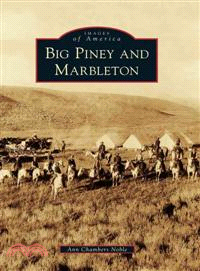
Big Piney and Marbleton are one mile apart, and attempts to combine the two towns have been unsuccessful. The area had been home to family-operated cattle ranches starting in 1878, and a year later Da
Brewton was founded by settlers in the early 1800s and was built by the lumber barons who found a wealth of trees in the area. The city is a direct travel route to and from the beaches of Alabama and
Gov. Thomas Worthington first came upon the Great Falls of the Hock-Hocking while searching for a location for a wheat and corn mill. Worthington suspected rich mineral resources lay beneath the rolli
In different times in its past, some have called Hopewell "the wonder city" or "the city that would not die." Others have called it "the wizard city," or "the city that DuPont built." "Hopewell," as s