The transition from foragers to farmers and the role of intensive rice agriculture have been among the most controversial subjects in Korean archaeology. However, the relatively high acidity of sedime
In the early sixteenth century much of West México was under the rule of the Purhépecha Empire, known to Europeans as the Tarascan Kingdom of Michuacan. Both archaeological and ethnohistorical evidenc
This volume is a product of the International Conference of Archaeological Prospection 2017 which was hosted by the School of Archaeological and Forensic Sciences at the University of Bradford. This e
This volume illustrates lamps from the Byzantine period excavated in the Holy Land and demonstrates the extent of their development since the first enclosing/capturing of light (fire) within a portabl
More than fifteen sites of either confirmed or conjectured urban status existed between the 6th and 19th centuries in the particular region of northeastern Mesopotamia, bounded by the rivers Great Zab
The Socotra archipelago lies approximately 135 nautical miles (Nm) northeast of Cape Guardafui, Somalia and 205Nm south of Ras Fartaq, Yemen. The archipelago is made up of four main islands, Socotra,
This book examines different forms of ritual activities performed in houses of Graeco- Roman Egypt. It draws on the rich archaeological record of rural housing and evidence from literature or papyrolo
The transfer, in 1981, of the town Museum collections in Sens (Yonne) to the old Archbishop’s palace required great discretion and an underground passage was planned between the two buildings. Prevent
Osaka, now a city of 19 million inhabitants, was the economic powerhouse of Japan for two thousand years and remains an important international center. In an unusual archaeological treatment of region
This well illustrated volume presents in its introduction a personal history of Daniel Schavelzon’s experience of Easter Island during his youth before collecting all the papers and work he produced i
This is the first memoir by an internationally known archaeological scientist, and one who has been particularly research active for over fifty years in the broad field of bioarchaeology. Written with
This research explores the development of the Maya writing system in Middle-Late Formative and Early Classic period (700 BC-AD 450) Mesoamerica. It seeks to correlate script development with interregi
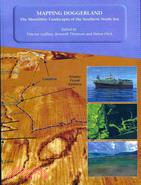
Oxbow says: Mapping Doggerland documents the methodology and results of an innovative project to investigate a large area of the Southern North Sea, submerged during the last Glacial Maximum between 1
This volume presents the proceedings of the Seventh Conference of Italian Archaeology held in Galway, Ireland, in April 2016. More than 60 papers, with contributors from the British Isles, Italy and o
Coins in Rhodes: From the monetary reform of Anastasius I until the Ottoman conquest (498 – 1522) presents the Byzantine and medieval coins collected by Greek archaeologists in Rhodes over a period of
This book addresses the rock engravings on the wonderstone hills just outside Ottosdal, North West province, South Africa. Wonderstone is remarkable rock that is smooth, shiny and very easy to mark. T
Physical Barriers, Cultural Connections: A Reconsideration of the Metal Flow at the Beginning of the Metal Age in the Alps considers the early copper and copper-alloy metallurgy of the entire Circum-
Archaeology with Art is the result of a 2013 Theoretical Archaeology Group (TAG) conference session that aimed to merge the perspectives of artists and archaeologists on making art. It explores the re
The Roman fort at Bearsden and its annexe, together with areas beyond its defences, were extensively excavated from 1973 to 1982. The report on these excavations was published in 2016. This ‘popular'
In a career spanning more than forty years Prof. Thanasis I. Papadopoulos exhibited his intensive devotion to the Bronze Age of Greece, and especially to Mycenaean Achaea (his native land), through hi
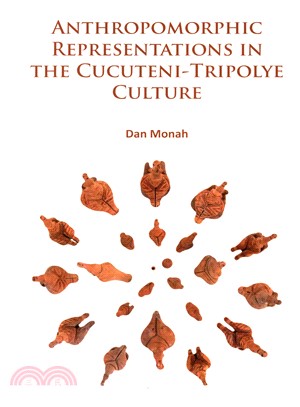
Dan Monah (11 February 1943 – 21 September 2013) was a specialist in the Neo-Eneolithic of Romania and, in particular, of the Precucuteni-Cucuteni-Tripolye cultural complex, last affiliated with the I
Professor Rodrigo de Balbin has played a major role in advancing our knowledge of Palaeolithic art, and the occasion of his retirement provides an excellent opportunity to assess the value of prehisto
The prehistoric site of Le Placard, located in Southwest France, was discovered and first explored 150 years ago at a time when prehistory was just emerging as a scientific discipline. Through this ce
Discussed here is the landscape of western Bavaria in the early-medieval period, between about 750 and 850. The title of the study derives from several indications that a noble genealogia, the Huosi,
The Nordic Bronze Age Symposium began modestly in 1977 with 13 participants, and has now expanded to over 120 participants: a tenfold increase that reflects the expanding role of Bronze Age research i
This book presents an overview of the results of the research project DESPAMED funded by the Spanish Minister of Economy and Competitiveness. The aim of the book is to discuss the theoretical challeng
These proceedings of the July 2006 seminar include 24 of the 44 oral and poster presentations. Topics (in English except where noted) include the coastal prehistory of the Red Sea Basin (including und
Cecil Torr's 19th-century studies of Rhodes, in the Greek Dodecanese, off the coast of Asia Minor, were the first and most authoritative English guides to the island's multi-layered history. Nothing a
A pioneer of the French Islamic archaeology in the Middle East, Monik Kervran (CNRS, lab The Orient & The Mediterranean) was first renowned for her excavations at Susa in Iran and the discovery of
Excavations over a period of eight years uncovered at least ten pottery kilns, waster heaps, ditches and pits, but only a few definite structures. The pottery from the site indicates a period of opera
This book details the archaeology of burnt mounds (fulachtaí fia) in Ireland, one of the most frequent and under researched prehistoric site types in the country. It presents a re-evaluation of the py
From the Fjords to the Nile brings together essays by students and colleagues of Richard Holton Pierce (b. 1935), presented on the occasion of his 80th birthday. It covers topics on the ancient world
This is a history of archaeological endeavor in Norfolk set within a national context. It covers the writer’s early experiences as a volunteer, the rise of field archaeology as a profession and
This book is devoted to flintworking encountered in the so-called cult houses and ritual zones from the Late Bronze Age in southern Scandinavia, where thousands of barrows were built in the period fro
The main objective of this work was to obtain an overview of the Roman monetary circulation in Gallaecia following the road network that crossed this territory in Roman times. With a historical and ec
The carved stone crosses of the Isle of Man of the late fifth to mid-eleventh century are of national and international importance. They provide the most coherent source for the early history of Chris
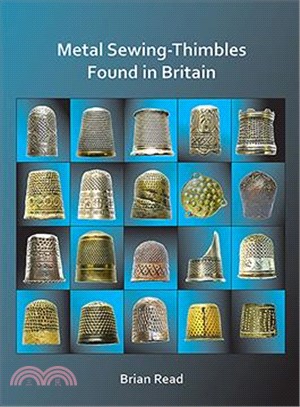
This is the first reference book that deals specifically with all types of sewing-thimble made from copper-alloy or silver, or either of these metals combined with iron or steel, and found in Britain:
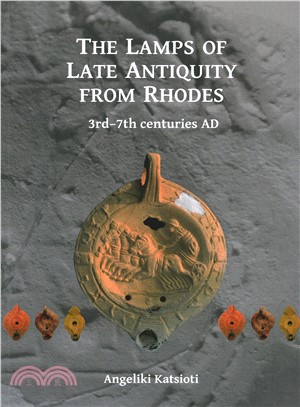
The city of Rhodes was an important harbour in the Hellenistic period, and although its political role in the Roman period was significantly diminished, it never ceased to be a key hub for trade. The
The carved stone crosses of the Isle of Man of the late fifth to mid-eleventh century are of national and international importance. They provide the most coherent source for the early history of Chris
Stones can serve an infinite array of functions both when they are worked and when they are left in a ‘raw’ state. Depending on their function, stones can also be meaningful objects especially when th