The research scope of this book is the human occupation of the northern Adriatic region at the end of the Last Glacial Maximum (ca. 24,000- 20,000 calBP), and a point of view over the long debated occ
If my fellow-traveller had lived, he intended to have put together in book form such information as we had gathered about Southern Arabia. Now, as he died four days after our return from our last jou
‘CAA2016: Oceans of Data’ gives an up-to-date overview of the field of archaeology and informatics. It presents ground-breaking technologies and best practice from various archaeological a
Proceedings of the 20th symposium: Suyanggae and Her Neighbours. The 20th symposium took place across two meetings, the first in Haifa, Israel and the second in Danyang, Republic of Korea. This procee
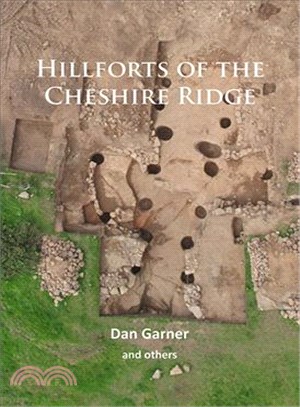
The Cheshire hillforts are some of the most conspicuous features of the prehistoric landscape in Cheshire. Outside of archaeological circles, however, they have almost become ‘lost’ in the landscape a
At the Crossroads of Greco-Roman History, Culture, and Religion' brings together recent research from a range of upcoming and well-established scholars to demonstrate the richness of the cross-cultura
Walking with the Unicorn – Jonathan Mark Kenoyer Felicitation Volume' is an important contribution highlighting recent developments in the archaeological research of ancient South Asia, with specific
Two of the questions most frequently asked by archaeologists of sites and the objects that populate them are ‘How old are you?’ and ‘Where are you from?’ These questions can often be answered through
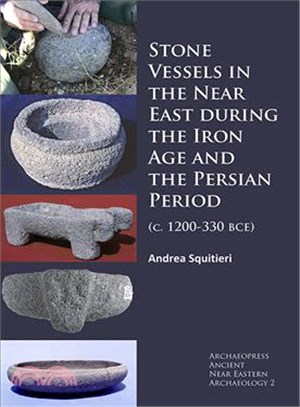
This book focuses on the characteristics and the development of the stone vessel industry in the Near East during the Iron Age and the Persian period (c. 1200 – 330 BCE). Three main aspects of this in
Flakes, and small flakes in particular, are usually seen as by-products or debris of the knapping process, rather than desired end-products with a specific potential use. In recent years, this particu
This volume presents a new systematic approach to the archaeological recording and documentation of rock art developed to analyse the spatial and temporal structure of complex rock art panels. Focusin
The flourishing civilisations of Mesopotamia, nowadays Iraq and Syria, imported all kinds of materials from the surrounding regions. Iron oxide rock (hematite, goethite and magnetite) was very popular
The significant body of stone and flint axe-heads imported into Britain from the Continent has been poorly understood, overlooked and undervalued in Neolithic studies, particularly over the past half
The excavation of the Leckie Iron Age broch in Stirlingshire, Scotland, took place during the 1970’s after the author had been asked to organise the work by a local archaeological society. At that sta
What is considered masculine is not something given and innate to males but determined by cultural ideas and ideals constructed through performative practices – today and in the past. This book questi
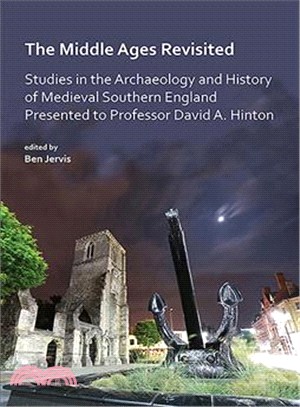
This volume, produced in honour of Professor David A. Hinton’s contribution to medieval studies, re-visits the sites, archaeologists and questions which have been central to the archaeology of m
This volume celebrates the work of Dr. Phil. h.c. Gerhard Milstreu in his 40th year as director of Tanum Museum of Rock Carving and Rock Art Research Centre, Sweden. A feast of scholarly contributions
This volume presents the lithic assemblage from Howburn in South Lanarkshire, Scotland, which at present is the oldest prehistoric settlement in Scotland (12,700-12,000 BC), and the only Hamburgian se
In Sudan the first ceramic containers appeared at the beginning of the 9th millennium BC, with the earliest dates c. 8700 BC from Sorourab 2, in Central Sudan, and c. 8600 BC from the district of Amar
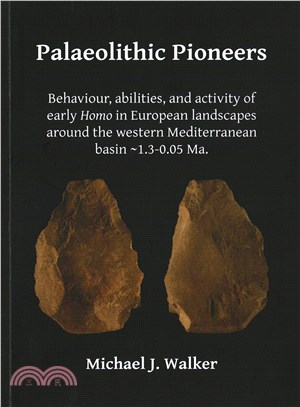
Archaic humans were present for over a million years in western Mediterranean Europe where they left very many traces of their early stone-age activities and behavior, and sometimes even human skeleta
Rock paintings and petroglyphs are a record of human memories. No doubt, this function defines in essence all archaeological objects. Yet some objects such as tools, beyond their symbolic value, are c
Archaeological excavations at the Eleuthernian burial ground of Orthi Petra continue to yield significant elements of the archaeo-anthropological record, the subject matter of continuous interdiscipli