What makes a city? What makes architecture? And, what is to be included in the discussions of architecture and the city? Attempting to answer such ambitious questions, this book starts from a citya€?s
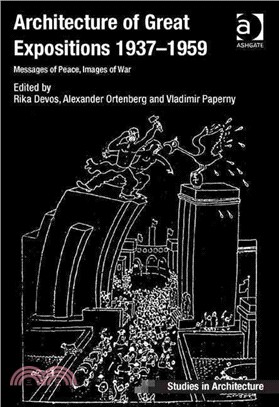
This book investigates architecture as a form of diplomacy in the context of the Second World War at six major European international and national expositions that took place between 1937 and 1959. Th
Judging from the debates taking place in both education and practice, it appears that architecture is deeply in crisis. New design and production techniques, together with the globalization of capital
This book is the first English translation of the German architect Bruno Tauta€?s early twentieth-century anthology Die Stadtkrone (The City Crown). Written under the influence of World War I, Taut de
Marco Frascari believed that architects should design thoughtful buildings capable of inspiring their inhabitants to have pleasurable and happy lives. A visionary Italian architect, academic and theor
Contemporary technical architectural drawings, in establishing a direct relationship between the drawing and its object, tend to privilege the visible physical world at the expense of the invisible in
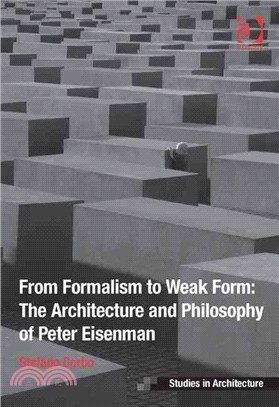
Peter Eisenman is one of the most controversial protagonists of the architectural scene, who is known as much for his theoretical essays as he is for his architecture. While much has been written abou
From the Rust Belt to Silicon Valley, the intersection between architecture and industry has provided a rich and evolving source for historians of architecture. In a historical context, industrial arc
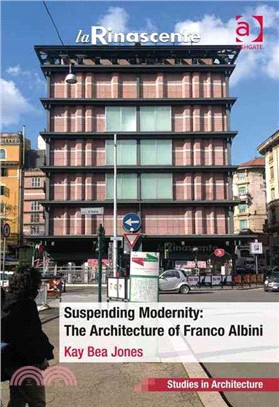
Franco Albinia€?s works of architecture and design, produced between 1930 and 1977, have enjoyed a recent revival but to date have received only sporadic scholarly attention from historians and critic
Architecture Post Mortem surveys architecturea€?s encounter with death, decline, and ruination following late capitalism. As the world moves closer to an economic abyss that many perceive to be the de
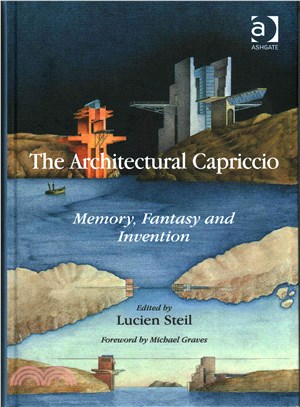
Bringing together leading writers and practicing architects including Jean Dethier, David Mayernik, Massimo Scolari, Robert Adam, David Watkin and Leon Krier, this volume provides a kaleidoscopic, mul
While Le Corbusier's urban projects are generally considered confrontational in their relationship to the traditional urban fabric, his proposal for the Venice hospital project remained an exercise in
Emulation is a challenging middle ground between imitation and invention. The idea of rivaling by means of imitation, as old as the Aenead and as modern as Michelangelo, fit neither the pessimistic de
At the end of the Second World War, Americaa€?s newly acquired status of hegemonic power- together with the launch of ambitious international programs such as the Marshall Plan- significantly altered
How do digital media (mobile phones, GPS, iPods, portable computers, internet, virtual realities, etc.) affect the way we perceive, inhabit and design space? Why do architects traditionally design, dr
The amusement parks which first appeared in England at the turn of the twentieth century represent a startlingly novel and complex phenomenon, combining fantasy architecture, new technology, ersatz da
Architecture Post Mortem surveys architecturea€?s encounter with death, decline, and ruination following late capitalism. As the world moves closer to an economic abyss that many perceive to be the de
Illustrated by critical analyses of significant buildings, including examples by such eminent architects as Adler and Sullivan, Erich Mendelsohn, and Louis Kahn, this book examines collaboration in th
Through a specific architectural lens, this book exposes the role the British Empire played in the development of apartheid. Through reference to previously unexamined archival material, the book unco
Between 1935 and 1959, the architecture of childhood was at the centre of architectural discourse in a way that is unique in architectural history. Some of the seminal projects of the period, such as