Shows how Democrat William Jennings Bryan's hopes for the presidency began to flag amidst the abhorrent heat of 1896 New York just as police commissioner Theodore Roosevelt scrambled to mitigate the d
On June 4, 1965, President Lyndon Johnson delivered what he and many others considered the greatest civil rights speech of his career. Proudly, Johnson hailed the new freedoms granted to African Amer
A theoretical physicist documents the story of the 1930s nuclear physicist and his mysterious disappearance, tracing his research group's discovery of atomic fission in 1934 while investigating theori
Reveals lesser-known events from the past half century that have been pivotal to middle-eastern development, drawing on the author's perspectives as a former Russian prime minister and KGB general to
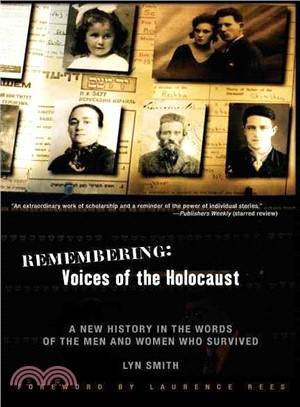
A unique oral history of the entire span of the Holocaust based on interviews from the sound archives of the Imperial War Museum and the National Holocaust Museum in Washington, D.C.
In the summer of 1863, as Union and Confederate armies converged on southern Pennsylvania, the town of Gettysburg found itself thrust onto the center stage of war. The three days of fighting that ens
Kirkpatrick Sale is at the tumultuous center of a technology backlash, actively challenging Bill Gates on the one hand and the Unabomber on the other. The subject of bets, barbs, and grudging praise
Every two minutes, Americans alone take more photographs than were printed in the entire nineteenth century; every minute, people from around the world upload over 300 hours of video to YouTube; and i
How do we know what’s real? That’s not a trick question: sensory science is increasingly finding that we don’t perceive reality: we create it through perception. InWe Have the Technology, science writ
Thomas Day, an 18th-century British writer and radical, knew exactly the sort of woman he wanted to marry. Pure and virginal like an English country maid yet tough and hardy like a Spartan heroine, sh
Since it was first published in 1993, Creating Minds has served as a peerless guide to the creative self. Now available as a paperback reissue with a new introduction by the author, the book uses port
"In Selling the Fountain of Youth, Arlene Weintraub, who spent more than ten years as a science reporter at BusinessWeek, takes us inside this world--from the internet marketers behind the rise of aca
In this inspiring book, best-selling author Abigail Trafford describes how people over fifty are rewriting the script of love and in the process redefining the institution of marriage for future gene
Drawn to an image of her great-grandfather’s ornately carved cane, scholar Elisa New embarked on a journey to discover the origins of her precious family heirloom. Treading back across the path
People today are living longer and healthier lives than at any other time in history—with profound implications for the nature of their romantic relationships. In this inspiring new book, best-
Since mid-century, America has witnessed an ominous decline in presidential leadership, culminating in the failing presidency of George W. Bush today. How did this happen? In Running Alone, the disti
A leading economic journalist explains why Washington's responses to globalization have created a global worker surplus that undermines both American workers and those in developing nations
Examines the rise of the doctor's control over the health-care system and discusses the threat of new health-care conglomerates to the practitioners' dominance of the system
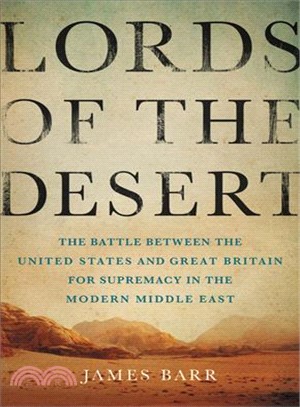
A path-breaking history of how the United States superseded Great Britain as the preeminent power in the Middle East, with urgent lessons for the present dayWe usually assume that Arab nationalism bro
"An important and alarming new book." --New York TimesThe way we teach reading is not working, and it cannot continue. We have largely abandoned phones-based reading instruction, despite research that
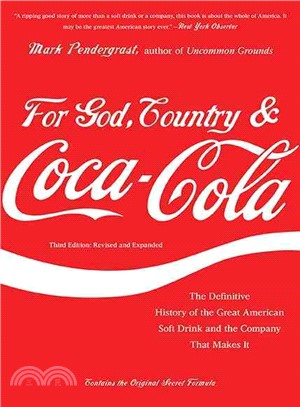
From its invention as a cocaine-laced patent medicine in the Gilded Age to its globe-drenching ubiquity as the ultimate symbol of consumer capitalism in the twenty-first century, Coca-Cola’s dramatic
The medieval Catholic Church, widely considered a source of intolerance and inquisitorial fervor, was not anti-science during the Dark Ages?in fact, the pope in the year 1000 was the leading mathemati
In Selfish Reasons to Have More Kids, contrarian economist Bryan Caplan argues that we’ve needlessly turned parenting into an unpleasant chore, and don’t know the real plusses and minuses of having ki
The medieval Catholic Church, widely considered a source of intolerance and inquisitorial fervor, was not anti-science during the Dark Agesin fact, the pope in the year 1000 was the leading mat
A revolutionary look at energy theory shatters commonly held perceptions and myths about fuel, explaining how demand will never go down, the benefits of energy "waste," the infinite nature of energy,
In his four decades as a KGB officer, Victor Cherkashin was a central player in the shadowy world of Cold War espionage. From his rigorous training in Soviet intelligence in the early 1950s to his pr
Are you a heroic leader? Or are you a passive follower? Chances are you act like one or the other, and it's doing serious damage to your company, your customers, and your colleagues. The reason behin
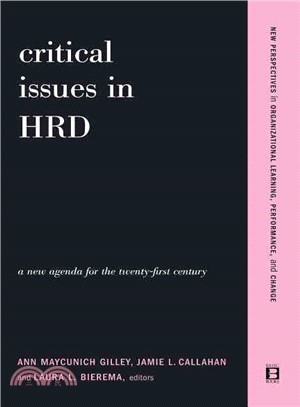
Critical Issues in HRD brings together ten essays by the most respected academics and executives in the field (including Patrick Combs, Michael Marquardt, Doug Whittle, Hallie Preskill, and Reid Bates
Everyone interested in building a stronger business needs to understand and use the information captured in financial statements. In Managing by the Numbers, business education and accounting experts
An important contribution to the ongoing debate over the origins of mental illness, this book is based on the largest study ever of identical twins in which one was ill and the other not. The book pro
Focused specifically on seven influential individuals--Freud, Einstein, Picasso, Stravinsky, Eliot, Graham, and Gandhi--born between 1856 and 1894 under the influence of Western European culture, this
When the fuzzy indeterminacy of quantum mechanics overthrew the orderly world of Isaac Newton, Albert Einstein and Erwin Schrodinger were at the forefront of the revolution. Neither man was ever satis
Albert Einstein and Erwin Schrodinger were friends and comrades-in-arms against what they considered the most preposterous aspect of quantum mechanics: its randomness. Although Einstein’s own work pro
The United States experienced its most harrowing military disaster of World War II not in 1941 at Pearl Harbor but in the period from 1942 to 1943, in Atlantic coastal waters from Newfoundland to the