Violence was endemic in the medieval world, to an extent most modern people find shocking. Violence was part and parcel of the public world of institutions [church, state, chivalry] and the private wo
This collection explores the idea of music in the salon during the long nineteenth century, both as a socio-cultural phenomenon, and as a source of artistic innovation and exchange. Drawing on a wide
The topics treated in this volume include a new look at the Canterbury primacy debate featuring the relics of St Ouen, an analysis of natura and divinitas in twelfth-century philosophical texts, and a
This volume has a special focus on the topic of proxy actors and irregular forces in medieval warfare. John France and Jochen G. Schenk offer broad overviews: France addresses the military role of non
The precedent of empire and the promise of return lay at the heart of King Arthur's appeal in the Middle Ages. Both ideas found fullness of expression in the twelfth century: monarchs and magnates sou
The rise of Norman naval power in the central Mediterranean in the eleventh and twelfth centuries prompted a seminal shift in the balance of power on the sea. Drawing from Latin, Greek, Jewish and Ara
From warhorses to the men-at-arms who rode them; armies that were raised to the lords who recruited, led, administered, and financed them; and ships to the mariners who crewed them; few aspects of the
Motets constitute the most important polyphonic genre of the thirteenth and fourteenth centuries. Moreover, these compositions are intrinsically involved in the early development of polyphony. This vo
"Eyewitness" is a familiar label that historians apply to numerous pieces of evidence. It carries compelling connotations of trustworthiness and particular proximity to the lived experience of histori
Joseph Joachim (1831-1907), of Jewish-Hungarian descent, was arguably the greatest violinist of the nineteenth century. His performing career in Berlin transformed the aesthetics and interpretation of
Although hundreds of dependent priories were founded across medieval Europe, they remain little studied and much misunderstood. Usually dismissed as just administrative units, many were in fact genuin
This volume of the Haskins Society Journal demonstrates the Society's continued engagement with historical and interdisciplinary research on the early to the central Middle Ages, focusing on the Anglo
Spanning the period 1512-78, the High Cross churchwardens' accounts of Stratton, in Cornwall, are unusually complete and informative. Written mostly in English, they are among only eighteen surviving
The engineers who built the first generations of modern textile machines, between 1770 and 1850, pushed at the boundaries of possibility. This book investigates these pioneering machine-makers, almost
The idea of uncertainty forms a major theme throughout the essays collected here; they tackle aspects of religious, intellectual, political and social history, highlighting how uncertainty, in many an
This book is an examination of early modern English almshouses in the 'mixed economy' of welfare. Drawing on archival evidence from three contrasting counties - Durham, Warwickshire and Kent - between
The Lambeth and Croydon Palace accounts for William Laud, Archbishop of Canterbury, represent the only extant record of the archiepiscopal household during his tenure in office. Spanning the period fr
Dynastic marriages mattered in early modern Europe. The creation of alliances and the outbreak of wars were tied to continental dynastic politics. This book combines cultural definitions of politics w
The highly complex combined sacramentary and pontifical presented here, preserved as Paris, Bibliothèque nationale de France, lat. 12052, was apparently written to the order of Ratoldus, abbot of
Gonville & Caius College is exceptional among Oxford and Cambridge colleges in having had three separate founders at different times. The statutes made by those founders are also exceptional, for
This book looks at the musical culture of death in early modern England. In particular, it examines musical funeral elegies and the people related to commemorative tribute - the departed, the composer
Cloth-making became England's leading industry in the late Middle Ages; clothiers co-ordinated its different stages, in some cases carrying out the processes themselves, and found markets for their fi
British composer Simon Holt (b. 1958) has been a leading presence in contemporary music since the early 1980s and Kites. His output is diverse, comprising chamber music, concertos for diverse instrume
It is commonly assumed that Franz Schubert (1797-1828), best known for the lyricism of his songs, symphonies, and chamber music, lacked comparable talent for drama. Challenging this view, Drama in the
The vitality and diversity of research into the late medieval period are exemplified by the contents of this volume. A central theme is the medieval Church: examinations of the process of ordination,
A.E. Housman (1859-1936) was both a celebrated poet and the foremost classicist of his day. His poetry was set to music by numerous composers including Arthur Somervell, Ralph Vaughan Williams, George
Thomas Becket - the archbishop of Canterbury cut down in his own cathedral just after Christmas 1170 - stands amongst the most renowned royal ministers, churchmen, and saints of the Middle Ages. He in
St Edmund's Abbey was one of the most highly privileged and wealthiest religious houses in medieval England, one closely involved with the central government; its history is an integral part of Englis
This is the second volume in a new series designed to cover the previously-neglected inquisitions post mortem of the fifteenth century between 1422 and 1485. Inquisitions post mortem were compiled wit
George Keith, fifth Earl Marischal, is an outstanding example of long-term successful Protestant Lordship in the reign of James VI. The founder of Marischal College in Aberdeen and the towns of Peterh
Shoplifting in Eighteenth-Century England examines the nature and impact on society of this commercial crime at a time of rapid retail expansion during the long eighteenth century. As a new consumer c
The silk industry was one of the most important fields of production in the medieval and early modern world. For several centuries, silk fabrics were globally identified as luxury goods. Silk cloth wa
The articles here offer a wide range of approaches to medieval warfare. They include traditional studies of strategy (on Baybars) and the logistics of Edward II's wars, as well as cultural history (a
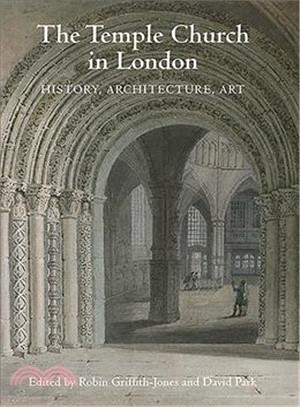
Founded as the main church of the Knights Templar in England, at their New Temple in London, the Temple Church is historically and architecturally one of the most important medieval buildings in Engla
Maritime social history is a relatively young and fertile field, with many new research findings being discovered on a wide range of aspects of the subject. This book, together with its companion volu
The castles of the late medieval period represent some of the finest medieval monuments in Britain, with an almost infinite capacity to fascinate and draw controversy. They are also a source of consid
Hans Richter (1843-1916) was the first conductor to gain international fame. His career began in Budapest, and he went on to dominate music-making in Vienna, Bayreuth, London, Manchester (with the Hal
This volume demonstrates the vitality and range of studies in the area. It begins with an appropriately timely chapter on the Magna Carta, the Allen Brown Memorial Lecture, given by John Hudson. Furth
The image of Vienna as musical city is a familiar one. Vienna has long been associated with many of the most significant composers in Western music - from Haydn, Mozart, Beethoven and Schubert, throug
The mid-twelfth century saw the sudden appearance of a remarkable group of writers: the `new historians', authors such as Geffrei Gaimar, Benoît de Sainte-Maure, Wace, Jordan Fantosme and Ambroi