Threatened by a rival editor brandishing a double-barreled shotgun, young Samuel Clemens had his first taste of literary criticism. Clemens began his long writing career penning satirical articles for
The twenty-first century has seen a renewed surge of cultural and critical interest in the works of the Austrian-Jewish author Stefan Zweig (1881-1942), who was among the most-read and -acclaimed auth
Wittgenstein wrote that "philosophy ought really to be written only as a form of poetry." American poetry has long engaged questions about subject and object, self and environment, reality and imagin
When the Swedish Academy announced that Günter Grass had been awarded the 1999 Nobel Prize for Literature, it singled out his first novel The Tin Drum (1959, English translation 1963) as a semina
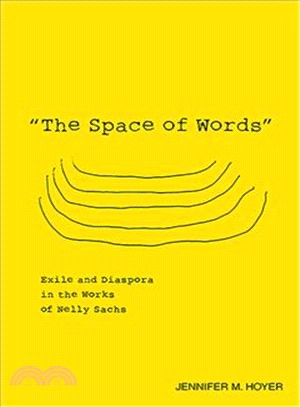
Nelly Sachs (1891-1970) has long been regarded as one of the most significant Holocaust poets. Her conception of language and words as a landscape has been understood by scholars and critics as an exi
James Baldwin is a widely taught and anthologized author. His short story "Sonny's Blues" remains a perennial favorite in literature anthologies, and all of his essay collections and novels
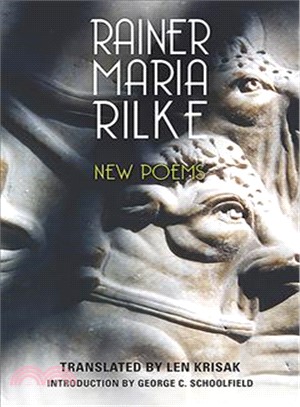
Rainer Maria Rilke, the most famous (and important) German language poet of the twentieth century - a master to be ranked with Goethe and Heine - wrote the New Poems of 1907 and 1908 in transition fro
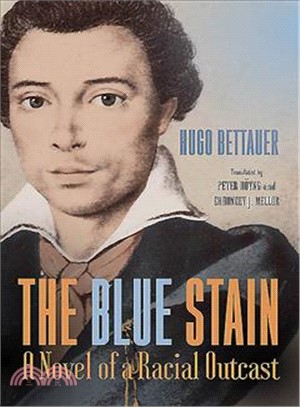
Hugo Bettauer's The Blue Stain, a novel of racial mixing and "passing," starts and ends in Georgia but also takes the reader to Vienna and New York. First published in 1922, the novel tells the story
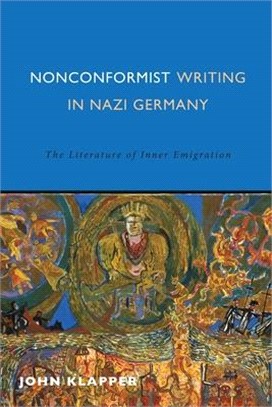
2016 CHOICE Outstanding Academic Title Studies of literary responses to National Socialism between 1933 and 1945 have largely focused on exiled writers; opposition within Germany and Austria is less
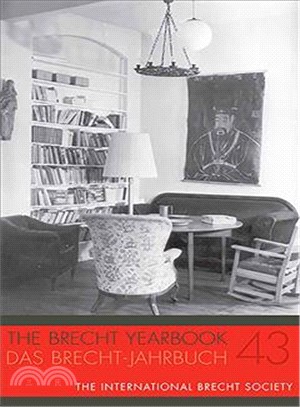
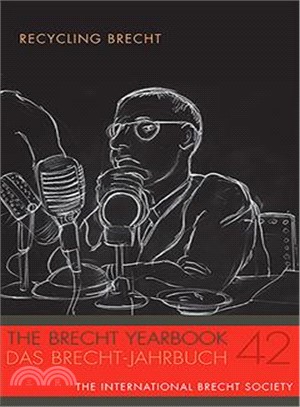
Published for the International Brecht Society by Camden House, the Brecht Yearbook is the central scholarly forum for discussion of Brecht's life and work and of topics of interest to him, especially
Published for the International Brecht Society by Camden House, the Brecht Yearbook is the central scholarly forum for discussion of Brecht's life and work and of topics of particular interest to him,
Now published for the International Brecht Society by Camden House, the Brecht Yearbook is the central scholarly forum for discussion of Bertolt Brecht's life and work and of topics of particular inte
What is the status of women's writing in German today, in an era when feminism has thoroughly problematized binary conceptions of sex and gender? Drawing on gender and queer theory, including the work
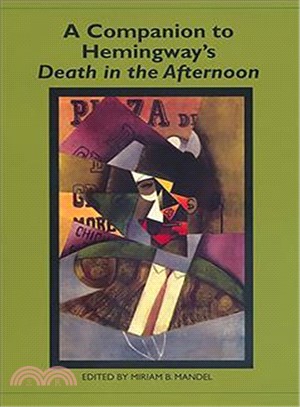
Published in 1932, Death in the Afternoon reveals its author at the height of his intellectual and stylistic powers. By that time, Hemingway had already won critical and popular acclaim for his short
Walter Benjamin (1892-1940) has emerged as one of the leading cultural critics of the twentieth century. His work encompasses aesthetics, metaphysical language and narrative theories, German literary
At long last a new, readable history of German literature. Each epochof German literature is treated against its historical and sociologicalbackdrop by experts in the literature of that period. Vivian
Mountains have always stirred the human imagination, playing a crucial role in the cultural evolution of peoples around the globe and becoming infused with meaning in the process. Beyond their geograp
Although George Bernard Shaw quipped that "the Germans lack talent for two things: revolution and crime novels," there is a long tradition of German crime fiction; it simply hasn't aligned itself with
Arno Schmidt (1914-1979) is considered one of the most daring and influential writers of postwar Germany; the Germanist Jeremy Adler has called him a "giant of postwar German literature." Schmidt was
Among the most important English novelists, Jane Austen is unusual because she is esteemed not only by academics but by the reading public. Her novels continue to sell well, and films adapted from her
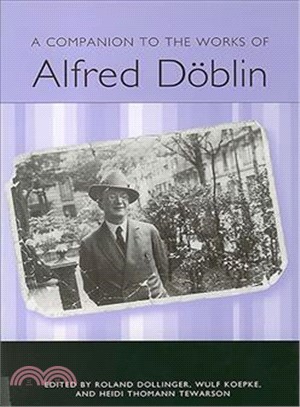
Alfred Döblin (1878-1957) was one of the great German-Jewish writers of the 20th century, a major figure in the German avant-garde before the First World War and a leading intellectual during the Weim
Now published for the International Brecht Society by Camden House under the Society's editorship, the Brecht Yearbook is the central scholarly forum for discussion of the life and work of Bertolt Bre