Employing accessible language throughout, this book covers the history of psychiatric research, the current state-of-the art in psychiatric practice, the physiological systems affected by psychiatric
This complete, authoritative study of the growing discipline of Archaeoastronomy examines the role of astronomy in antiquity. Professor Giulio Magli provides a clear, up-to-date survey of current thi
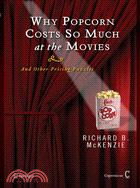
Why Popcorn Costs So Much at the Movies, And Other Pricing Puzzles unravels the pricing mysteries we encounter every day. Have you ever wondered why all movies, whether blockbusters or duds, have the
Prions are an entirely new class of pathogens, and scientists are just beginning to understand them. This book tells the strange story of their discovery, and the medical controversies that swirl aro
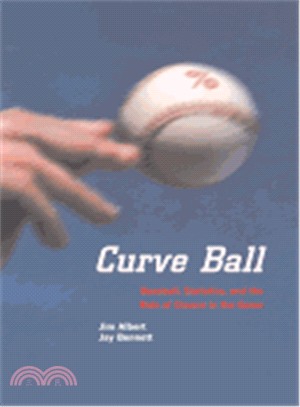
In this lively and thought-provoking look at the numbers and the game, Jim Albert and Jay Bennett examine just what we learn, and just what we think we learn, from baseball statistics. The authors con
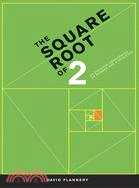
Using no more than the most basic algebra and geometry, Flannery (Cork Institute of Technology, Ireland) manages to convey not only why irrational numbers are fascinating, but how the whole enterpris
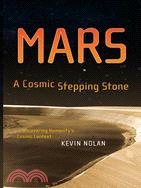
The questions of our origin and cosmic abundance of life are among the most compelling facing humanity. We have determined much about the nature and origin of the Universe and our place in it, but wi
The purpose of the book is a dual one: to detail the nature and results of Tunguska investigations in the former USSR and present-day CIS, and to destroy two long-standing myths still held in the West
Many of us, especially since 9/11, have become personally concerned about issues of security, and this is no surprise. Security is near the top of government and corporate agendas around the globe. Se
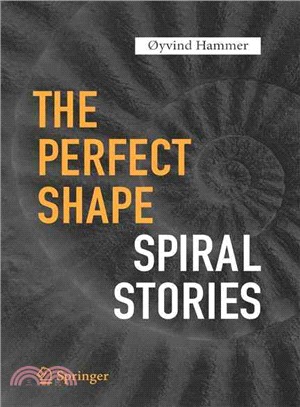
This book uses the spiral shape as a key to a multitude of strange and seemingly disparate stories about art, nature, science, mathematics, and the human endeavour. In a way, the book is itself organi
This book will take an evidence-based approach to current knowledge about biomolecules and their place in our lives, inviting readers to explore how we know what we know, and how current gaps in knowl
The aim of this popular science text is to explain aerodynamic and astrodynamic flight without the use of mathematics, in an informal style, for non-technical readers who are interested in spacefligh
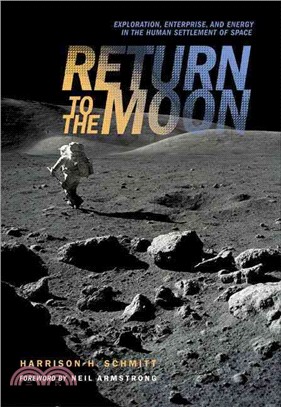
The Moon is not just a "local" destination, argues former NASA Astronaut Harrison Schmitt. As a destination, the Moon presents us with a goal that tests our resourcefulness and determination. How muc
Recent discoveries of planet-like objects circling other sun-like stars have stirred enormous interest in what other planets may exist in the universe, and whether they support intelligent life, or a
What does game theory tell us about rational behavior? Is there such a thing as rational behavior, and if so, is it of any use to us? In this fascinating book, renowned Hungarian economist Laszlo Mero
As miniaturisation deepens, and nanotechnology and its machines become more prevalent in the real world, the need to consider using quantum mechanical concepts to perform various tasks in computation
In this, the first history of artificial satellites and their uses, Helen Gavaghan shows how the idea of putting an object in orbit around the earth changed from science fiction to indispensable techn