The question of how modernity has influenced medievalism and how medievalism has influenced modernity is the theme of this volume. The opening essays examine the 2001 film Just Visiting's comments on
In 1959 C. P. Snow memorably described the `gulf of mutual incomprehension' which existed between `literary intellectuals' and scientists, referring to them as `two cultures'. This volume looks at th
Although the question of Machiavellian influence on Shakespeare has been thoroughly debated, this book represents the first attempt to compare the two authors in detail. The playwright and the politic
The legend of Charlemagne is a strong motif in the literature of medieval and early modern Spain. The essays in this volume consider the narration of both the historical and imaginary events across di
"What meanys shall I use to lurne withoute betynge?", asks a pupil in a translation exercise compiled at Oxford in 1460s. One of the most conspicuous features of medieval education is its reliance on
Literature of the city and the city in literature are topics of major contemporary interest. This volume enhances our understanding of Chaucer's iconic role as a London poet, defining the modern sens
The relationship between that most popular of medieval genres, the saint's life, and the sagas of the Icelanders is investigated here. Although saga heroes are rarely saints themselves - indeed rather
The ballad genre, and its material, are frequently backward-looking in terms of subject and style: it is ideally suited to the reimagining of past events, both real and fictional. This volume addresse
One of the biggest attractions of George R.R. Martin's high fantasy series A Song of Ice and Fire, and by extension its HBO television adaptation, Game of Thrones, is its claim to historical realism.
The medieval figure of Merlin is intriguing, enigmatic, and riddled with contradictions. Half human, half devil, he possesses a supernatural knowledge that allows him to prophesy the future. This book
Fiction and film interrelate closely to each other, and the specially commissioned essays in this volume all consider different aspects of this relationship. Beginning with discussions of Dickens and
Discrimination has long played a part in medievalism studies, but it has rarely been weaponized as thoroughly and publicly as in recent exchanges. The essays in the first part of this volume respond t
The work of William Morris (1834-1896) was hugely influenced by the medieval sagas and poetry of Iceland; in particular, they inspired his long poems "The Lovers of Gudrun" and Sigurd the Volsung. Bet
The topics of "selfhood" and "otherness" lie at the heart of these compelling new assessments of John Gower's poetry. Divided into three main areas - knowing the self and others; the essence of stran
Thomas Traherne has all too often been defined and studied as a solitary thinker, "out of his time", and not as a participant in the complex intellectual currents of the period. The essays c
This interdisciplinary volume of articles focuses on the cultural and political legacy of Anne de Bretagne (1477-1514). As duchess of Brittany (1491-1514) and twice queen of France (1491-98; 1498-15
Religious and academic dress in the middle ages functioned as a metaphorical signifier of spiritual and intellectual standards, implied a given social status, signalled the rejection or possession of
The writings of Julian of Norwich and Margery Kempe show an awareness of traditional and contemporary attitudes towards women, in particular medieval attitudes towards the female body. This study exam
Castles play an integral part in Malory's Morte Darthur; Camelot, Tintagel, Joyous Gard, and Dover, for example, are the crucial backdrop to the action and both host and shape the story as it moves th
The Scottish poet George Lauder began as a "university wit", by imitating anti-papal satires popular in the Italian Renaissance. He set off for London as a young man, looking for patronage, but instea
The hope of salvation and the fear of damnation were fundamental in the Middle Ages. Surprisingly, however, this topic, as reflected in Old Norse literature, has received limited critical attention.T
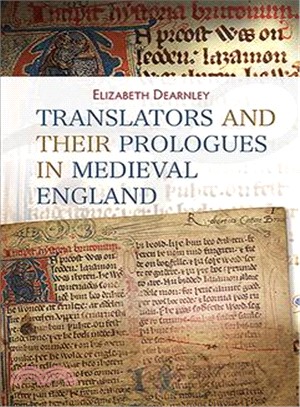
The prologue to Layamon's Brut recounts its author's extensive travels "wide yond thas leode" (far and wide across the land) to gather the French, Latin and English books he used as source m
The debt owed by Shakespeare to Ovid is a major and important topic in scholarship. This book offers a fresh approach to the subject, in aiming to account for the Middle English literary lenses throug
The Book of the Duchess, Chaucer's first major poem, is foundational for our understanding of Chaucer's literary achievements in relation to late-medieval English textual production; yet in comparison
The Grail is one of the most enduring literary motifs in publishing history. In spite of an ever-changing world, the reading public has maintained a fascination for this enigmatic object, as well as t
The legend of Theophilus stages an iconic medieval story, its widespread popularity attesting to its grip on the imagination. A pious clerk refuses a promotion, is demoted, becomes furious and makes a
The world of medieval romance is one in which magic and `the marvellous' are constantly present: in otherwordly encounters, in the strange adventures experienced by questing knights, the experience o
Best known for their love-songs and their invention of Courtly Love, the troubadours were fascinated by debate and devised their entire, multifaceted lyric production on the basis of dialogue. This d
This study brings the songs of the trouveres to an encounter with Lacanian psychoanalytic theories of signification, sexual difference and unconscious desire. In trouvere song desire functions as a me
Within the large-scale historiography of sixteenth- and seventeenth-century warfare and the early modern military revolution there remain many unanswered questions about the individual soldier and the
Thomas Hoccleve, Margery Kempe, John Audelay and Charles d'Orléans present themselves as the makers not only of their texts, but also of the books that transmitted their writing. This new study a
The nature, conditions and place of medieval theatre performance remain somewhat mysterious, with scholarship in the field tending to be devoted to its context, and to the texts themselves. The essays
A possible direct link between the two greatest literary collections of the fourteenth century, Boccaccio's Decameron and Chaucer's Canterbury Tales, has long tantalized readers because these works sh