With the rise of cognitive science and the revolution in neuroscience, it is now commonplace to assume that the study of a human person-a thinking, feeling, acting subject-is ultimately the study of t
Responding to Loss: Heideggerian Reflections on Literature, Architecture, and Film closely attends to a novel, a building, and a film that powerfully bring forth and call on us to respond to dimension
Sometimes Always True aims to resolve three connected problems central to philosophical thought. First, we need and do not yet have a genuine, undogmatic pluralist standpoint in political theory, epis
In the well-known Scopes "Monkey Trial" of 1925, famously portrayed in the film and play Inherit the Wind, William Jennings Bryan's fundamentalist fervor clashed with defense attorney Clarence Darrow'
Political Magic examines early modern British fictions of exploration and colonialism, arguing that narratives of intercultural contact reimagine ideas of sovereignty and popular power. These fictions
The incredibly rich tapestry of medicine can never be finished. In every generation, new patterns of service develop, as clinical observations and scientific discoveries change diagnostic and therapeu
The intensity and meaningfulness of aesthetic experience have often been described in theological terms. By designating basic human emotions as rasa, a word that connotes taste, flavor, or essence, In
The guiding theme of these essays by aesthetician, musician, and Santayana scholar Morris Grossman is the importance of preserving the tension between what can be unified and what is disorganized, ran
Babylon is a surprisingly multivalent symbol in U.S. culture and politics. Political citations of Babylon range widely, from torture at Abu Ghraib to depictions of Hollywood glamour and decadence. In
Babylon is a surprisingly multivalent symbol in U.S. culture and politics. Political citations of Babylon range widely, from torture at Abu Ghraib to depictions of Hollywood glamour and decadence. In
"What's Queer about Europe? examines how queer theory helps us initiate disorienting conjunctions and counterintuitive encounters for imagining historical and contemporary Europe. This book queers Eur
"What's Queer about Europe focuses on those queer types of artistic, political or theoretical exchanges that take place in the presence of the idea of Europe. This book is not about queer communities
From the late 1940s through the 1950s, McCarthyism disfigured the American political landscape. Under the altar of anticommunism, domestic Cold War crusaders undermined civil liberties, curtailed equa
The irreducibly constitutional nature of the Civil War's prelude and legacy is the focus of this absorbing collection of nine essays by a diversity of political theorists and historians. The authors e
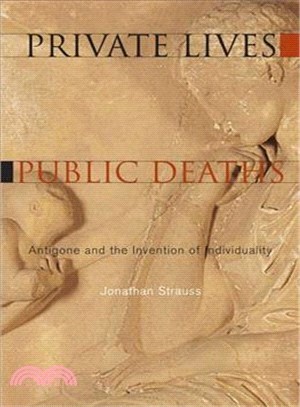
In Private Lives, Public Deaths, Jonathan Strauss shows how Sophocles' tragedy Antigone crystallized the political, intellectual, and aesthetic forces of an entire historical moment--fifth-century Ath
In Private Lives, Public Deaths, Jonathan Strauss shows how Sophocles' tragedy Antigone crystallized the political, intellectual, and aesthetic forces of an entire historical moment--fifth-century Ath
The Human Eros: Eco-ontology and the Aesthetics of Existence explores themes in classical American philosophy, primarily that of John Dewey, but also in the thought of Ralph Waldo Emerson, George Sant
The central aim of this book is to approach contemporary problems raised by technologies of life and death as ethical issues that call for a more nuanced approach than mainstream philosophy can provid
This book considers melancholy as an "assemblage," as a network of dynamic, interpretive relationships between persons, bodies, texts, spaces, structures, and things. In doing so, it parts ways with p
This book considers melancholy as an "assemblage," as a network of dynamic, interpretive relationships between persons, bodies, texts, spaces, structures, and things. In doing so, it parts ways with p
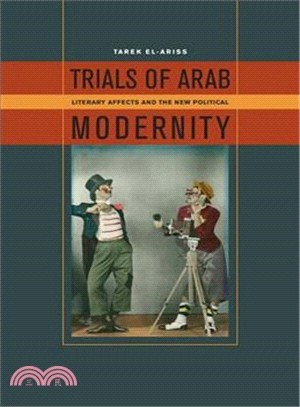
Challenging prevalent conceptualizations of modernity--which treat it either as a Western ideology imposed by colonialism or as a universal narrative of progress and innovation--this study instead off
This book relates developments in the visual arts and printing to humanist theories of literary and bodily imitation, bringing together 15th- and 16th-century frescoes, statues, coins, letters, dialog
Gabriel Marcel's reflective method is animated by his extra-philosophical commitment to battle the ever-present threat of dehumanization in late Western modernity. Unfortunately, Marcel neglected to e
Challenging prevalent conceptualizations of modernity--which treat it either as a Western ideology imposed by colonialism or as a universal narrative of progress and innovation--this study instead off
The Human Eros: Eco-ontology and the Aesthetics of Existence explores themes in classical American philosophy, primarily that of John Dewey, but also in the thought of Ralph Waldo Emerson, George Sant
The essays in this volume explore how two domains of human experience and action--religion and technology--are implicated in each other. Contrary to commonsense understandings of both religion (as an
The essays in this volume explore how two domains of human experience and action--religion and technology--are implicated in each other. Contrary to commonsense understandings of both religion (as an
Why do humans get angry with objects? Why is it that a malfunctioning computer, a broken tool, or a fallen glass causes an outbreak of fury? How is it possible to speak of an inanimate object's recalc
Why do humans get angry with objects? Why is it that a malfunctioning computer, a broken tool, or a fallen glass causes an outbreak of fury? How is it possible to speak of an inanimate object's recalc
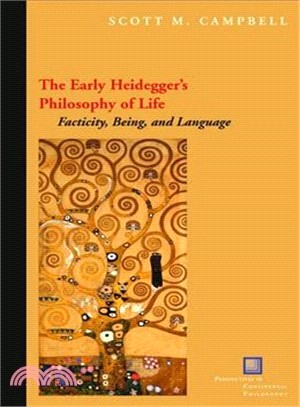
In his early lecture courses, Martin Heidegger exhibited an abiding interest in human life. He believed that human life has philosophical import while it is actually being lived; language has philosop
Campbell (philosophy, Nazareth College of Rochester) presents a fascinating study of the earlier Heidegger (pre-1925), advancing a number of scholarly and philosophical points about the meaning of Bei
As a virtue, loyalty has an ambiguous place in our thinking about moral judgments. We lauded the loyalty of firefighters who risked their lives to save others on 9/11 while condemning the loyalty of t
Enlightened Sentiments reassesses the Enlightenment's liberal legacies by revisiting the wide-ranging development of eighteenth-century letters known as "sentimentalism." Nazar argues that the recent
This book starts off from a philosophical premise: nobody can be in the world unless they are born into the world. It examines this premise in the light of the theological belief that birth serves, or
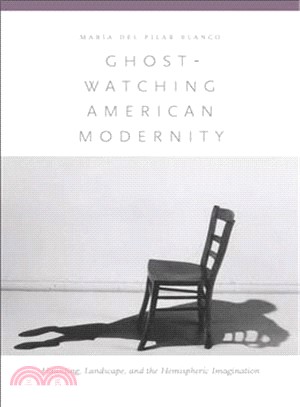
In Ghost-Watching American Modernity, Mari??a del Pilar Blanco revisits nineteenth- and twentieth-century texts from Spanish America and the United States to ask how different landscapes are represent
The living and the dead cohabited Paris until the late eighteenth century, when, in the name of public health, measures were taken to drive the latter from the city. Cemeteries were removed from urban
This monograph explores the ethics and religious sensibilities of a group of the hibakusha (survivors) of 1945's atomic bombings. Unfortunately, their ethic of "not retaliation, but reconciliation" h
The acceleration in science, technology, communication, and production that began in the second half of the twentieth century- developments which make up the concept of the digital-has brought us to w