This work details all aspects and phases of Napoleon’s defeat of Russian forces in Poland. It gives background on events leading to the campaign against Russia and provides details on the leaders and
In this vivid and spirited account the author evocatively sets his love of the skies and flying against his bitter experience of the horrors of war, as we follow his progress from France and the battl
‘A magnificent biography which finally provides recognition to one of Bletchley's and Britain's lost heroes.’ Michael SmithThe Official Secrets Act and the passing of time have prevented the Bletchley
The story of America’s cavalry is extraordinarily rich in colorful, and often flamboyant, personalities and exciting action. Indeed, much of the early military history of the United States is dominate
The Anglo-Boer War in 100 Objects brings the victories and the tragedies – and the full extent of the human drama behind this war – to life through 100 iconic artefacts.While a Mafeking siege note hel
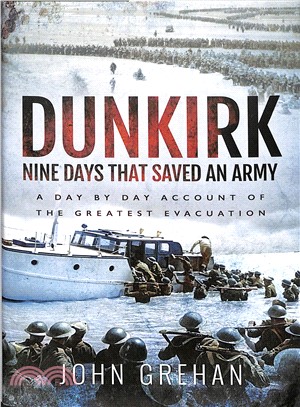
The epic of Dunkirk has been told many times, but the numerous accounts from surviving soldiers and sailors were often a blur of fear and fighting with the days mingling into each other, leaving what
On 16 May 1811, the small town of Albuera was the setting for one of the Peninsular War’s most bloody and desperate battles. A combined Spanish, British and Portuguese force of more than 30,000 men,
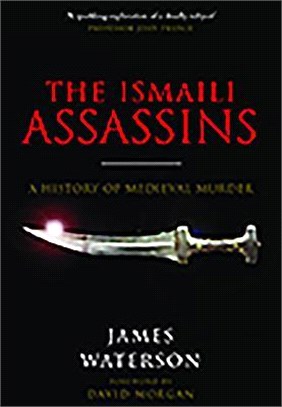
Every war has its cause and every conflict its context, none more so than the centuries-old ideological battle between Christian and Muslim theology. The concept of holy war is almost as old as the re
After the reverses of 1914, the French and British commanders were determined to turn the tables on the Germans and take the war to the enemy. A major combined offensive was planned in the Artois regi
We visualize dashing and daring young men as the epitome of the pilots of the Second World War, yet amongst that elite corps was one person who flew no less than 400 Spitfires and seventy-six differen
They came to fight for freedom and their country, they came to fight Germans. Men of the Polish Air Force, who had escaped first to France and then to Britain, to fly alongside the Royal Air Force jus
The Ismaili Assassins were an underground group of political killers who were ready to kill Christians and Muslims alike with complete disregard for their own lives.
This book provides an insight into how artillery resources were established, developed and employed during the Second World War, using the British Royal Artillery as an example. Beginning with an over
The Frontline Napoleonic Library is an unparalleled collection of classic works on the Napoleonic Wars. Presenting some of the finest memoirs and studies of the period the collection brings together r
Recruitment of the Scottish Highland regiments has been seen as blind obedience by traditional regimental historians, and as coercion by later authors. This work treads a middle ground in its examinat
After being seriously wounded in the 1939 Polish campaign, Rochus Misch was invited to join Hitler's SS-bodyguard. There he served until the wars end as Hitler’s bodyguard, courier, orderly and finall
Graves, based near Ottawa, specializes in Napoleonic period warfare, and this study of the 23rd Foot rose from his biography of Lieutenant General Sir Thomas Pearson of that regiment, Fix Bayonets! (2
In June 1944, the Nazis locked eighteen-year-old Dave Hersch into a railroad boxcar and shipped him from his hometown of Dej, Hungary, to Mauthausen Concentration Camp, the harshest, cruellest camp in
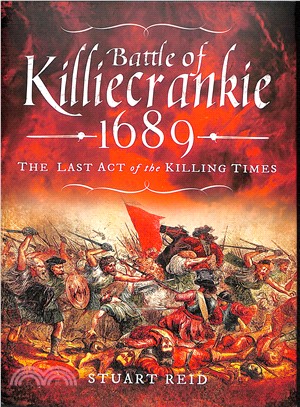
The fifty-odd years of Scottish history dominated by the Jacobite Risings are amongst its most evocative and whilst the last battle, Culloden in 1746, is deservedly remembered as a national tragedy, t
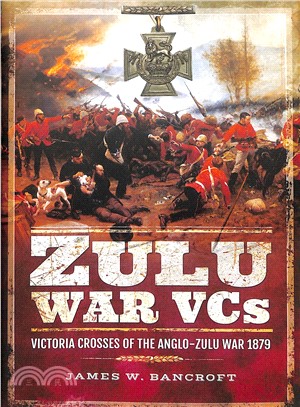
The Anglo-Zulu War lasted only six months in 1879, but in that relatively short time twenty-three men were awarded the Victoria Cross for gallantry under most trying and dangerous circumstances. Zulu
Napoleon began his military career as an artillery cadet and artillery played a fundamental part in all his great battles. Until the Napoleonic Wars artillery had been seen merely as a supporting arm
In the archives of the Special Operations Executive lay a report compiled by a staff officer and former member of SOE's French Section, Major Robert Bourne-Patterson, that until recently could not be
Fighting the Bombers is an unrivaled look at the Allied bombing campaign of the Second World War from the point of view of the Luftwaffe establishment and command. The contributing authors were involv
The Campaign of Waterloo is the complete account of the climatic campaign and battle of the Napoleonic Wars abstracted from Sir John Fortescue’s monumental A History of the British Army.Issued as an i
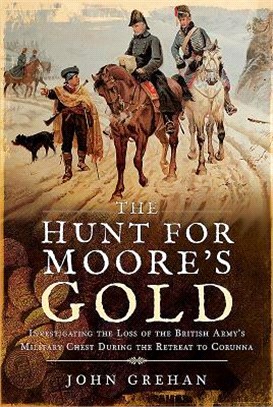
History abounds with unresolved puzzles and unanswered questions, none more so than that of the loss of the British Army’s military chest during the retreat to Corunna in 1809.Sir John Moore’s small f
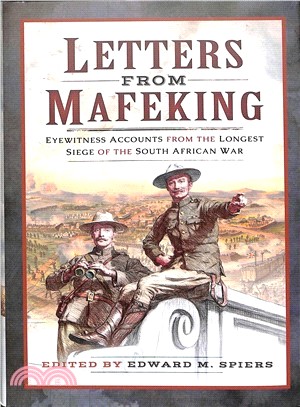
Mafeking was the longest and the most controversial of the three sieges that began the South African War in 1899. Lasting 217 days, the Siege of Mafeking brought a highly charismatic leader to public
Located by the Baltic near the town of Barth in Western Pomerania, Germany, Stalag Luft I was one of a number of Stammlager Luftwaffe, these being permanent camps established and administered by the L
It is early September 1942 and the German commander of the Sixth Army, General Paulus, assisted by the Fourth Panzer Army, is poised to advance on the Russian city of Stalingrad. His primary mission w
Rudolf Hess' flight to Britain in May 1941 stands out as one of the most intriguing and bizarre episodes of the Second World War.In The Truth About Rudolf Hess, Lord James Douglas-Hamilton explores ma
The memoirs of Wolfe Frank, which lay hidden in an attic for twenty-five years, are a unique and highly moving behind-the-scenes account of what happened at Nuremberg – ‘the greatest trial in history’
"Gentlemen, we are going to capture Tobruk and destroy it."'Operation Agreement' started as a fairly simple plan to destroy Rommel's bomb-proof oil-storage tanks at Tobruk on the eve of Alam
After the unprecedented death and devastation of the First World War, few people imagined that such a conflict could ever happen again. Though the belief that it was the ‘war to end war’ was to be sha
Wednesday 22 January 1879 was one of the most dramatic days in the long and distinguished history of the British Army. At noon a massive Zulu host attacked the 24th Regiment in its encampment at the f
In the whole of the Second World War, only two men succeeded as operational fighter pilots in the RAF after losing both legs. Douglas Bader was one, and his story is well-known indeed, he has been des
At dawn on 13 December 1939, smoke was seen on the horizon; HMS Exeter was told to close in and investigate. Two minutes later a dramatic signal was sent from the British cruiser – ‘I think it is a po