Discusses the history of mapmaking in the age of exploration, from the maps made by European navigators of the fifteenth century, to the early maps made by the settlers of North America, to the coloni
Discusses the history of making maps of urban areas, including the development of cities laid out according to plan, and describes how different types of maps provide different details about cities an
Gareth Stevens Vital Science books are designed to help prepare students for NCLB science testing by reinforcing key concepts across the science curriculum. The six volumes in Earth Science use clea
Gareth Stevens Vital Science books are designed to help prepare students for NCLB science testing by reinforcing key concepts across the science curriculum. The eight volumes in Physical Science use
Secrets of the Universe is the perfect supplement to the middle school science curriculum. The six-volume series is comprehensive in scope, yet packed with detailed information on a variety of topic
Great Inventions is a captivating chronicle of major technological advances that have shaped everyday life over the past two centuries. Each book provides an in-depth look at the dedicated individual
Looks at the departments and agencies that make up the executive branch of the government, working on issues involving the environment, foreign policy, national defense, and the economy.
Terrorism is a worldwide problem and one of today's most pressing concerns. This compelling series uses the stories of some of the world's most devastating terrorist attacks as the jumping off point
The Middle Ages, from AD 500-1500, were once described as dark and stagnant—a thousand years without a bath. Now, the Middle Ages are celebrated as a time of immense social change, of outstanding ach
Examines the history of navigational maps, from the ancient use of stars and the Sun, to the developments of the compass, the quadrant, and nautical charts, to the modern inventions of radar and globa
Terrorism is a worldwide problem and one of today's most pressing concerns. This compelling series uses the stories of some of the world's most devastating terrorist attacks as the jumping off point
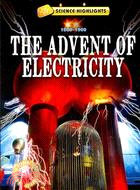
Highlights scientific and technological innovations between 1900 and 1946, including radio, automobiles, television, antibiotics, radar, and nuclear fission.
Highlights scientific and technological innovations between 1800 and 1900, including photography, evolution, genetics, the periodic table, and the internal combustion engine.
Briefly describes the history, geography, and society of West African cultures; explains concepts found within their folklore and mythology; and presents several myths.
Chronicles the important events, people, and places in Europe during the Renaissance, including the invention of the printing press, the age of discovery, and advances in art, science, and religion.
Religions of the World provides a rich, in-depth look at five major religions that have shaped human culture and spiritual life and fostered both conflict and peace throughout the recorded history of
Highlights scientific and technological innovations from 1946 to the present, including computers, DNA, manned space flight, cloning, and the Internet.
Discusses notable events, people, and locations in classical civilization, including ancient Greece, ancient Rome, the reign of Alexander the Great, and the spread of Christianity.
Chronicles the important events, people, and locations during the Colonial era, including the age of exploration, the settling of North America, the American Revolution, and the colonization of Austra
Ideal for reports and correlated to the social studies curriculum, Continents of the World provides students with essential information about our world. Each volume focuses on one continent and gives
Examines the use of maps by governments, discussing the mapping of populations, the establishment of national and local boundaries, maps during a time of war, and the publication of national atlases.
This series examines eight major conflicts in American history, describing how each has shaped and altered the nation and how the United States' role in international conflicts has affected world his
Focusing on one of the world's most important and volatile regions, this series provides the background and context students need to understand today's headlines. A wealth of maps, charts, time line
Traces the history of St. Augustine, Florida, from its development as a Spanish colony and military outpost in 1565 through the early eighteenth century, and discusses the impact of colonialization on
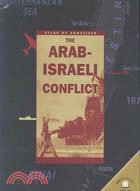
Atlas of Conflicts explains how and why the major wars of the twentieth century started, describes what happened, and analyzes how the results changed our world. Each title includes twenty-four maps
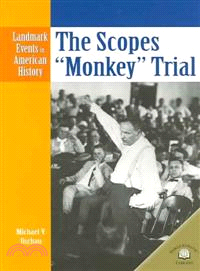
Describes the famous 1925 courtroom showdown of William Jennings Bryan and Clarence Darrow over the teaching of evolution in public schools, including the events leading up to it and how the issue con
Ideal for classroom discussions and reports on current events, this series takes an in-depth look at six global problems facing us today. Each book clearly explains the causes and effects of a major
Ideal for classroom discussions and reports on current events, this series takes an in-depth look at six global problems facing us today. Each book clearly explains the causes and effects of a major
Ideal for classroom discussions and reports on current events, this series takes an in-depth look at six global problems facing us today. Each book clearly explains the causes and effects of a major
In only a few decades, new materials, new machines, new sources of power, and new methods of transportation changed the face of the world. Mines, furnaces, and mills formed the basis of towns where th
Examines the reasons for the rise of the Nazis, covering such factors as the harsh treatment of Germany by the victors of World War I, the unstable German economy, and the oratory and political ambiti
"Covers two centuries when amateur scientists-- natural philosophers-- began to use close observation and experiment to understand processes that had previously been explained by religion or superstit
Presents an introduction to maps, describing the impact of the computer on the creation of modern maps and covering such topics as digital maps, geographical information systems, virtual environments,
Gareth Stevens Vital Science books are designed to help prepare students for NCLB science testing. The eight volumes in Life Science use clear language and a variety of photographs, illustrations, a
Gareth Stevens Vital Science books are designed to help prepare students for NCLB science testing. The eight volumes in Life Science use clear language and a variety of photographs, illustrations, a