Since it appeared in 1971, John Rawls's A Theory of Justice has become a classic. The author has now revised the original edition to clear up a number of difficulties he and others have found in the o
Was punk just another moment in music history, a flash in time when a group of young rebels exploded in a fury of raw sound, outrageous styles, and in-your-face attitude? Greil Marcus, author of the r
How is medicine doing at the end of the twentieth century? While there has been no end of studies of our health care system and proposals for changing it, there have been few credible studies of the r
As part of his attempt to secure a place for women in scientific culture, the Cartesian Francois Poullain de la Barre asserted as long ago as 1673 that "the mind has no sex?" In this rich and compreh
What is law? What is it for? How should judges decide novel cases when the statutes and earlier decisions provide no clear answer? Do judges make up new law in such cases, or is there some higher law
Quintus Curtius was apparently a rhetorician who lived in the first century of the Roman empire and, early in the reign of Claudius (41?54 CE), wrote a history of Alexander the Great in 10 books in cl
Quintus Curtius was apparently a rhetorician who lived in the first century of the Roman empire and, early in the reign of Claudius (41?54 CE), wrote a history of Alexander the Great in 10 books in cl
Reason, we are told, is what makes us human, the source of our knowledge and wisdom. If reason is so useful, why didn’t it also evolve in other animals? If reason is that reliable, why do we produce s
What if you were to discover that you were not entirely you, but rather one half of a whole, that you had, in other words, a divine double? In the second and third centuries CE, this idea gripped the
Imagine yourself in your new job, doing your best to make a good impression—and your boss asks you to do something that doesn’t feel right, like fudge a sales report, or lie to a customer. You have no
Working simultaneously on two levels, Saladin represents the best kind of biography—a portrait of a man who is said to have made an age, and the most complete account we have to date of an age that ma
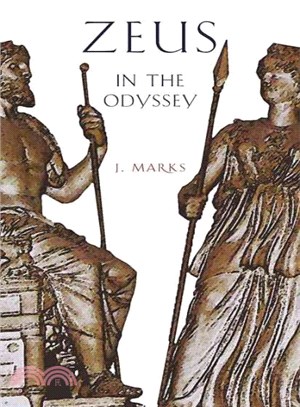
This book makes the case that the plot of the Odyssey is represented within the narrative as a plan of Zeus, Dios boule, that serves as a guide for the performing poet and as a hermeneutic for the aud
This elegant essay on the justice of work focuses on the fit between who we are and the kind of work we do. Russell Muirhead shows how the common hope for work that fulfills us involves more than pers
On our side, a vast arsenal of chemical pesticides. On their side? They don't have a side, the pests who must do nature's bidding. This is our war, and should we win it, ours would be a sorry planet.
It was 1869 and Sarah Moses, with "a very black eye," told her father: The world will never know what trouble I have seen. What she'd seen was violence at the hands of her husband. Does the world kno
You are old, ill, in pain, and your doctor asks you what you want to do about it. You may be uncertain but you're definitely not alone. By the year 2020, some 50 million Americans will be over sixty-
The late Perry Miller once stated, "I have been compelled to insist that the mind of man is the basic factor in human history," and his study of the mind in America has shaped the thought of three de
The late Perry Miller once stated, “I have been compelled to insist that the mind of man is the basic factor in human history,” and his study of the mind in America has shaped the thought of three dec
Dio Cassius (Cassius Dio), ca. 150? 235 CE, was born at Nicaea in Bithynia in Asia Minor. On the death of his father (Roman governor of Cilicia) he went in 180 to Rome, entered the Senate, and under t
Dio Cassius (Cassius Dio), ca. 150? 235 CE, was born at Nicaea in Bithynia in Asia Minor. On the death of his father (Roman governor of Cilicia) he went in 180 to Rome, entered the Senate, and under t
Dio Cassius (Cassius Dio), ca. 150? 235 CE, was born at Nicaea in Bithynia in Asia Minor. On the death of his father (Roman governor of Cilicia) he went in 180 to Rome, entered the Senate, and under t
Dio Cassius (Cassius Dio), ca. 150? 235 CE, was born at Nicaea in Bithynia in Asia Minor. On the death of his father (Roman governor of Cilicia) he went in 180 to Rome, entered the Senate, and under t
Dio Cassius (Cassius Dio), ca. 150? 235 CE, was born at Nicaea in Bithynia in Asia Minor. On the death of his father (Roman governor of Cilicia) he went in 180 to Rome, entered the Senate, and under t
As we follow the path of a giant water bug or peer over the wing of a gypsy moth, we glimpse our world anew, at once shrunk and magnified. Owing to their size alone, insects’ experience of the world i
Around the world, more than a million people die by suicide each year. Yet many of us know very little about a tragedy that may strike our own loved ones—and much of what we think we know is wrong. Th
Life is a property of the universe. We may not know how it began or where else it exists, but we have come to know a great deal about how it relates to stars, planets, and the larger cosmos. In clear
"She has a funny way of looking at you," a fourth-grader told Rhona Weinstein about his teacher. "She gets that look and says 'I am very disappointed in you.' I hate it when she does that. It makes me
Our modern narratives of science and technology can only go so far in teaching us about the death that we must all finally face. Can an act of the imagination, in the form of opera, take us the rest o
How do we judge whether an action is morally right or wrong? If an action is wrong, what reason does that give us not to do it? Why should we give such reasons priority over our other concerns and val
When a loved one dies we mourn our loss. We take comfort in the rituals that mark the passing, and we turn to those around us for support. But what happens when there is no closure, when a family memb
Travel back to the year 1926 and into the rush of experiences that made people feel they were living on the edge of time. Touch a world where speed seemed the very essence of life. It is a year for w
Any woman who has been examined by a gynecologist could tell Descartes a thing or two about the mind/body problem. Is her body an object? Is it the self? Is it both, and if so, how? Katharine Young ta
In 1832, Ralph Waldo Emerson had come to a critical pass. He had lost his wife and was on the brink of leaving his career as a minister. In this reduced state he traveled to New Hampshire, where he ma
America in the 1950s: the world was not so much a stage as a setpiece for TV, the new national phenomenon. It was a time when how things looked--and how we looked--mattered, a decade of design that co
Go ahead and try to make a federal case of it. That may seem to be your right, but as Larry Yackle reveals in Reclaiming the Federal Courts, the guardians of that right don't see it that way. A system
"I cannot O! I cannot be reconciled to living as I have done for 3 years past… Will you let me try to soften, if I cannot wholy) releave you, from your Burden of Cares and perplexities?'' So begins Ab
In Pursuit of Truth W. V. Quine gives us his latest word on issues to which he has devoted many years. As he says in the preface: "In these pages I have undertaken to update, sum up, and clarify my va
Strabo (ca. 64 BCE to ca. 25 CE), an Asiatic Greek of Amasia in Pontus, studied at Nysa and after 44 BCE at Rome. He became a keen traveller who saw a large part of Italy, various near eastern regions
Strabo (ca. 64 BCE to ca. 25 CE), an Asiatic Greek of Amasia in Pontus, studied at Nysa and after 44 BCE at Rome. He became a keen traveller who saw a large part of Italy, various near eastern regions
Strabo (ca. 64 BCE to ca. 25 CE), an Asiatic Greek of Amasia in Pontus, studied at Nysa and after 44 BCE at Rome. He became a keen traveller who saw a large part of Italy, various near eastern regions