There have been many studies of George Orwell’s life and work, but nothing quite like this book by Alex Woloch—an exuberant, revisionary account of Orwell’s writing.“Good prose is like a window-pane,”
Gregory of Tours served as bishop of Tours, then a city in the Frankish kingdom, from 563 to 594. Acclaimed by the French as “the father of our history” on account of hisHistory of the Franks, he also
Sardis was home to one of the earliest known Christian communities, appearing among the Seven Churches of Asia in the mid-first century AD. Between 1962 and 1973, the Archaeological Exploration of Sar
Human beings evolved in the company of others and flourish in proportion to their positive social ties. To understand the human brain, we must situate its biology in the wider context of society. To u
The evolutionist Ernst Mayr considered August Weismann “one of the great biologists of all time.” Yet the man who formulated the germ plasm theory—that inheritance is transmitted solely through the nu
Photography has a unique relationship to chance. Anyone who has wielded a camera has taken a picture ruined by an ill-timed blink or enhanced by an unexpected gesture or expression. Although this pron
This lively book offers a wide-ranging study of Greek notions of mind and human selfhood from Homer through Plotinus. A. A. Long anchors his discussion in questions of recurrent and universal interest
Molecular and Cellular Physiology of Neurons, Second Edition is a comprehensive, up-to-date introduction to essential concepts of cellular neuroscience. Emphasizing experimental approaches and recent
Chinese-American relations are often viewed through the prism of power rivalry and civilization clash. But China and America’s shared history is much more than a catalog of conflicts. Using culture ra
Creating a sensation with her risque nightclub act and strolls down the Champs Elysees, pet cheetah in tow, Josephine Baker lives on in popular memory as the banana-skirted siren of Jazz Age Paris. In
On the World and Religious Life (c. 1381) is the first surviving treatise of Coluccio Salutati (1332-1406), chancellor of the Florentine Republic (1375-1406) and the leader of the humanist movement in
In the writings of Philostratus (ca. 170-ca. 250 CE), the renaissance of Greek literature in the second century CE reached its height. His Life of Apollonius of Tyana, Lives of the Sophists, and Imagi
Relativism is a hotly contested doctrine among philosophers, some of whom regard it as neither true nor false but simply incoherent. As Carol Rovane demonstrates in this analytical tour-de-force, the
"Taking both a historical and a comparative view, Perkins explores the nature of economic growth in East Asia. He focuses on ten sites in East and Southeast Asia that achieved a substantial degree of
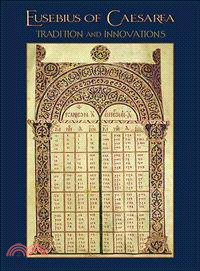
Eusebius of Caesarea was one of the most significant and voluminous contributors to the development of late antique literary culture. Despite his significance, Eusebius has tended to receive attention
Comparative Literature and Classical Persian Poetics applies comparative literary approaches to classical Persian traditions of composing and performing poetry and song. Olga M. Davidson focuses on ep
Many have argued in recent years that the U.S. constitutional system exalts individual rights over responsibilities, virtues, and the common good. Answering the charges against liberal theories of rig
The first classics in human history—the early works of literature, philosophy, and theology to which we have returned throughout the ages—appeared in the middle centuries of the first millennium bce.
We've all heard that a father's involvement enriches the lives of children. But how much have we heard about how having a child affects a father's life? As Peter Gray and Kermyt Anderson reveal, fathe
Why do the paintings and poetry of the Italian Renaissance—a celebration of classical antiquity—also depict the Florentine countryside populated with figures dressed in contemporary silk robes and fle
Hosking (retired, Russian history, U. College London) necessarily draws with broad strokes as he profiles one of the largest, strongest, and oldest cultures on the planet. He warns Western policy make
Are you alive? What makes you so sure? Most people believe this question has a clear answer—that some law defines our status as living (or not) for all purposes. But they are dead wrong. In this pione
Native and foreign speakers, mother tongues and national languages have jostled for distinction throughout the modern period. The fight for global dominance between the English and Chinese languages
What happens within us when we read a novel? And how does a novel create its unique effects, so distinct from those of a painting, a film, or a poem? In this inspired, thoughtful, deeply personal book
What Did It Mean to be a wife, woman, or slave in a society in which a land-owning woman was forbidden to lie with her male slave but the same slave might he allowed to take concubines? Jurists of the
Frigid, dark, and energy-deprived, the deep sea was long considered hostile to life. However, new sampling technologies and intense international research efforts in recent decades have revealed a rem
It has been clear from the beginning that William Blake was both a political radical and a radical psychologist. In William Blake on Self and Soul, Laura Quinney uses her sensitive, surprising reading
Slavery may no longer exist as a legal institution, but we still find many forms of non-freedom in contemporary societies. It is a troubling paradox, and one this book addresses by considering a perio
This book provides a careful historical analysis of the co-evolution of educational attainment and the wage structure in the United States through the twentieth century. The authors propose that the t
From the Iliad to Aristophanes, from the gospel of Matthew to Augustine, Greek and Latin texts are constellated with descriptive images of dreams. Some are formulaic, others intensely vivid. The best
What made Henry Kissinger the kind of diplomat he was? What experiences and influences shaped his worldview and provided the framework for his approach to international relations? Jeremi Suri offers a
Autonomy for Kant is not just a synonym for the capacity to choose, whether simple or deliberative. It is what the word literally implies: the imposition of a law on one’s own authority and out of one
Marsilio Ficino (1433–1499), the Florentine scholar-philosopher-magus, was largely responsible for the Renaissance revival of Plato. The publication of his Latin translations of the dialogues in 1484
Spinal cord injury, or SCI, is frequently sudden and unexpected—through accident, disease, or violence, patients temporarily lose control of their bodies and, it seems, their lives. With reh
After thirty years, the debate over antitrust's ideology has quieted. Most now agree that the protection of consumer welfare should be the only goal of antitrust laws. Execution, however, is another m
The Meiji Restoration of 1868 inaugurated a period of great change in Japan; it is seldom associated, however, with advances in civil and political rights. By studying parliamentarianism--the theories
Autism is a complex and incurable constellation of bizarre behaviors, impaired cognition, limited language, and most distressingly, a lack of responsiveness to other people, and it has been the center
This compact and original exposition of optimal control theory and applications is designed for graduate and advanced undergraduate students in economics. It presents a new elementary yet rigorous pro
All of the essays in this new collection by Thomas Schelling convey his unique perspective on individuals and society. This perspective has several characteristics: it is strategic in that it assumes
The present renewal of garden art demands a new approach to garden aesthetics. This book considers exceptional creations around the world and proposes new forms of garden experience. Using a variety o