In these two essays, one of America’s most honored writers fastens on the interrelation of American democracy and poetry and the concept of selfhood vital to each. “I really don’t w
Food and the City explores the physical, social, and political relations between the production of food and urban settlements. Its thirteen essays discuss the multiple scales and ideologies of product
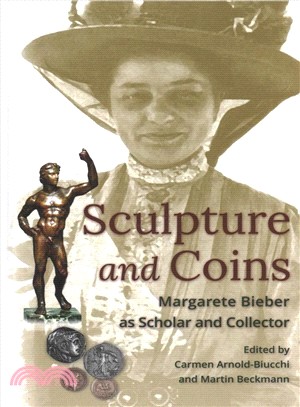
Based on a Harvard Art Museums symposium on the acquisition of Margarete Bieber's coin collection, Sculpture and Coins addresses the relation between large statuary and miniature art in the private an
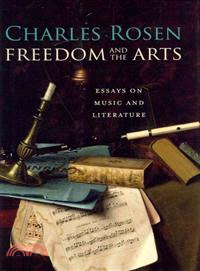
Is there a moment in history when a work receives its ideal interpretation? Or is negotiation always required to preserve the past and accommodate the present? The freedom of interpretation, Charles R
Breaking with the idea that gardens are places of indulgence and escapism, these studies of ritualized practices reveal that gardens in Europe, Asia, the United States, and the Caribbean have in fact
In a major new book, Lucian Pye reconceptualizes Asian political development as a product of cultural attitudes about power and authority. He contrasts the great traditions of Confucian East Asia wit
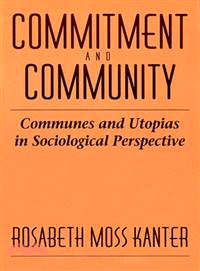
What makes some communes work, while others fail? Why is it so difficult to put utopian ideals into practice? Rosabeth Kanter offers a unique analysis of the nature and process of enduring commitment,
For anyone interested in an epoch of almost unrivaled intellectual activity and debate in India, the sixth-centuryMadhyamakahrdayakarika along with its auto-commentary, the Tarkajvala, is an indispens
The Renaissance marked a turning point in Europe’s relationship to Arabic thought. On the one hand, Dag Nikolaus Hasse argues, it was the period in which important Arabic traditions reached the peak o
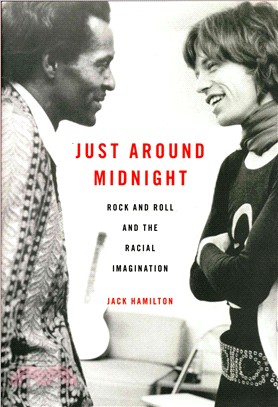
By the time Jimi Hendrix died in 1970, the idea of a black man playing lead guitar in a rock band seemed exotic. Yet a mere ten years earlier, Chuck Berry and Bo Diddley had stood among the most influ
At Indian independence in 1947, the country’s founders worried that the army India inherited— conservative and dominated by officers and troops drawn disproportionately from a few “martial” groups—pos
How do poor nations become rich, industrialized, and democratic? And what role does democracy play in this transition? To address these questions, Jongryn Mo and Barry R. Weingast study South Korea's
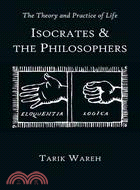
The Theory and Practice of Life is a study of the literary culture within which the works, schools, and careers of Plato, Aristotle, and contemporary Greek intellectuals took shape. It focuses on the
The Vatican’s dealings with the Weimar Republic and the Third Reich have long been swathed in myth and speculation. After almost seventy years, the crucial records for the years leading up to 1939 wer
Any sound practical philosophy must be clear on practical concepts—concepts, in particular, of life, action, and practice. This clarity is Michael Thompson’s aim in his ambitious work. In Thompson’s v
Between 1880 and 1930, close to 200 women were murdered by lynch mobs in the American South. Many more were tarred and feathered, burned, whipped, or raped. In this brutal world of white supremacist p
Any sound practical philosophy must be clear on practical concepts—concepts, in particular, of life, action, and practice. This clarity is Michael Thompson’s aim in his ambitious work. In Thompson’s v
Pain is immediate and searing but remains a deep mystery for sufferers, their physicians, and researchers. As neuroscientific research shows, even the immediate sensation of pain is shaped by psycholo
As America confronts an unpredictable war in Iraq, Stephen Randolph returns to an earlier conflict that severely tested our civilian and military leaders. In 1972, America sought to withdraw from Viet
Arousal is fundamental to all cognition. It is intuitively obvious, absolutely necessary, but what exactly is it? In Brain Arousal and Information Theory, Donald Pfaff presents a daring perspective on
Never has the power of scientific research to solve existing problems and uncover new ones been more evident than it is today. Yet there exists widespread ignorance about the larger contexts within wh
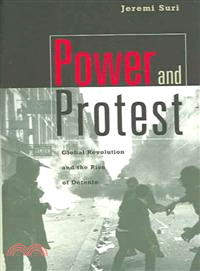
In a brilliantly conceived book, Jeremi Suri puts the tumultuous 1960s into a truly international perspective in the first study to examine the connections between great power diplomacy and global soc
A study offers insights into why states wage war and traces the effects of human tendency toward overconfidence through two turning points that erupted into war and two that did not.
For this updated edition of her acclaimed work on historians and the writing of history, Gertrude Himmelfarb adds four insightful and provocative essays dealing with changes in the discipline over the
The Analects (Lunyu) is one of the most influential texts in human history. As a putative record of Confucius' (551–479 B.C.E.) teachings and a foundational text in scriptural Confucianism, this class
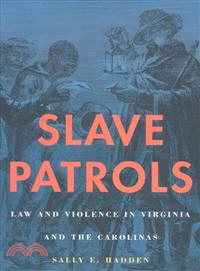
Obscured from our view of slaves and masters in America is a critical third party: the state, with its coercive power. This book completes the grim picture of slavery by showing us the origins, the na
An institution in decline, possessing little power in an age dominated by warriors? Or a still-potent symbol of social and political legitimacy? Emperor and Aristocracy in Japan traces the fate of the
As the high-ranking Bishop of Alexandria from 328 to 373, Athanasius came into conflict with no fewer than four Roman emperors--Constantine himself, his son Constantius, Julian the Apostate, and the "
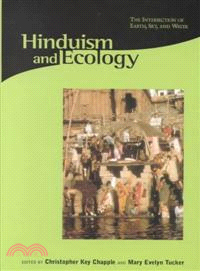
Chapple (theology, Loyola Marymount U, Los Angeles) and Tucker (religion, Bucknell U, Lewisberg, PA) edit 21 essays by scholars of religion, anthropology, ecology, and political science, most of whom
Volumes V and VI of Shelley and His Circle, edited by Donald H. Reiman, make available a further portion of the Shelley manuscript materials in the Carl H. Pforzheimer Library. These two volumes conti
The publication of Volumes III and IV of Shelley and His Circle under the editorial auspices of Kenneth Neill Cameron makes available a further portion of the Shelley manuscript materials in the Carl
Plutarch (Plutarchus), ca. 45?120 CE, was born at Chaeronea in Boeotia in central Greece, studied philosophy at Athens, and, after coming to Rome as a teacher in philosophy, was given consular rank by