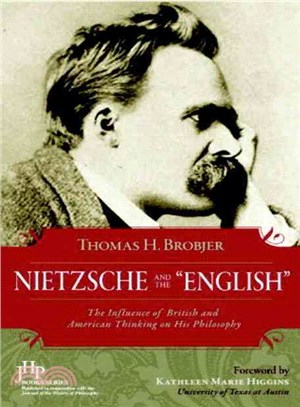
Friedrich Nietzsche—one of the most read and discussed philosophers of all time—is frequently regarded as a quintessentially German philosopher, yet one who had strong anti-German tendencies and late
Philosopher Daniel C. Fouke sheds the light of rhetorical analysis on a subversive thinker whose challenges to institutional authority have awakened recent scholarly interest.John Toland (1670-1722) w
Wittgenstein sought clarity for its own sake, and so avoided advocacy or system building, says Garver (philosophy, State U. of New York-Buffalo), but he himself strives to contribute greater clarity t
Cassidy (natural science, Hofstra U.) traces the impact on society of the views and theories of physicist, essayist, and man of moral principles Albert Einstein (1879-1955). He looks at the scientific
In this work of political philosophy Nielsen (emeritus, philosophy, U. of Calgary, Canada) criticizes capitalist globalization as increasing inequality and damaging prospects for genuine democracy. He
Anglophone philosophers have on the whole overlooked much of the last ten years or so of Descartes' philosophical career. In the period following publication of the Meditations, however, Descartes was
This absorbing study of the Victorian controversies over the cultural meaning of evolution broadens our perspective by discussing the roles played by prominent individuals besides Charles Darwin, nota
It is of the very definition of any "classic" work that it will not only introduce a new depth and direction of thought, but that its original insights endure. When it first appeared in 1940, Reason a
In this book, Macmurray develops with exceptional clarity his views on reason and emotion as interdependent, rather than opposed aspects of human personality. Underlying the lectures collected in this
This revision of the 1996 edition expands coverage of Asian, continental, and contemporary analytic philosophy. About a quarter of the some 4,000 entries are bibliographic ones on major philosophers a
This study of Lenin's conception of the revolutionary party, and its place in Marxist thought, gives a vibrant sense of the historical context—both Russian and international—in which Lenin's views wer
Buber poetically interprets the central aspects of Hasidic life, offers a selection of sayings from Baal-Shem-Tov, and movingly recounts his personal path to Hasidism.
Postmodernism is a term used to describe a contemporary school of philosophy that takes a highly critical stance toward the conceptual underpinnings of the modern worldview. Such leading postmodernist
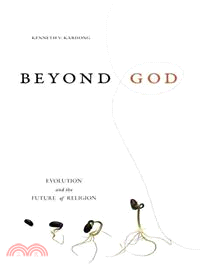
Looking at religion from an evolutionary perspective, Kardong (biology, Washington State U.) updates and rewrites his previous book Origin of God (2004) to argue that religion was an evolutionary nece
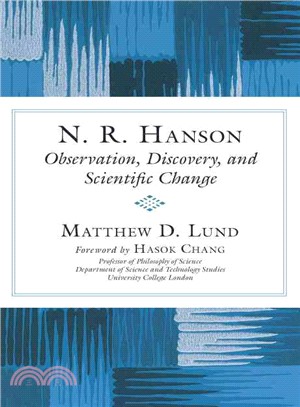
In Patterns of Discovery (1958), Norwood Russell Hanson (1924-1967; founder, department of the history and philosophy of science, U. of Indiana) argues that observation is theory- and language-laden;
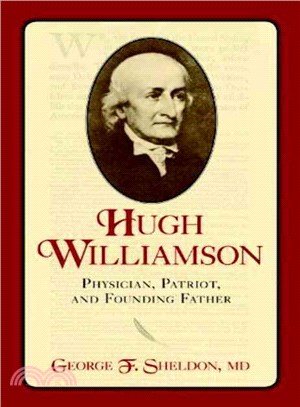
Hugh Williamson (1735-1819) was a physician, a member of the educated intelligentsia in colonial America, and a signer of the US Constitution. Although he is one of the lesser-known Founding Fathers,
In this insightful study, Nietzsche specialist Jonathan R. Cohen argues that Human, All-Too-Human (1878) represents the crucial watershed for Nietzsche’s philosophical development, the moment at which
It is an undeniable fact that economic circumstances can directly impact political affairs, that wealth is easily translated into political influence, and that political movements and constitutional a
A specialist on nomadic peoples, Salzman (anthropology, McGill U.) describes Arab culture as a brilliant construction of human creativity that responds in a practical manner to many human problems. Li
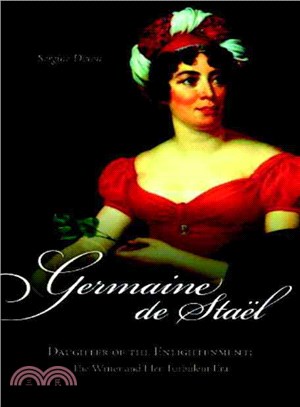
Her parents bought her a husband. It was not money well spent. She was not pretty, a condition rarely forgiven. But she was brilliant, a prolific and celebrated author, and perfectly placed as a premi
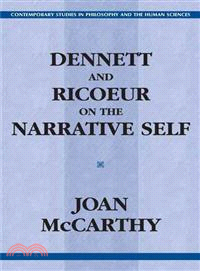
A central issue in contemporary philosophy is the problem of the self. Is it some kind of real entity or a very convincing illusion? Drawing on the work of two leading philosophers, Daniel Dennett and
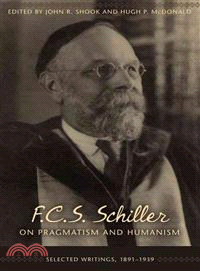
The renaissance of pragmatism in recent decades has stimulated renewed study of the classical pragmatists. Until this volume, F. C. S. Schiller (1864–1937) was the only major pragmatist from the class
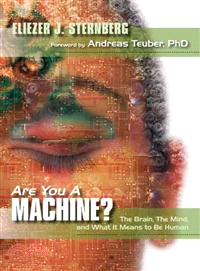
Can conscious machines be created, and if so, what does that imply for being human? Extending a paper written in high school, Sternberg (neuroscience and philosophy major, Brandeis U.) offers an acces
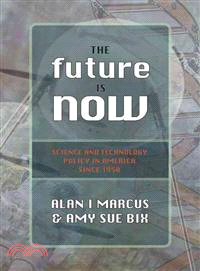
Marcus (history, Mississippi State U.) and Bix (history, Iowa State U.) employ case studies and vignettes to chronologically illustrate the evolution of US federal science and technology policies from
A specialist in early modern culture and intellectual history, Wolloch has chosen anthropocentrism as the pivot around which to study the considerable interest in animals by early modern European phil
How can we respond in the aftermath of wrongdoing? How can social trust be restored in the wake of intense political conflict? In this challenging work, philosopher Trudy Govier explores central dilem
In this revised, expanded edition of his critically acclaimed book, Eric Dorn Brose weaves a fabric from three histories that, until now, have been thought of as mutually exclusive. The history of tec
Drawing on the full spectrum of Marx's writings, Brien (philosophy, Washington College) reconstructs the philosophical dimensions of Marx's thought, centrally focusing on the problem of freedom, which
Asante (African American studies, Temple U.) is the creator of the first doctoral program in African American studies and the author of some 60 books. He examines, from an Afrocentric perspective, sev
Eight essays revised from presentations at a March 2002 conference in Los Angeles cast light on the role and influence of ancient skepticism in early modern philosophy, particularly drawing on develop
Issues of economic justice and racial justice have been intertwined throughout American history, a fact long recognized by African American leaders and thinkers. Le Blanc (history, La Roche College) p
The growth of transnational corporations, the dominance of worldwide financial and political institutions, and the extensive influence of media that are nearly monopolized by corporate interests are k
Historians from North and South America, Europe, and Africa explore how the cultures of Africans changed both in western Africa and in Brazil from about 1600 to 1850. They look at the Portuguese slave
Most philosophy and philosophers are lumped under one or the other of the two labels mentioned in the title, but for Prado (philosophy, Queen's U., Canada) such a practice is too facile. He sees benef
In this brilliant assessment of the relation between poststructuralism and feminism to current religious thought, philosopher of religion Carol Wayne White convincingly demonstrates that postmodernist
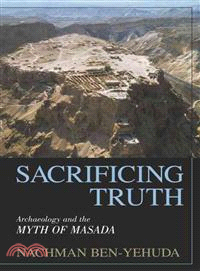
Ben-Yehuda (social sciences, Hebrew U.) examines the 1963-65 excavation of Masada in the Judean Desert of Israel, and how it shaped nation-building by helping forge a specific past and hence new natio
Elizabeth Cady Stanton (1815-1902) devoted her life to the cause of advancing the political, legal, and social standing of women, and she became the women's rights movement's most eloquent spokespers
This collection brings together some of Latin America's most important thinkers and writers, making available in one volume classic and recent essays that address the question of postmodernity in Lati