Lacan and the Subject of Law is both an accessible introduction to Lacanian psychoanalytic theory and a demonstration of the relevance of Jacques Lacan's influential work for the critique of legal pro
Radical Philosophy of Law represents a cross section of contemporary critiques of the legal establishment—its theoretical foundations and its institutions and processes. Recognizing that proposals for
Written in 1937, World Revolution was a contemporary attempt to synthesize the experience of the revolutionary movement after World War I. James's analysis of the Soviet Union bears a surprising fresh
In this insightful study, Nietzsche specialist Jonathan R. Cohen argues that Human, All-Too-Human (1878) represents the crucial watershed for Nietzsche’s philosophical development, the moment at which
Her parents bought her a husband. It was not money well spent. She was not pretty, a condition rarely forgiven. But she was brilliant, a prolific and celebrated author, and perfectly placed as a premi
Historians from North and South America, Europe, and Africa explore how the cultures of Africans changed both in western Africa and in Brazil from about 1600 to 1850. They look at the Portuguese slave
Jose Carlos Mariategui is widely considered one of Latin America's greatest Marxist theoreticians and activists and remains nearly unknown in the English-speaking world. This collection of essays is a
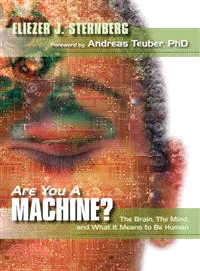
Can conscious machines be created, and if so, what does that imply for being human? Extending a paper written in high school, Sternberg (neuroscience and philosophy major, Brandeis U.) offers an acces
Here the development of nuclear weapons is viewed from the perspective of the scientist. From the discovery of fission to the Manhattan Project, to Hiroshima and Nagasaki, the arms race and early step
In The Primal Instinct, Dr. Martin Jaffe argues that the need for security—both physical security and intellectual security, which is assessed as the feeling of self-esteem—is the principle that motiv
Sivulka (journalism and mass communications, U. of South Carolina) explores what advertisements for packaged soap and related products reveal about changes in beliefs and values of society during the
Liberalism is an attempt to both understand and change the world, an ideology and a movement, a set of ideas and a set of institutions. Liberal ideas began in Western Europe, but eventually spread thr
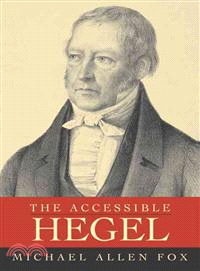
Hegel's influence over intellectual history, philosophy, social science and even literature is enormous, but his works are notoriously difficult to read and apply. Fox (philosophy, Queen's U., Canada)
This collection brings together many of Alan M. Wald's most influential and original essays. They provide a richly provocative inquiry into the antinomies of cultural radicalism and are characterized
Paul Crittenden sets out to recover the past philosophical practice of treating developmental questions as an important part of ethical inquiry and to bring moral development, moral education, and mor
Cited in Books for College Libraries, 3d ed . Most of the major schools of contemporary philosophy, including Marxism and Existentialism are reactions to Hegelianism, and a grounding in Hegel's work,
Gill (emeritus, philosophy and religious studies, College of Saint Rose) presents a broad survey of Native American worldviews for students and the general reader. He draws upon the findings of anthro
Born a slave on a Virginia plantation, James Lindsay Smith endured a life of humiliation, and physical and psychological abuse of every sort. Originally published in 1881, this detailed narrative of S
The American and European contributors, some established scholars and some new, do not share an approach to Phenomenology or to Hegelian philosophy in general, but do consider one or the other either
"We have been reminded time and again by anthropologists of the ideas and ideals of the Enlightenment in which the intellectual inspiration of anthropology is supposed to lie. But anthropology is also
Acquaints those unable to read Russian with writings that have helped to shape the social and political consciousness of modern Russia. Most of these documents, from the 18th and 19th centuries, have
The "civilization" of 20th-century Europe included many of the most revolutionary scientific advances in human history, some of the most original movements in art and music, and the creation of a "wel
The Philosophy of John Stuart Mill demonstrates that Mill both saw his views as part of a systematic defense of empiricist epistemology and utilitarian ethics, and was to a large extent successful in
Some years ago, Cook decided that in his attempts to defend Ludwig Wittgenstein's (1889-1951) philosophy, he had been cheating both himself and his students, and so resigned his position as head of th
Why are we in the United States so concerned with street violence and murder and so unconcerned about the many untimely deaths resulting from the routine workings of our society? Far more people die b
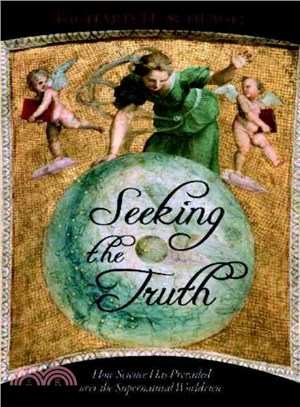
In this sweeping intellectual history, philosopher Richard H. Schlagel compares the conceptual worldviews of science and religion, their distinct historical origins, their radically different experie
Psychology has traditionally analyzed the self in terms of familial influence, close relationships, inherited personality traits, education, social status, and economic level. But as psychologist Jose
Plessner (1892-1985), a onetime student of Husserl and contemporary of Heidegger, achieved recognition as a German social philosopher who helped establish philosophical anthropology as a discipline in
Beck examines the politics of the risk society. He starts from the assumption that the ecological issue, considered politically and sociologically, is a systematic, legalized violation of fundamental
The debate on the foundations of knowledge and meaning has gained particular attention in recent philosophical discourse. A number of commentators, including Richard Rorty, have categorized leading co
On the American frontier, African American units of the U.S. Army - nicknamed "Buffalo Soldiers" by their Indian opponents - were renowned for their fortitude, courage, and ability to handle difficul
One of the most original and refreshing approaches to philosophy is existentialism. Although the heyday of this movement spanned the late-nineteenth to mid-twentieth centuries, the themes that existen
As we survey the negative effects of modernism—environmental destruction, the net consumption of irreplaceable natural resources, the ever-widening gulf between first and third worlds—we are forced to
Semujanga (literature, U. of Montreal, Canada) uses discourse analysis to trace the roots of the Rwandan genocide. He begins his study with Christian missionary discourse and the move from labyrinthin
Naturalism is widely regarded as the dominant philosophical worldview in the West. The prestige of science and the power of technology have driven naturalism to prominence, even as deep questions moun
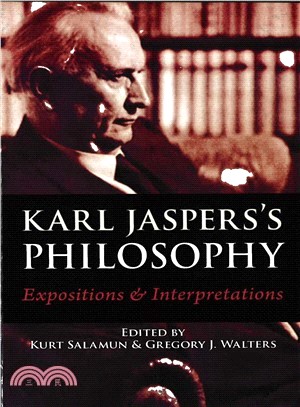
Karl Jaspers was one of the greatest European philosophers and humanists of the twentieth century. He demonstrated a broad range of philosophical thinking that makes his work relevant for the twenty-f
Navia (philosophy, New York Institute of Technology) sifts through the contemporary evidence about the life of the strange Greek philosopher, who died in 323 BC, and through reports of his writing, no
T. D. Lysenko (1898-1976) was a Russian agronomist and head of a school that rejected classical genetics. He was championed by the new Soviet government, which officially condemned genetics until 1964
One hundred years ago, African Americans looked forward to the new twentieth century with mixed feelings of pride and discouragement. While they could point to the tremendous progress many of them ha