In this work of political philosophy Nielsen (emeritus, philosophy, U. of Calgary, Canada) criticizes capitalist globalization as increasing inequality and damaging prospects for genuine democracy. He
Wittgenstein sought clarity for its own sake, and so avoided advocacy or system building, says Garver (philosophy, State U. of New York-Buffalo), but he himself strives to contribute greater clarity t
Anglophone philosophers have on the whole overlooked much of the last ten years or so of Descartes' philosophical career. In the period following publication of the Meditations, however, Descartes was
Philosopher Daniel C. Fouke sheds the light of rhetorical analysis on a subversive thinker whose challenges to institutional authority have awakened recent scholarly interest.John Toland (1670-1722) w
In this brilliant assessment of the relation between poststructuralism and feminism to current religious thought, philosopher of religion Carol Wayne White convincingly demonstrates that postmodernist
In this critical examination of Descartes's Fourth Meditation and the latter part of the Sixth Meditation, Joel Thomas Tierno has produced not only an interesting contribution to Cartesian scholarship
A specialist on nomadic peoples, Salzman (anthropology, McGill U.) describes Arab culture as a brilliant construction of human creativity that responds in a practical manner to many human problems. Li
Postmodernism is a term used to describe a contemporary school of philosophy that takes a highly critical stance toward the conceptual underpinnings of the modern worldview. Such leading postmodernist
Asante (African American studies, Temple U.) is the creator of the first doctoral program in African American studies and the author of some 60 books. He examines, from an Afrocentric perspective, sev
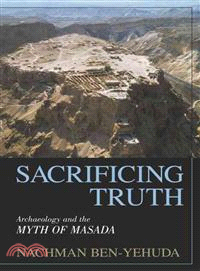
Ben-Yehuda (social sciences, Hebrew U.) examines the 1963-65 excavation of Masada in the Judean Desert of Israel, and how it shaped nation-building by helping forge a specific past and hence new natio
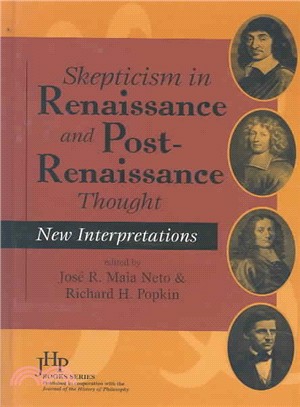
Eight essays revised from presentations at a March 2002 conference in Los Angeles cast light on the role and influence of ancient skepticism in early modern philosophy, particularly drawing on develop
It is an undeniable fact that economic circumstances can directly impact political affairs, that wealth is easily translated into political influence, and that political movements and constitutional a
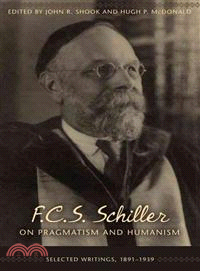
The renaissance of pragmatism in recent decades has stimulated renewed study of the classical pragmatists. Until this volume, F. C. S. Schiller (1864–1937) was the only major pragmatist from the class
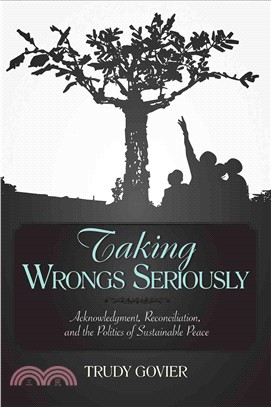
How can we respond in the aftermath of wrongdoing? How can social trust be restored in the wake of intense political conflict? In this challenging work, philosopher Trudy Govier explores central dilem
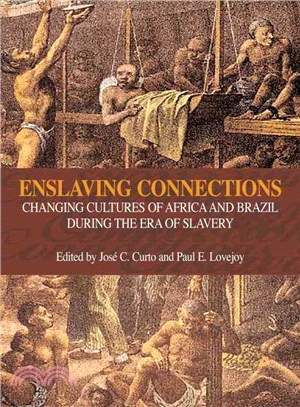
Historians from North and South America, Europe, and Africa explore how the cultures of Africans changed both in western Africa and in Brazil from about 1600 to 1850. They look at the Portuguese slave
Jose Carlos Mariategui is widely considered one of Latin America's greatest Marxist theoreticians and activists and remains nearly unknown in the English-speaking world. This collection of essays is a
Some years ago, Cook decided that in his attempts to defend Ludwig Wittgenstein's (1889-1951) philosophy, he had been cheating both himself and his students, and so resigned his position as head of th
Plessner (1892-1985), a onetime student of Husserl and contemporary of Heidegger, achieved recognition as a German social philosopher who helped establish philosophical anthropology as a discipline in
The debate on the foundations of knowledge and meaning has gained particular attention in recent philosophical discourse. A number of commentators, including Richard Rorty, have categorized leading co
Semujanga (literature, U. of Montreal, Canada) uses discourse analysis to trace the roots of the Rwandan genocide. He begins his study with Christian missionary discourse and the move from labyrinthin
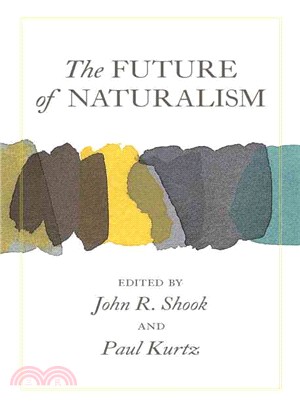
Naturalism is widely regarded as the dominant philosophical worldview in the West. The prestige of science and the power of technology have driven naturalism to prominence, even as deep questions moun
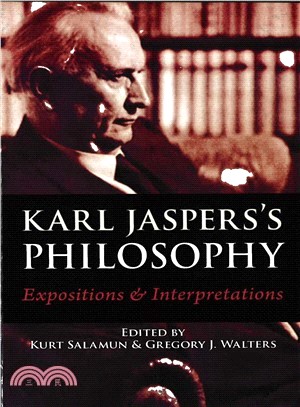
Karl Jaspers was one of the greatest European philosophers and humanists of the twentieth century. He demonstrated a broad range of philosophical thinking that makes his work relevant for the twenty-f
The Logic of Human Personality shows how the ancient definition of person remains useful today, and explains how it happened to fall into disuse.The method of using the categories of Aristotle is illu
To be a cosmopolitan—i.e., a citizen of the world first and only secondarily a member of a particular nation—is an ideal that has a long history. It dates back to the ancient Greek philosopher Diogene
Women have been practicing the healing arts for centuries. And at the same time, they have wanted to play a vital role in wartime—not only on the home front but also on the battlefield with all its ri
The fall of the Berlin Wall on November 9, 1989, signaled the beginning of the end of a divided Germany. More than any other event, it also symbolized the end of the so-called postwar era. The period
Radical Philosophy of Law represents a cross section of contemporary critiques of the legal establishment—its theoretical foundations and its institutions and processes. Recognizing that proposa
These essays focus on and explore the idea of "radicalizing" hermeneutics, which John D. Caputo first proposed in his provocative and widely read study, Radical Hermeneutics (1987). In the wake of Der