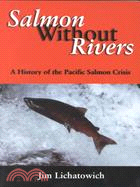
"Fundamentally, the salmon's decline has been the consequence of a vision based on flawed assumptions and unchallenged myths.... We assumed we could control the biological productivity of salmon and
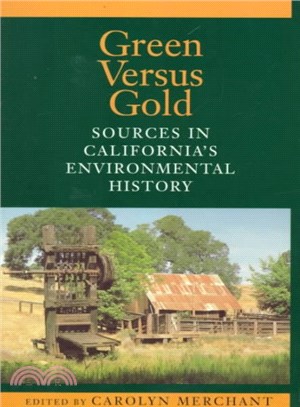
A collection of analytical essays and primary source documents ranging in time from 1774 to 1994 explore the history of environmental usage, degradation, and conservation struggles in California. The
Stormwater management as art? Absolutely. Rain is a resource that should be valued and celebrated, not merely treated as an urban design problem—and yet, traditional stormwater treatment methods often
Stormwater management as art? Absolutely. Rain is a resource that should be valued and celebrated, not merely treated as an urban design problem—and yet, traditional stormwater treatment methods often
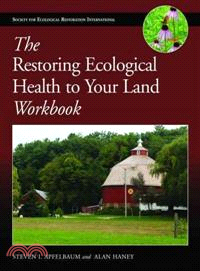
Restoring Ecological Health to Your Land was the first practical guidebook to give restorationists and would-be restorationists with little or no scientific background the "how to" information and kno
There's a simple, straightforward way to cut carbon emissions and prevent the most disastrous effects of climate change-and we're rejecting it because of irrational political fears. That's the central
There's a simple, straightforward way to cut carbon emissions and prevent the most disastrous effects of climate change-and we're rejecting it because of irrational political fears. That's the central
Two of the country's leading experts on land conservation provide an overview of successful state, local, and private land conservation programs, and also describe successful campaigns to win ballot m
Community development -- the economic, physical, and social revitalization of a community, led by the people who live in that community -- offers a wide range of exciting and rewarding employment opt
Vast areas of valuable resources unfettered by legal rights have, for centuries, been the central target of human exploitation and appropriation. The global commons -- Antarctica, the high seas and de
Consider this: Without interaction between animals and flowering plants, the seeds and fruits that make up nearly eighty percent of the human diet would not exist.In The Forgotten Pollinators, Stephe
What we make and buy is a major indicator of society’s collective priorities. Among twenty-four key trends,Vital Signs Volume 22 explores significant global patterns in production and consumption. The
City Rules offers a challenge to students and professionals in urban planning, design, and policy to change the rules of city-building, using regulations to reinvigorate, rather than stifle, our commu
City Rules offers a challenge to students and professionals in urban planning, design, and policy to change the rules of city-building, using regulations to reinvigorate, rather than stifle, our commu
Restoration ecology is a young field that integrates theory and knowledge from a range of disciplines, including the biological, physical, and social sciences as well as the humanities. This new textb
State of the Wild is a biennial series that brings together international conservation experts and writers to discuss emerging issues in the conservation of wildlife and wild places.In addition to ev
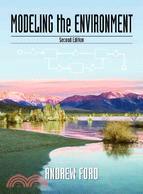
Modeling the Environment was the first textbook in an emerging field—the modeling techniques that allow managers and researchers to see in advance the consequences of actions and policies in environme
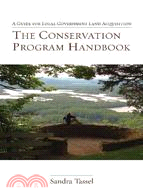
Between 1996 and 2007,?voters approved almost $24 billion for local government park, open space, and other conservation purposes. Despite this substantial sum for land protection, there was at that ti
Baker (ecology and geography, U. of Wyoming) reviews scientific research on fire in Rocky Mountain ecosystems from a landscape-scale approach and shows that systems in the Rockies were dominated histo
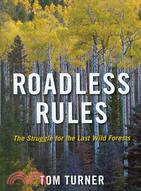
Roadless Rules is a fast-paced and insightful look at one of the most important, wide-ranging, and controversial efforts to protect public forests ever undertaken in the United States.In Januar
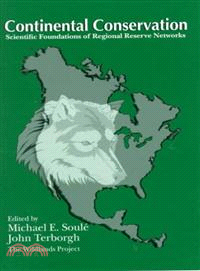
The Wildlands Project is a far-reaching effort by scientists and activists to develop better ways of protecting nature, wilderness, and biodiversity. Its ultimate goal is to establish an effective net
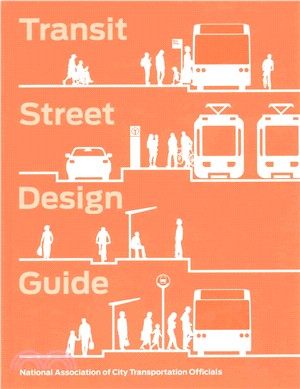
Transit and cities grow together. As cities work to become more compact, sustainable, and healthy, their work is paying dividends: in 2014, Americans took 10.8 billion trips on public transit, the hig
In New Mexico's Gila Wilderness, 106 Mexican gray wolves may be some of the most monitored wildlife on the planet. Collared, microchipped, and transported by helicopter, the wolves are protected and c
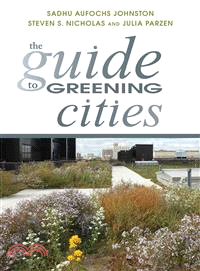
From New York City's urban forest and farmland in Virginia to the vast Sonoran Desert of Arizona and riverside parks in Vancouver, Washington, green infrastructure is becoming a priority for cities, c
Short-term, community-based projects—from pop-up parks to open streets initiatives—have become a powerful and adaptable new tool of urban activists, planners, and policy-makers seeking to drive las
"Superstorm Sandy sent a strong message that a new generation of urban development and infrastructure is desperately needed, and it must be designed with resilience in mind. As cities continue to face
From meat consumption to automobile production to hydropower, Vital Signs, Volume 20 documents over two dozen trends that are shaping our future in concise analyses and clear tables and graphs. The tw
We all have a natural nesting instinct—we know what makes a good place. And a consensus has developed among urban planners and designers about the essential components of healthy, prosperous communiti
Leon Krier is one of the best-known—and most provocative—architects and urban theoreticians in the world. Until now, however, his ideas have circulated mostly among a professional audience of architec
Research has shown that successful public spaces are ones that are responsive to the needs of their users, are democratic in their accessibility, and are meaningful for the larger community and socie
Why shouldn't people who deplete our natural assets have to pay, and those who protect them reap profits? Conservation-minded entrepreneurs and others around the world are beginning to ask just that
"In this book, I relate the pleasures, as well as the virtues and difficulties of a perhaps simpler than average North American life." So begins ecological thinker and writer Stephanie Mills's Epicure
Vigorous, colorful, bold and highly personal, Breaking New Ground is the autobiography of Gifford Pinchot, founder and first chief of the Forest Service. He tells a fascinating tale of his efforts, un
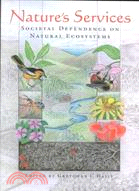
Life itself as well as the entire human economy depends on goods and services provided by earth's natural systems. The processes of cleansing, recycling, and renewal, along with goods such as seafood
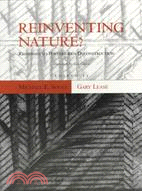
How much of science is culturally constructed? How much depends on language and metaphor? How do our ideas about nature connect with reality? Can nature be "reinvented" through theme parks and malls,
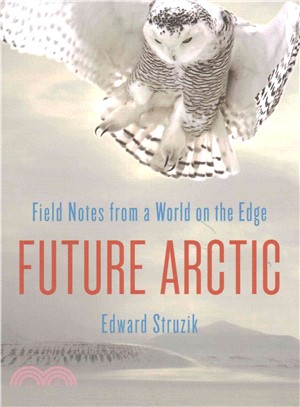
In one hundred years, or even fifty, the Arctic will look dramatically different than it does today. As polar ice retreats and animals and plants migrate northward, the Arctic landscape is morphing in
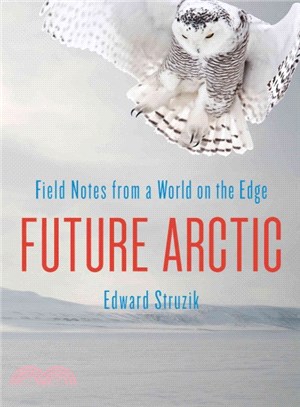
In one hundred years, or even fifty, the Arctic will look dramatically different than it does today. As polar ice retreats and animals and plants migrate northward, the arctic landscape is morphing in
In 1987, zoologist Alan Rabinowitz was invited by the Thai government to study leopards, tigers, and other wildlife in the Huai Kha Khaeng valley, one of Southeast Asia's largest and most prized fores
It’s easy to feel small and powerless in the face of big environmental challenges. When climate change forces species to fight for their very survival and the planet’s last places of wilderness are gr
Americans are voting with their feet to abandon strip malls and suburban sprawl, embracing instead a new type of community where they can live, work, shop, and play within easy walking distance. In Th