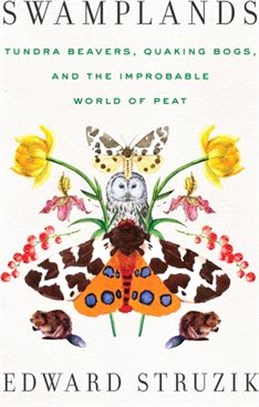
What would it be like to live in a world with no predators roaming our landscapes? Would their elimination, which humans have sought with ever greater urgency in recent times, bring about a pastoral,
"Plugged by no fewer than twenty-five dams, the Colorado is the world's most regulated river, providing most of the water supply of Las Vegas, Tucson, and San Diego, and much of the power and water of
Despite an uncertain economy, the market for green building is exploding. The US green building market has expanded dramatically since 2008 and is projected to double in size by 2015 (from $42 billion
Ecological restoration is a rapidly growing discipline that encompasses a wide range of activities and brings together practitioners and theoreticians from a variety of backgrounds and perspectives, r
Ecological restoration is a rapidly growing discipline that encompasses a wide range of activities and brings together practitioners and theoreticians from a variety of backgrounds and perspectives, r
Plugged by no fewer than twenty-five dams, the Colorado is the world’s most regulated river drainage, providing most of the water supply of Las Vegas, Tucson, and San Diego, and much of the power and
In 2006, Resilience Thinking addressed an essential question: As the natural systems that sustain us are subjected to shock after shock, how much can they take and still deliver the services we need f
Today, “Love Canal” is synonymous with the struggle for environmental health and justice. But in 1972, when Lois Gibbs moved there with her husband and new baby, it was simply a modest neighborhood in
In the middle of the Mojave Desert, Las Vegas casinos use billions of gallons of water for fountains, pirate lagoons, wave machines, and indoor canals. Meanwhile, the town of Orme, Tennessee, must tr
Foundations of Environmental Physics is designed to focus students on the current energy and environmental problems facing society, and to give them the critical thinking and computational skills need
Terborgh (Environmental Sciences, Duke University) and Estes (Ecology, University of California at Santa Cruz) present the first comprehensive book on trophic cascades--the top-down regulation of ecos
Mountain goats have been among the least studied of North American ungulates, leaving wildlife managers with little information on which to base harvest strategies or conservation plans.?This book off
Silicon is among the most abundant elements on earth. It plays a key but largely unappreciated role in many biogeochemical processes, including those that regulate climate and undergird marine food we
Increasingly, cracks are appearing in the capacity of communities, ecosystems, and landscapes to provide the goods and services that sustain our planet's well-being. The response from most quarters h
Sustainable design has made great strides in recent years; unfortunately, it still falls short of fully integrating nature into our built environment. Through a groundbreaking new paradigm of "restor
The Earth's biological, chemical, and physical systems are increasingly shaped by the activities of one species-ours. In our decisions about everything from manufacturing technologies to restaurant me
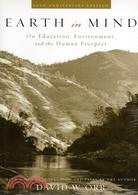
In Earth in Mind, noted environmental educator David W. Orr focuses not on problems in education, but on the problem of education. Much of what has gone wrong with the world, he argues, is the result
Is private ownership an inviolate right that individuals can wield as they see fit? Or is it better understood in more collective terms, as an institution that communities reshape over time to promote
Recommended by The Nature Conservancy magazine.Ranching West of the 100th Meridian offers a literary and thought-provoking look at ranching and its role in the changing West. The book's lyrical and de
In recent years, scientists have begun to focus on the idea that healthy, functioning ecosystems provide essential services to human populations, ranging from water purification to food and medicine t
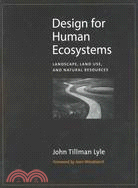
For more than 30 years, John Tillman Lyle (1934-1998) was one of the leading thinkers in ecological design. Design for Human Ecosystems, originally published in 1985, is his classic text that explores
Some parks, preserves, and other natural areas serve people well; others are disappointing. Successful design and management requires knowledge of both people and environments.With People in Mind expl
This volume presents a series of case studies from around the world that examine the complex culture and power dimensions of water resources and management. Chapters describe highly contentious cases
Current patterns of land use and development are at once socially, economically, and environmentally destructive. Sprawling low-density development literally devours natural landscapes while breeding
Landscape ecology has emerged in the past decade as an important and useful tool for land-use planners and landscape architects. While professionals and scholars have begun to incorporate aspects of
Better Trout Habitat explains the physical, chemical, and biological needs of trout, and shows how climate, geology, vegetation, and flowing water all help to create trout habitat.
What is nature worth? The answer to this question—which traditionally has been framed in environmental terms—is revolutionizing the way we do business.In Nature’s Fortune, Mark Tercek, CEO of The Natu
Plum and pear trees shade park benches in Kamloops, British Columbia. Tomatoes and cucumbers burst forth from planters at City Hall in Provo, Utah. Strawberries and carrots flourish along the sunny si