"A compelling agricultural story skillfully told; environmentalists will eat it up." - Kirkus Reviews When Bob Quinn was a kid, a stranger at a county fair gave him a few kernels of an
In Twenty Years of Life, Suzanne Bohan exposes the disturbing flip side of the American dream: your health is largely determined by your zip code. The strain of living in a poor neighborhood, wit
A National Climate Assessment is required every four years by the Global Change Research Act of 1990 as a report to the president and congress on the status of climate change science and impacts. This
As we struggle to feed a global population speeding toward 9 billion, we have entered a new phase of the food crisis. Wealthy countries that import much of their food, along with private investors, ar
In a very short time America has realized that global warming poses real challenges to the nation's future. The Agile City engages the fundamental question: what to do about it? Journalist and urban a
Forty-two international conservation specialists and writers contribute 29 chapters to the second text in a science-based series produced by the Wildlife Conservation Society which addresses emerging
Development booms have marked the US West for the past century. Travis (geography/Center of the American West, U. of Colorado at Boulder), an Orton Family Foundation fellow, examines land use patterns
Can land degraded by centuries of agriculture be restored to something approaching its original productivity and diversity? This book tells the story of fifty years of restoration and management of th
Property rights are a tool humans use in regulating their use of natural resources. Understanding how rights to resources are assigned and how they are controlled is critical to designing and implemen
Public transit is a powerful tool for addressing a huge range of urban problems, including traffic congestion and economic development as well as climate change. But while many people support transit
Recent decades have been marked by the decline or collapse of one fishery after another around the world, from swordfish in the North Atlantic to orange roughy in the South Pacific. While the effects
"An admirable work...compelling." "A clear, informative account of the clash in the dark heart of the rain forest." -NEW YORK TIMES"In the rain forests of the western Amazon," writes author Andrew Re
Prepared for the 2013 National Climate Assessment and a landmark study in terms of its breadth and depth of coverage, Oceans and Marine Resources in a Changing Climate is the result of a collaboration
Romm, a climate expert and physicist, is no stranger to those who follow the news on climate change. His straight-ahead and often ferocious blogs on climate change, the confrontational politics of the
Marvin is a contract hog farmer in Iowa. He owns his land, his barn, his tractor, and his animal crates. He has seen profits drop steadily for the last twenty years and feels trapped. Josh is a dairy
As the distance between farm and table grew, we went from knowing particular places and specific stories behind our foods’ origins to instead relying on advertisers’ claims. The woman who raised, pluc
Dubbed the Indiana Jones of wildlife science by The New York Times, Alan Rabinowitz has devoted—and risked—his life to protect nature’s great endangered mammals. He has journeyed to the remote corners
Just over two decades ago, research findings that environmentally hazardous facilities were more likely to be sited near poor and minority communities gave rise to the environmental justice movement.
The new Equid Action Plan provides current knowledge on the biology, ecology and conservation status of wild zebras, asses, and horses. It specifies what information is lacking, and prioritizes needed
Scientists and policymakers must work together if solutions to the biodiversity crisis are to be found. Yet all too often, scientific data are unknown or incomprehensible to policymakers, and politica
Something new and important is afoot. Nonprofit and philanthropic organizations are under increasing pressure to do more and to do better to increase and improve productivity with fewer resources. Soc
Draws on past scholarship and new studies of unpublished archival materials to provide insight into the naturalist's life and work and to chart his intellectual growth and role in championing the earl
Today's natural resource managers must be able to navigate among the complicated interactions and conflicting interests of diverse stakeholders and decisionmakers. Technical and scientific knowledge,
Architect and landscape architect Condon (landscape and livable environments, U. of British Columbia) offers advice to urban designers, policy makers, developers, regulators and citizen activists on w
Using case studies from around the world, Share describes the benefits gained from cooperation and the challenges of constructing legal frameworks, institutions, management processes and financing and
In hundreds of watersheds and communities across the United States, conservation is being reinvented and invigorated by collaborative efforts between federal, state, and local governments working with
Lindenmayer (resource and environmental studies, Australian National U.) and Franklin (ecosystem science, U. of Washington-Seattle) lay the foundations for a comprehensive and multi-scaled approach th
Written for students and professionals, this guide to ecosystem-based management (EBM) for marine and coastal environments uses case studies to illustrate how these holistic and integrated principles
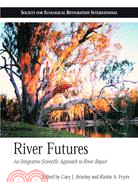
Across much of the industrialized world, rivers that were physically transformed and ecologically ruined to facilitate industrial and agricultural development are now the focus of restoration and reh
The authors are both consultants and design practitioners with a particular vision. To create sustainable systems, objects and environments, they argue, designers and planners must use nature, includi
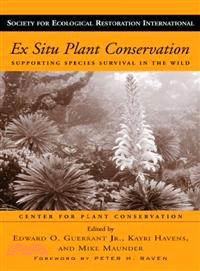
Faced with widespread and devastating loss of biodiversity in wild habitats, scientists have developed innovative strategies for studying and protecting targeted plant and animal species in "off-site
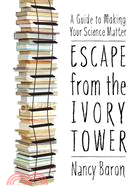
In this handbook, Baron, a zoologist, science writer, and communications trainer for the Communication Partnership for Science and the Sea (COMPASS) and Stanford U., helps scientists who lack communic