Julian (Flavius Claudius Iulianus) "the Apostate", Roman Emperor, lived 331 or 332 to 363 CE. Born and educated in Constantinople as a Christian, after a precarious childhood he devoted himself to li
This volume contains three rhetorical treatises dating probably from the reign of Diocletian (AD 285–312) that provide instruction on how to compose epideictic (display) speeches for a wide variety of
The Loeb Classical Library series Fragmentary Republican Latin continues with oratory, an important element of Roman life from the earliest times, essential to running public affairs and for advancing
The Loeb Classical Library series Fragmentary Republican Latin continues with oratory, an important element of Roman life from the earliest times, essential to running public affairs and for advancing
The Loeb Classical Library series Fragmentary Republican Latin continues with oratory, an important element of Roman life from the earliest times, essential to running public affairs and for advancing
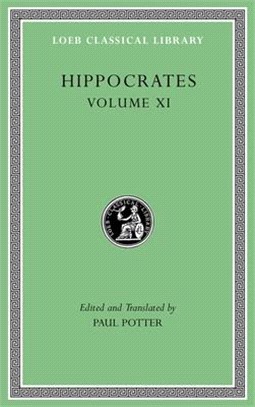
This is the eleventh and final volume in the Loeb Classical Library’s complete edition of Hippocrates’ invaluable texts, which provide essential information about the practice of medicine in antiquity
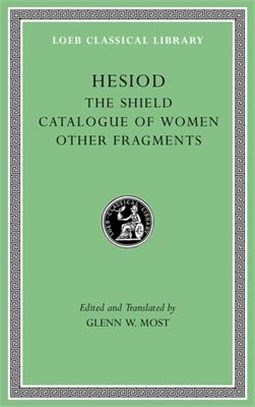
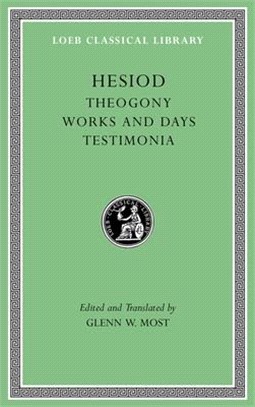
Hesiod describes himself as a Boeotian shepherd who heard the Muses call upon him to sing about the gods. His exact dates are unknown, but he has often been considered a younger contemporary of Homer.
Hesiod describes himself as a Boeotian shepherd who heard the Muses call upon him to sing about the gods. His exact dates are unknown, but he has often been considered a younger contemporary of Homer.
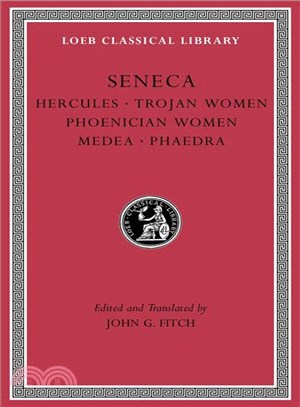
Seneca is a figure of first importance in both Roman politics and literature: a leading adviser to Nero who attempted to restrain the emperor’s megalomania; a prolific moral philosopher; and the autho
Seneca is a figure of first importance in both Roman politics and literature: a leading adviser to Nero who attempted to restrain the emperor’s megalomania; a prolific moral philosopher; and the autho
Livy (Titus Livius), the great Roman historian, was born at Patavium (Padua) in 64 or 59 BC, where after years in Rome he died in AD 12 or 17. Livy’s history, composed as the imperial autocracy of Aug
Quintus Ennius (239–169 BC), widely regarded as the father of Roman literature, was instrumental in creating a new Roman literary identity and inspired major developments in Roman religion, social org
Livy (Titus Livius), the great Roman historian, was born at Patavium (Padua) in 64 or 59 BC where after years in Rome he died in AD 12 or 17. Livy’s history, composed as the imperial autocracy of Augu
Quintus Ennius (239–169 BC), widely regarded as the father of Roman literature, was instrumental in creating a new Roman literary identity and inspired major developments in Roman religion, social org
Publius Aelius Aristides Theodorus was among the most celebrated authors of the Second Sophistic and an important figure in the transmission of Hellenism. Born to wealthy landowners in Mysia in 117, h
Plato of Athens, who laid the foundations of the Western philosophical tradition and in range and depth ranks among its greatest practitioners, was born to a prosperous and politically active family c
Livy (Titus Livius), the great Roman historian, was born at Patavium (Padua) in 64 or 59 BC, where after years in Rome he died in AD 12 or 17. Livy’s history, composed as the imperial autocracy of Aug
Apuleius, one of the great stylists of Latin literature, was born ca. 125 AD in Madauros to a politically prominent family and received an elite education in the provincial capital Carthage and at Ath
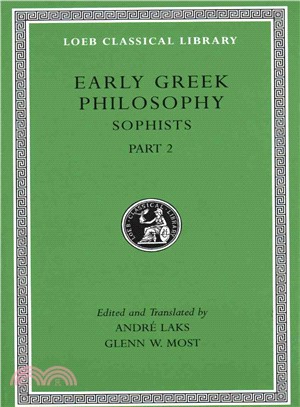
The fragments and testimonia of the early Greek philosophers (often labeled the Presocratics) have always been not only a fundamental source for understanding archaic Greek culture and ancient philoso
Volume VI of the nine-volume Loeb edition of Early Greek Philosophy includes the later Ionian and Athenian thinkers Anaxagoras, Archelaus, and Diogenes of Apollonia, along with chapters on early Greek
The fragments and testimonia of the early Greek philosophers (often labeled the Presocratics) have always been not only a fundamental source for understanding archaic Greek culture and ancient philoso
The fragments and testimonia of the early Greek philosophers (often labeled the Presocratics) have always been not only a fundamental source for understanding archaic Greek culture and ancient philoso
The fragments and testimonia of the early Greek philosophers (often labeled the Presocratics) have always been not only a fundamental source for understanding archaic Greek culture and ancient philoso
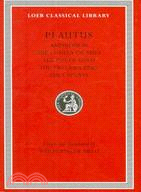
The rollicking comedies of Plautus, who brilliantly adapted Greek plays for Roman audiences c. 205–184 BCE, are the earliest Latin works to survive complete and are cornerstones of the European
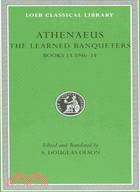
In the Learned Banqueters, Athenaeus describes a series of dinner parties at which the guests quote extensively from Greek literature. The work (which dates to the very end of the second century CE)
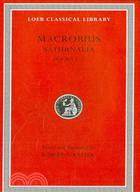
The Saturnalia, Macrobius’s encyclopedic celebration of Roman culture written in the early fifth century CE, has been prized since the Renaissance as a treasure trove of otherwise unattested lo
The Saturnalia, Macrobius’s encyclopedic celebration of Roman culture written in the early fifth century CE, has been prized since the Renaissance as a treasure trove of otherwise unattested lo
The Saturnalia, Macrobius' encyclopedic celebration of Roman culture written in the early fifth century CE, has been prized since the Renaissance as a treasure trove of otherwise unattested lore. Cas
This is the ninth volume in the Loeb Classical Library’s ongoing edition of Hippocrates’ invaluable texts, which provide essential information about the practice of medicine in antiquity and about Gre
Aeschylus (ca. 525–456 BCE), the dramatist who made Athenian tragedy one of the world’s great art forms, witnessed the establishment of democracy at Athens and fought against the Persians at Marathon.
In The Learned Banqueters, Athenaeus describes a series of dinner parties at which the guests quote extensively from Greek literature. The work (which dates to the very end of the second century CE) i
The bite and wit of two of antiquity's best satirists are captured here in a new Loeb Classical Library edition, a vivid and vigorous translation facing the Latin text.Persius (34-62 CE) and Juvenal (
The writings of the Apostolic Fathers give a rich and diverse picture of Christian life and thought in the period immediately after New Testament times. Some of them were accorded almost Scriptural au
The writings of the Apostolic Fathers give a rich and diverse picture of Christian life and thought in the period immediately after New Testament times. Some of them were accorded almost Scriptural au
Terence brought to the Roman stage a bright comic voice and a refined sense of style. His six comedies--first produced in the half dozen years before his premature death in 159 BCE--were imaginatively
Terence brought to the Roman stage a bright comic voice and a refined sense of style. His six comedies--first produced in the half dozen years before his premature death in 159 BCE--were imaginatively
Valerius Maximus compiled his handbook of notable deeds and sayings during the reign of Tiberius (14-37 CE). The collection was very popular in the Renaissance and has recently attracted renewed schol
Aristophanes of Athens (ca. 446?386 BCE), one of the world's greatest comic dramatists, has been admired since antiquity for his iridescent wit and beguiling fantasy, exuberant language, and brilliant
One of antiquity's greatest poets, Euripides (ca. 485-406 BCE) has been prized in every age for the pathos, terror, surprising plot twists, and intellectual probing of his dramatic creations. Here, i
Aristophanes of Athens (ca. 446386 BCE), one of the world's greatest comic dramatists, has been admired since antiquity for his iridescent wit and beguiling fantasy, exuberant language, and bri