This series is for people—adults and teenagers—who are interested in computer programming because it's fun. The three volumes use the Logo programming language as the vehicle for an exploration of com
This series is for people—adults and teenagers—who are interested in computer programming because it's fun. The three volumes use the Logo programming language as the vehicle for an exploration of com
This series is for people—adults and teenagers—who are interested in computer programming because it's fun. The three volumes use the Logo programming language as the vehicle for an explo
In Great Ideas in Computer Science: A Gentle Introduction, Alan Biermann presents the "great ideas" of computer science that together comprise the heart of the field. He condenses a great d
"Ascertain the meaning before consulting this dictionary," warns the author of this collection of deliberately satirical misdefinitions. New computer cultures and their jargons have burgeoned since th
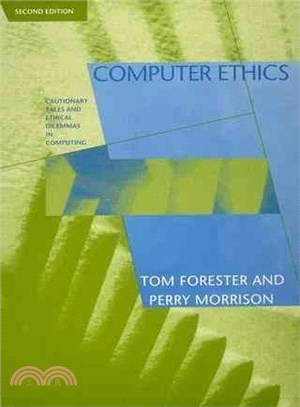
For anyone interested in the issues arising from computer malfunctions and, moreperniciously, from misuse, this new edition of Computer Ethics is right on the mark. Widelyacclaimed for its readability
A comprehensive introduction to Support Vector Machines and related kernel methods. In the 1990s, a new type of learning algorithm was developed, based on results from statistical learning theory: t
Assisted reproductive technology (ART) makes babies and parents at once. Drawing onscience and technology studies, feminist theory, and historical and ethnographic analyses of ARTclinics, Charis Thomp
In Computer-Integrated Surgery leading researchers and clinical practitioners describe the exciting new partnership that is being forged between surgeons and machines such as computers and robots, ena
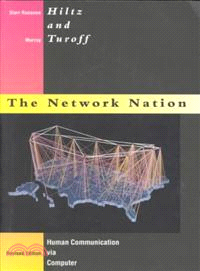
A visionary book when it was first published in the late 1970s, The Network Nationhas become the defining document and standard reference for the field of computer mediatedcommunication (CMC). This re
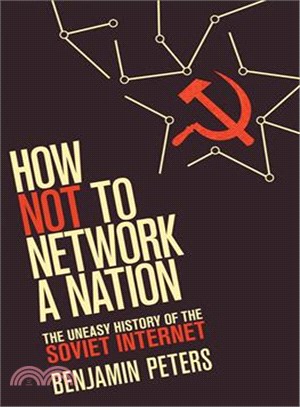
Between 1959 and 1989, Soviet scientists and officials made numerous attempts to network their nation -- to construct a nationwide computer network. None of these attempts succeeded, and the enterpris
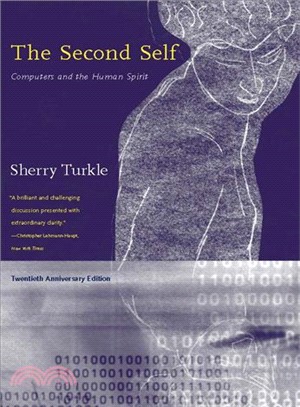
In The Second Self, Sherry Turkle looks at the computer not as a "tool," but as part of our social and psychological lives; she looks beyond how we use computer games and spreadsheets to ex
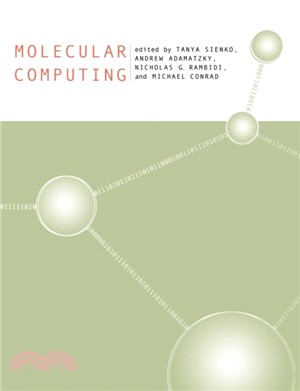
The next great change in computer science and information technology will come from mimicking the techniques by which biological organisms process information. To do this computer scientists must draw
This is a book about the public display of death in contemporary culture. It consistsof a series of essays on specific cases in which death is displayed in museums and in photography.The essays focus
One goal of modern computer science is to engineer computer programs that can act as autonomous, rational agents; software that can independently make good decisions about what actions to perform on o
The proliferation of weapons of mass destruction, in the hands of both states and terrorist networks, is considered by many to be the greatest threat to global security today. Contemporary Nuclear De
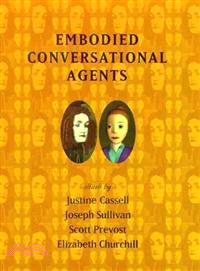
Embodied conversational agents are computer-generated cartoonlike characters thatdemonstrate many of the same properties as humans in face-to-face conversation, including theability to produce and res
Supercomputing research--the goal of which is to make computers that are ever fasterand more powerful--has been at the cutting edge of computer technology since the early 1960s. Untilrecently, researc
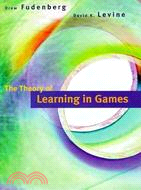
In economics, most noncooperative game theory has focused on equilibrium in games, especially Nash equilibrium and its refinements.In The Theory of Learning in Games Drew Fudenberg and David Levine d
"This volume, likely to become a standard reference work, describes an extraordinary number of approaches to the representation of musical information for purposes of computer processing. It is a cons
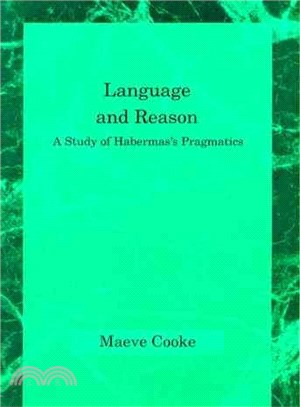
Readers of Jurgen Habermas's Theory of Communicative Action and his later social theory know that the idea of communicative rationality is central to his version of critical theory. Language and Reaso
Over the past twenty-five years, Ray Jackendoff has investigated many complex issuesin syntax, semantics, and the relation of language to other cognitive domains. He steps back in thisnew book to surv
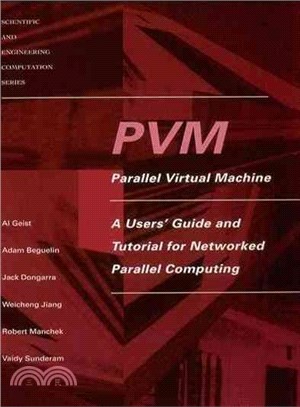
PVM is a software package that enables the computer user to define a networked heterogeneous collection of serial, parallel, and vector computers to function as one large computer. Written by the tea
If you have access to a personal computer and want to explore the Internet, Everybody's Guide is the place to begin. Foreword by Mitchell Kapor. If you have access to a personal computer and want to
Semantics of Programming Languages exposes the basic motivations and philosophy underlying the applications of semantic techniques in computer science. It introduces the mathematical theory of program
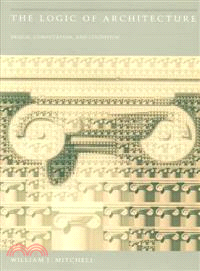
Drawing on recent computer and cognitive science, Mitchell (architecture, Harvard) explores the languages of architectural form and graphic composition to illuminate the underlying concepts of design.
In describing the technical experiences of one company from the beginning of the computer era, this book unfolds the challenges that IBM's research and development laboratories faced, the technologica
This book describes a theory of memory representation, organization, and processing for understanding complex narrative texts. The theory is implemented as a computer program called BORIS which reads
Papers from the first International Conference on Universals in Language, uniting perspectives from linguistics, cultural anthropology, and psychology. In 1961, the first International Conference on
This anthology provides a multivocal critique of the exhibition of contemporary art,bringing together the writings of artists, curators, and theorists. Collectively these diverseperspectives are unite
Visual science is the model system for neuroscience, its findings relevant to allother areas. This essential reference to contemporary visual neuroscience covers the extraordinaryrange of the field to
What does 'contemporary' actually mean? This is among the fundamental questions aboutthe nature and politics of time that philosophers, artists and more recently curators haveinvestigated over the pas
An examination of more than sixty years of successes and failures in developing technologies that allow computers to understand human spoken language. Stanley Kubrick's 1968 film 2001: A Space Odyss
Roy Lichtenstein's popular appeal--and his influence on pop culture, seen ineverything from greeting cards to sitcoms--at times overshadows his importance to contemporary art.Yet, examined on its own
Experts investigate communicative flexibility (in both form and usage of signals) as the foundation of the evolution of complex communication systems, including human language. The evolutionary root
From the Gothic to the contemporary, glass has transformed the structural, formal, and philosophical principles of architecture. In The Glass State, Annette Fierro views the many meanings of transpare
Ed Ruscha is among the most innovative artists of the last forty years. He is also one of the first Americans to introduce a critique of popular culture and an examination of language into the visual
In Dark Tongues, Daniel Heller-Roazen offers a sustainedexploration of a perplexing fact that has never received the attention it deserves. Wherever humanbeings share a language, they also strive to m
Originally published in 1967; back in print in 2003. As contemporary history in general, and political history in particular, this book will be of immeasurable interest to any student of East Europe