Twenty years ago, the Berlin Wall fell. In one of modern history’s most miraculous occurrences, communism imploded–and not with a bang, but with a whimper. Now two of the foremost scholars of East Eur
Acclaimed historian Margaret MacMillan explores here the many ways in which history affects us all. She shows how a deeper engagement with history, both as individuals and in the sphere of public deba
In Prehistory, the award-winning archaeologist and renowned scholar Colin Renfrew covers human existence before the advent of written records–the overwhelming majority of our time here on earth–and gi
Insightful, informed, and at times controversial in its conclusions, A Short History of Medicine offers an exceptional introduction to the major and many minor facets of its subject.In this lively, le
The Hellenistic Age chronicles the years 336 to 30 BCE, a period that witnessed the overlap of two of antiquity’s great civilizations, the Greek and the Roman. Peter Green’s remarkably far-ranging stu
In this timely, highly original, and controversial narrative, New York Times bestselling author Mark Kurlansky discusses nonviolence as a distinct entity, a course of action, rather than a mere state
“Football is force and fanatics, basketball is beauty and bounce. Baseball is everything: action, grace, the seasons of our lives. George Vecsey’s book proves it, without wasting a word.”–Lee Eisenber
In Infinite Ascent, David Berlinski, the acclaimed author of The Advent of the Algorithm, A Tour of the Calculus, and Newton’s Gift, tells the story of mathematics, bringing to life with wit, elegance
America’s engagement with the Arab world stretches back far beyond the Iraq wars. According to Milton Viorst, the current conflict is simply the latest round in a 1,400-year struggle between Christian
California has always been our Shangri-la–the promised land of countless pilgrims in search of the American Dream. Now the Golden State’s premier historian, Kevin Starr, distills the entire sweep of C
The Second World War was the defining event of the twentieth century, leaving millions dead and redrawing the political map in ways that continue to affect nearly the entire human race. What was unpre
If humankind can be said to have a single greatest creation, it would be those places that represent the most eloquent expression of our species’s ingenuity, beliefs, and ideals: the city. In this aut
“No revolution however drastic has ever involved a total repudiation of what came before it.”The religious reformations of the sixteenth century were the crucible of modern Western civilization, profo
“I often said before starting, that I had no doubt I should frequently repent of the whole undertaking.” So wrote Charles Darwin aboard The Beagle, bound for the Galapagos Islands and what would argua
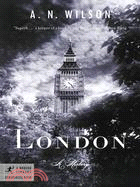
In its two thousand years of history, London has ruled a rainy island and a globe-spanning empire, it has endured plague and fire and bombing, it has nurtured and destroyed poets and kings, revolution
In this groundbreaking work, leading historian Felipe Fernandez-Armesto tells the story of our hemisphere as a whole, showing why it is impossible to understand North, Central, and South America in is
The Boys’ Crusade is the great historian Paul Fussell’s unflinching and unforgettable account of the American infantryman’s experiences in Europe during World War II. Based in part on the author’s own
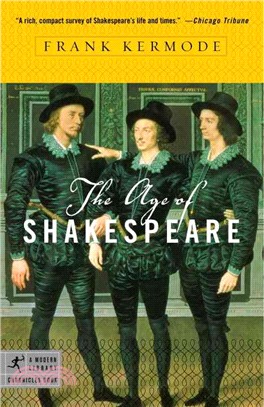
In The Age of Shakespeare, Frank Kermode uses the history and culture of the Elizabethan era to enlighten us about William Shakespeare and his poetry and plays. Opening with the big picture of the rel
In a single short book as elegant as it is wise, Ian Buruma makes sense of the most fateful span of Japan’s history, the period that saw as dramatic a transformation as any country has ever known. In
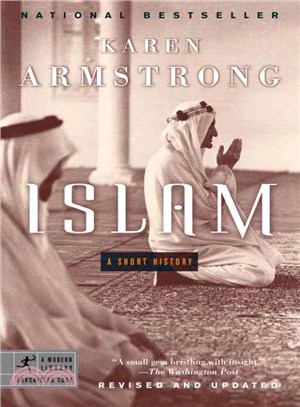
No religion in the modern world is as feared and misunderstood as Islam. It haunts the popular imagination as an extreme faith that promotes terrorism, authoritarian government, female oppression, and
The Renaissance holds an undying place in our imagination, its great heroes still our own, from Michelangelo and Leonardo to Dante and Chaucer. This period of profound evolution in European thought is