In this autobiography, Bill Lawrence (d. 2005) reflects on his 37-year career in the U.S. Navy. Coverage includes his brutal imprisonment at the "Hanoi Hilton" during the Vietnam War and his later ris
This guide remains the only complete reference to the weapons currently in service in ships, submarines, and naval aircraft around the world. It is the only book of its type to explain the transforma
Peebles' history of US air-supported covert operations against the Soviet Bloc spans the cold war as far as the fall of Saigon. Drawing on recent scholarship and Soviet-era archives, Peebles, an aeros
This book (and its companion volume, Dictionary of Naval Terms) is written for Navy neophytes who want - indeed need - to be able to understand the language of their new profession. It is also writte
Heroism, tragedy, devotion to duty, and scandal are just a few of the ingredients that make up this dramatic first-time account of troopship losses in wartime. International in scope, it offers a comp
Written in his own hand and finished only weeks before his death, Gen. Douglas MacArthur's memoir spans more than half a century of modern history. His vantage point at center stage during major contr
In the early 20th century this book was required reading in any study of naval strategy. Though this work pre-dates the airplane, submarine, and missile, it still should be basic reading for students
Through the Valley is the captivating memoir of the last U.S. Army soldier taken prisoner during the Vietnam War. A narrative of courage, hope, and survival, Through the Valley is more than just a war
USS Nevada (BB-36) was America's first modern battleship. When her keel was laid in 1912, kings and emperors still ruled much of the world. When she finally slipped beneath the waves in 1948, America
In an effort to divert China's attention from the Korean front in 1950 and relieve pressure on the allied forces, the CIA sponsored a series of raids along the southeastern coast of China conducted by
Bayly's War is the story of the Royal Navy's Coast of Ireland Command (later named Western Approaches Command) during World War I. After the sinking of the Lusitania in May 1915 and the introduction o
The “Second Happy Time” was the informal name given to the phase of the battle of the Atlantic when German U-boats attacked both merchant and U.S. naval vessels along America’s east coast. With tanker
Until the late 1930s, Singapore was noted as a popular stop-off point for wealthy European travellers on their way to countries such as Australia and New Zealand. All of that changed with the outbreak
Very Special Ships is the first full-length book about the Abdiel-class fast minelayers, which were considered the fastest and most versatile to serve in the Royal Navy during World War II. This book
The torpedo was the greatest single game-changer in the history of naval warfare. For the first time it allowed a small, cheap torpedo-firing vessel--and by extension a small, minor navy--to threaten
The warships of the World War II German Navy are among the most popular subjects in naval history, and one of the best collections is the concise but authoritative six volume series written by Gerhard
The warships of the World War II German Navy are among the most popular subjects in naval history, and one of the best collections is the concise but authoritative six volume series written by Gerhard
The warships of the World War II German Navy are among the most popular subjects in naval history, and one of the best collections is the concise but authoritative six volume series written by Gerhard
Elliot Carlson's biography of Capt. Joe Rochefort is the first to be written of the officer who headed the U.S. Navy's decrypt unit at Pearl Harbor and broke the Japanese Navy's code before the Battle
Books on the history of fortifications are plentiful, but the hidden forts of the nuclear age have not been cataloged and studied in the same way until now. In Underground Structures of the Cold War,
Shares the exciting story of the British Royal Navy's efforts to crack a key German code--from a team of scientists, chess champions and linguists, including Alan Turing, trying to crack the code on s
Presents an autobiography of the nineteenth-century ship captain and his exciting adventures at sea, from his first voyages as a seaman at eleven years old to his experiences as the leader of the Drea
Mercenary airman Frank G. Tinker Jr. graduated from the US Naval Academy in 1933 and served as a flying ace in the Spanish Civil War. Coming from a working class background, he was equally comfortable
The late Morison, a professor of American history at Harvard U., was appointed by his close friend, Franklin D. Roosevelt, to write the history of US naval operations during World War II, and in this
Hubbard recounts how, after three years doing counter-intelligence in Vietnam, he went to Cold War southern Africa and joined what had been the police force of Cecil Rhodes company. In the course of h
One of the key concerns of naval strategists and planners today is the nature of the Chinese geostrategic challenge. Conceding that no one can know for certain China s intentions in terms of future co
The first special service force of World War II was known as the Devil's Brigade. Ferocious and stealthy combatants, the men of the unit garnered their moniker from the captured diary of a German off
Beware Raiders! is the story of two very different German surface raiders and the havoc they caused amongst Allied shipping in the Second World War. One was the 8-inch gun cruiser Admiral Hipper, fast
Details how, despite the odds, the Royal Navy helped Britain survive during the critical times of the Battle of the Atlantic, the Siege of Malta, the convoys to northern Russia, and the D-Day landings
A masterpiece of World War II heroism, this book catches the spirit and tone of an incredible fighting ship, the USS Aaron Ward, a destroyer-turned-minelayer on the radar picket lines in the Pacific.
This biography traces the life and career of one of the U.S. Navy's first admirals, Andrew Hull Foote. As flag officer of the Union's western naval forces, Foote was a key figure in the February 1862
The colorful Captain John "Mad Jack" Percival was a legend in his time. Known as a seaman of uncommon ability and fearlessness, he led such an extraordinary life that he drew the attention of the famo
In May 1962 the Office of Naval Research and the CIA launched one of the most exotic spy missions of the Cold War: the parachuting of two intelligence officers onto a hastily abandoned Soviet drift st
Just eight square miles in size, the Japanese island of Iwo Jima lies some 750 miles due south of Tokyo. Following a preparatory air and naval bombardment which lasted for many weeks, it was there, on
From the shelling of the fort at Westerplatte, on the Polish coast, on 1 September 1939, to the loss of thousands of German refugees at sea in May 1945, the Baltic witnessed continuous and ferocious f
The Japanese invaded the Solomon Islands in May 1942 with the aim of building an airfield at Guadalcanal. After an epic six month struggle they were repulsed and the island became a staging base for U
No one escaped whole from the fall of Saigon. We Americans were all damaged. The Last of the Annamese is about the Vietnamese and Americans who escaped from Vietnam in April 1975, those who decided to
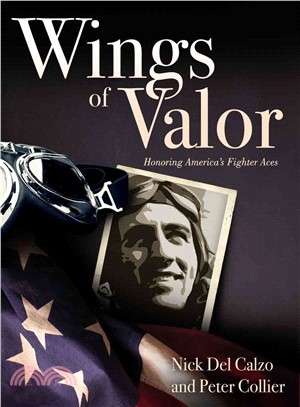
A hero’s action is always extraordinary because it is so contrary to the basic human instincts of self-preservation and survival. For the fighter ace, it is often “kill or be killed”. The men whose im
The intimate view of the U.S. Coast Guard's dramatic World War II record has long been considered a classic. First published in 1957 and out of print for years, the book is now available in paperback.
The smallest ship in Nelson's fleet at the Battle of Trafalgar was the curiously-named HMS Pickle. The ship was a topsail schooner and, though deemed too small to take part in the fighting, she distin