In almost 200 archive photographs Leo Marriott traces the development of British and American jet fighters during the first pioneering decade of their production. In many ways the period from 1944 to
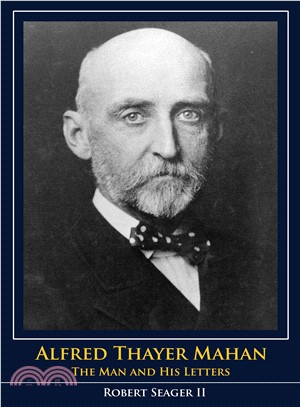
President Theodore Roosevelt called him “one of the greatest and most useful influences in American life.” He was. Indeed, in the words of the author of this biography, Mahan had “much to do with re
One of this century’s most significant events, China’s maritime transformation is already making waves. Yet China’s course and its implications, including at sea, remain highly uncertain—triggering in
This autobiography highlights Lt. Gen. Becton's remarkable career and reveals the influences that contributed to his success. It reflects on his youth in the suburban Philadelphia area, his parental a
Rough Waters traces the evolution of the role of the U.S. merchant ship flag, and the U.S. merchant fleet itself. Rodney Carlisle looks at conduct and commerce at sea from the earliest days of the cou
Norman Ough is considered by many as the greatest ship modeler of the twentieth century and his exquisite drawings and meticulous models have come to be regarded as masterpieces of draftsmanship, work
Hunters and Killers is a comprehensive two-volume history of all aspects of Anti-Submarine Warfare (ASW), covering its beginnings in the late 18th Century through the important role of present anti-su
How does one engage in the study of strategy? Strategy: Context and Adaptation from Archidamus to Airpower argues that strategy is not just concerned with amassing knowledge; it is also about recogniz
May 2015 is the 250th anniversary of the launch of HMS Victory. While many books have been written about Nelson's flagship at Trafalgar, none tell the full story of the ship since she first took to th
Faltum offers readers a comprehensive historical overview and a contemporary exploration of the role of two classes of naval aircraft carriers, the Forrestal and the Kitty Hawk. Beginning with the int
This is the true life story of the Scottish gardener's son, John Paul, who became America's greatest naval hero, John Paul Jones. British midshipman, African slaver, traveling actor, merchant captain,
The seventh volume in Admiral Morison's History of the United States Naval Operations in World War II picks up operations in the Aleutians where they were broken off after the Battle of Midway and car
In a book the draws on accounts of polar and space explorers, as well as shipwreck and disaster survivors, the author looks at how being isolated or confined in small places affects a human's mental s
Cumming, winner of the University of London's Julian Corbett Prize for Research in Modern Naval History, argues that the Royal Navy deserves greater recognition for its role in the Battle of Britain,
Packed with hundreds of color photographs of the finest examples of miniature ship models in existence, this book traces the history of modern models back to their use as identification aids by the mi
Strategist and naval historian Friedman argues that the September 11 attacks on the US were carried out on the orders of Osama bin Laden in order to create a pan-Muslim empire with him at its head. He
When first published in 1995, this book was hailed as an absolutely indispensable contribution to the history of the Pacific War. Drawing heavily from Japanese sources and American wartime intercepts
A Tale of Two Navies is an analysis of the unique relationship between the United States Navy and the Royal Navy from 1960 to present. This loosely chronological study examines the histories, strategi
With the Mexican-American War winding down, and after a painful divorce and the death of his daughter, Lieutenant William Lynch was given permission to lead the first and only US Navy expedition to th
Submarines played a major role in the war at sea in the years 1939-45, and this major reference book describes all the classes of vessel that were deployed by the eighteen combatant nations during tho
One of the largest and most complex military efforts ever undertaken, the Leyte Operation was the Allies’ first and most important major combined operation to liberate the Philippine archipelago. The
This second volume of a three-volume history of the war in the Pacific tells of the situation in which Japan found herself in spring 1942 when confronted by the reality that her enemies would not nego
On July 31, the U.S. Navy destroyer USS Maddox (DD-731) began a reconnaissance cruise off the coast of North Vietnam. On August 2, three North Vietnamese torpedo boats attacked the ship. On the night
Since the Second World War the old categories of destroyer and frigate have tended to merge, a process that this book traces back to the radically different ‘Tribal’ class destroyers of 1936. It deals
After being wounded and awarded the Bronze Star for valor as a Marine infantry platoon commander in Vietnam, Arnold Punaro thought he’d left the battlefield behind. Instead, he redeployed onto the bat
When first published in 1990 Before the Ironclad was highly regarded and wholly unique. Brown's work challenged old assumptions and started a reevaluation of British contributions to naval development
Military historian O'Hara describes the Anglo-American Operation Torch, a risky amphibious invasion of neutral French territory in North Africa in order to get a toe-hold and open another front agains
Between the world wars, France produced some of the largest and fastest destroyers in the world. Known as Contre-Torpilleurs, these striking and innovative super-destroyers and the more conventional T
The attack on the British frigate Amethyst on the Yangtze River by Chinese Communists in 1949 made world headlines. There was even more publicity when the ship made a dramatic escape after being trapp