Guarding Hitler provides an inside look at the secret world of Adolf Hitler's security and domestic arrangements. Using new and rare research material, some only declassified in 2010, the book draws o
Rentfrow, a former naval flight officer who teaches US and naval history, traces the transformation of the US Navy into a fighting organization between 1874 and 1897, using the North Atlantic Station
"This is the first book to examine the concept of anti-access and area denial warfare, providing a definitive introduction to both conceptual theories and historical examples of this strategy. Also re
A top adviser at the Joint Intelligence Task Force for Combating Terrorism explains how militant Islamists have cobbled together various aspects of Islamist theology and history and weaved it into a n
J. F. Leahy chronicles the transition of eighty-one men and women from civilians to sailors at the U.S. Navy Recruit Training Command in Great Lakes, Illinois. Granted unlimited and unprecedented acce
An accessible guide to the U.S. Navy covers saluting, flag etiquette, the Navy's history, key ships and aircraft, how to "read" a uniform, the phonetic alphabet, miliary time and much more. Original.
Follows the history and development of the figurehead carvings, including their names and the symbolism incorporated, that adorned 5,000 ships of the Royal Navy from the reign of Henry VIII through th
Mersky, a retired Navy commander and illustrator, integrates first-person accounts from aviators and crewmen in this account of the history of the US Marine Corps' air arm. He describes early developm
Gerstein, a strategist and policy expert who has served in the security and defense fields, examines the threat of bioterrorism in the 21st century. He argues that the increase in globalization, terro
Wragg, formerly the Head of Communications with the Royal Bank of Scotland and now a noted author and journalist, has written this collection of biographies on the naval commanders who influenced the
For general readers, this sketch of the Navy between the world wars traces its workings and its transformation from using battleships to warships. The authors describe the work of sailors and officers
In this book, Magnus Nordenman explores the emerging competition between the United States and its NATO allies and the resurgent Russian navy in the North Atlantic. This maritime region played a key r
China's maritime "gray zone" operations represent a new challenge for the U.S. Navy and the sea services of our allies, partners, and friends in maritime East Asia. There, Beijing is waging what some
Patton’s Way is a unique approach to the legend of General George S. Patton, Jr. and his development and application of a unique approach to modern warfare.Unlike Carlo D’Este’s Patton: Genius for War
Now available in paperback, Shot from the Sky uncovers one of the great, dark secrets of World War II: neutral Switzerland shot and forced down U.S. aircraft entering Swiss airspace and imprisoned the
This taut thriller provides the behind-the-scenes reality of the national security system at work --the CIA, the Oval Office, the Pentagon, and the National Security Council -- and is must-reading for
How does the U.S. Coast Guard create, instill, and maintain leadership throughout a 40,000 member force spread across the United States? A former Commandant of the U.S. Coast Guard and a best-selling
In this book for general readers and history buffs, British journalist and TV producer Swinfield tells the calamitous history of the large-scale airship, with special attention to the role of Count Ze
In 1965 and 1966, the Communist Vietnamese, orchestrated by militant hardliners in Hanoi, endeavored to crush South Vietnam and expel US forces with a strategy based on 'big unit' combat rather than g
The novel, Mister Roberts, was an instant hit after being published in 1946 and was quickly adapted for the stage and screen. The title character, a Lieutenant Junior Grade naval officer, defends his
This biography recounts the education and career of Admiral Moffett (1869-1933) through his first command on the cruiser Chester, his promotion to director of Naval Aviation in 1920, and his death abo
Admittedly small and vulnerable, PT boats were, nevertheless, fast--the fastest craft on the water during World War II--and Dick Keresey's account of these tough little fighters throws new light on th
Looks at the history of the exploratory high-altitude balloon trips of the fifties and early sixties into the stratosphere, and the people that risked their lives to make the flights a success.
This textbook for Naval Academy midshipmen focuses on search and detection theory as it was developed in World War II and evolved after the war. Accessible to anyone with a mathematical background, it
A classic and poignant treatment of Japan's struggle between recognition of the kamikaze's futility and the country's pride in having made the attempt to stem the tide of the American advance in 1944-
The battle of the Atlantic fought by the Allies to maintain lines of communication and vital trade routes for armaments men and basic sustenance could not have been won without the 2710 Liberty ships
Honoring the Enemy is the story of how American sailors, Marines, and soldiers landed in eastern Cuba in 1898 and, against daunting odds, fought their way to victory.Capt. Peter Wake, USN, is a vetera
The brainchild of Admiral Sir John Fisher, battlecruisers combined heavy guns and high speed in the largest hulls of their era. Conceived as “super-cruisers” whose job it was to hunt down and destroy
Kroll, a former Coast Guard officer with a PhD in history, tells the story of the Coast Guard and its predecessor services, focusing on relatively unknown Coast Guard heroes, both men and women, rathe
It is the contention of this book that US Navy-trained officers have better, broader military strategic skills than their counterparts in the Army and Air Force. Why this is, and what implications it
Brian Lavery's extensively researched study takes an in-depth look at the officers of the Royal Navy and the various routes they took from initial recruitment and training to their role in the fightin
Verdun, the Somme, Tannenberg and Passchendaele. These epics of destruction and futility are such bywords for the World War I that--Jutland apart--we forget the role played by sea power in the war to
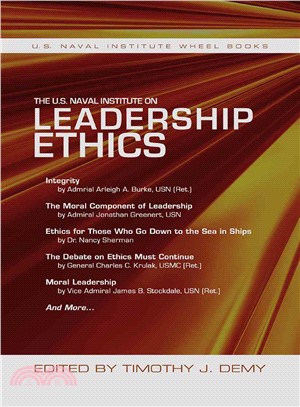
The volume is an edited book of 25 articles that have appeared in Proceedings of the U.S. Naval Institute. The material looks at naval leadership and ethics with respect to the individual leader and h
The Japanese Imperial Army was the most powerful force in the Far East through the 1930s and early 1940s, and this photographic history is the ideal introduction to it. In a vivid selection of archive
The rapid evolution of radio and radar systems for military use during World War II, and devices to counter them, led to a technological battle that neither the Axis nor the Allied powers could afford
A compelling tale of courage, heroism and terror is told in the words of 91 sailors and officers interviewed by the author about their World War II service aboard 56 U.S. destroyer escorts, tasked wit
"In this comprehensive portrait of the women of Chechnya in modern war, Paul Murphy argues that they are the principal victims of the 1994 and 1999 wars with Russia and the present conflict with Islam
Virginia poets and fiction writers Schultz (English, Roanoke College) and Shell draw mainly on the testimony of Robert Hunt, who was torpedoman on the USS Tambor for 12 of its 13 World War II patrols
Few historical books have addressed the role of the Union Navy during the Civil War, and this volume serves to close that gap by describing naval strategies employed by Lincoln and his Secretary of th
Introduces the WWII admiral who led the US Navy's carrier attack across the Pacific and developed a new concept of war at sea, chronicling his career from 1916 through post-WWII and drawing on intervi